Wedding Catering Kenya

Most couples don’t start searching for wedding catering in Kenya because they enjoy comparing menus. They start because a venue coordinator has just asked for a final guest count, an aunt has strong opinions about who should serve the mbuzi, and nobody in the family agrees on whether the reception needs a formal sit-down dinner or a generous buffet. That tension between tradition, budget and the practical reality of feeding several hundred people well is the actual problem Hauchi Kay Events and Catering Services Kenya solves most weekends of the year.

Wedding catering in Kenya covers a wide range of food service, from the tea and mandazi offered to elders during a ruracio negotiation to a five-course plated dinner at a Nairobi hotel reception. It includes the food itself, trained service staff, crockery and glassware, setup and breakdown, and, for many couples, coordination across two or three separate sittings in one long day. The right caterer treats each of these as connected parts of a single event, not as separate jobs handed to whoever is cheapest.

A quick way to think about it: if your wedding has more than one meal moment (breakfast for the bridal party, a heavy lunch, afternoon tea, then dinner) you need a caterer who plans quantities, staffing and kitchen logistics for the whole day, not just the headline meal. Couples who only budget for “the reception” often get caught out when 40 relatives show up hungry at 7am wanting chai before hair and makeup even starts.

Here is the short version before we go into detail.

  • Kenyan wedding catering pricing typically runs from KES 1,500 to over KES 7,000 per plate depending on menu, service style and event type.
  • The biggest cost drivers are guest count, whether service is plated or buffet, and how far the team has to travel.
  • Traditional ceremonies and dowry negotiations need continuous, generous service rather than a single formal meal.
  • White wedding receptions usually need the most staff per guest because of plated service and multi-course timing.
  • Booking a caterer who can handle your entire wedding weekend, not just one event, almost always costs less than hiring separate vendors for each function.
  • A tasting session before you sign anything is standard practice and worth insisting on.

Kenyan weddings are rarely a single event, and each function on the calendar, from the traditional ceremony and dowry negotiation through the white wedding reception to the bridal shower and engagement dinner, needs its own catering approach. What follows goes function by function, then deeper into the practical side: how the food, the timing and the pricing actually come together on the day, and how Hauchi Kay builds a menu that survives contact with 300 hungry guests and a schedule that never quite runs on time.

The Question Behind The Question

When someone searches for wedding catering in Kenya, what they usually want to know is whether a caterer can be trusted not to embarrass them in front of their families. Food is public in a way that flowers and photography are not. A late buffet, a dry piece of chicken, or a shortage of ugali becomes the story people tell for years.

So the real question isn’t “what does catering cost.” It’s “will this company show up on time, feed everyone properly, and handle it if 60 unexpected guests arrive.” That last part happens more often than you’d think at Kenyan weddings, where invitations are treated as guidelines rather than headcounts. A caterer who can’t absorb a 15 to 20 percent overflow without visibly running short is not ready for a Kenyan wedding, regardless of how polished their sample menu looks.

Hauchi Kay builds a buffer into every quotation for exactly this reason. It’s not padding for profit. It’s the difference between a smooth reception and a mother of the bride standing at the kitchen tent asking why there’s no more nyama choma at 4pm.

How The Type Of Ceremony Changes The Food

Kenyan weddings rarely consist of a single event. Most couples move through several distinct functions, and each one calls for a different catering approach, different quantities, and a different rhythm of service. Treating a ruracio like a smaller version of the reception, or a garden wedding like an indoor one with better weather, is where most catering plans start to go wrong. Below is how Hauchi Kay approaches each of the seven core wedding functions on its own terms.

Traditional Wedding Catering

A traditional Kenyan wedding ceremony is where the couple’s community identity takes centre stage, and it’s a distinct event from both the dowry negotiation and the white wedding reception that may follow it. This is the day built around cultural attire, traditional dance and song, and a menu that speaks directly to where the couple comes from, rather than a generic “Kenyan buffet” served at every function.

Every community brings its own culinary identity to this event. A Kikuyu ceremony tends to centre on nyama choma and irio, a Luo celebration is rarely complete without fresh fish from Lake Victoria, Luhya families often build the menu around ingokho, traditional free-range chicken, and a Kamba ceremony calls for mbuzi choma slow-roasted over open coals. Along the Coast, biryani, pilau and coconut-spiced dishes carry the same festive weight. Hauchi Kay plans each traditional wedding menu around the specific customs of the couple’s community rather than defaulting to a one-size-fits-all spread.

Because these ceremonies are community-facing rather than couple-facing, guest counts and portions tend to run larger than a typical white wedding, extended family, clan elders and neighbours are often included as a matter of respect, and the kitchen has to plan quantities around that. Service also tends to be communal rather than individually plated, similar in rhythm to a ruracio, so the food itself becomes part of how the day honours where the family comes from.

Traditional Wedding Catering

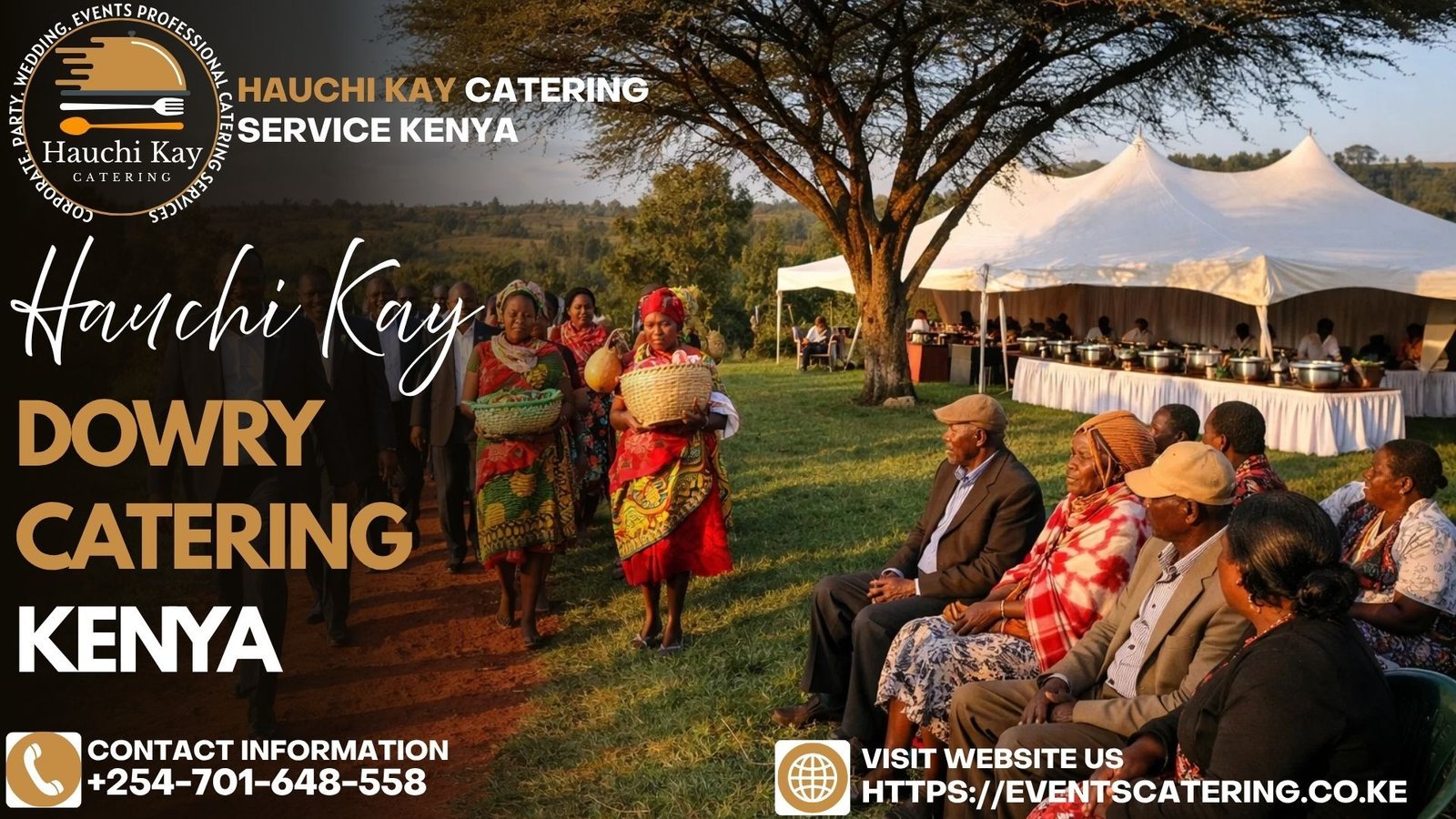
Dowry (Ruracio) Catering

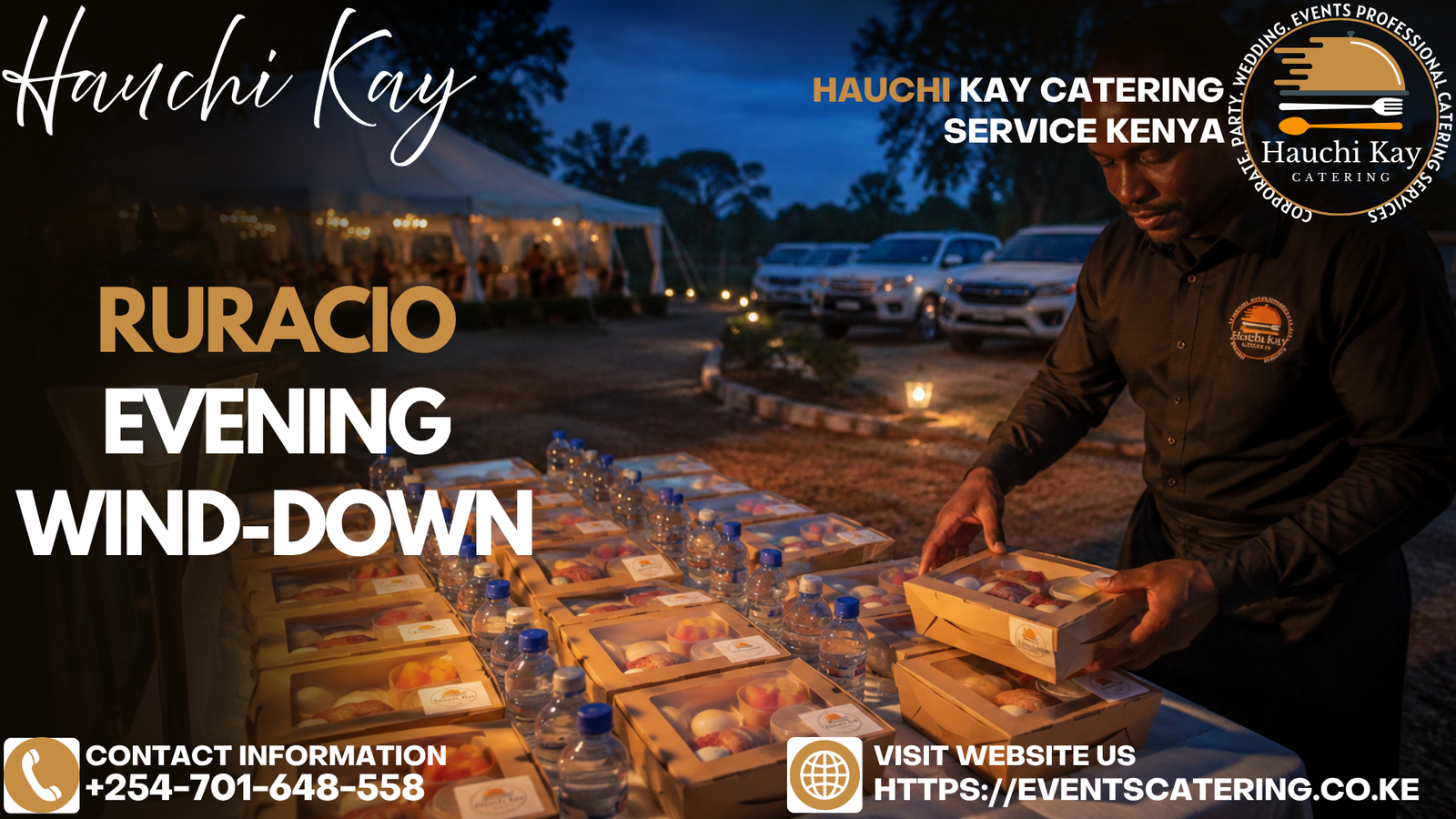
A ruracio is a long day built around continuous eating rather than one formal meal, and the catering has to match that rhythm. Negotiations move at their own pace, sometimes wrapping up by early afternoon, sometimes stretching well into the evening, so the kitchen needs to be ready to hold food warm and extend service without the quality dropping.

Elders and negotiators typically need tea and mandazi on arrival, followed by a substantial mid-morning snack once the two sides have settled in. Lunch is usually the centrepiece of the whole event, roast goat, pilau or rice, ugali, sukuma wiki and kachumbari, served in large communal quantities rather than individual plates. Portions are typically planned generously here, since this meal often has to satisfy two extended families at once, and running short in front of in-laws is not an option.

Because negotiations can run late, a second round of tea and snacks in the afternoon is standard, and Hauchi Kay usually keeps a light reserve of the lunch dishes on hand in case a group arrives late or negotiations spill into a second sitting. Staffing for a ruracio also looks different from a reception: fewer waitstaff doing formal table service, more kitchen and serving hands managing communal platters and keeping food replenished throughout the day.

Dowry (Ruracio) Catering

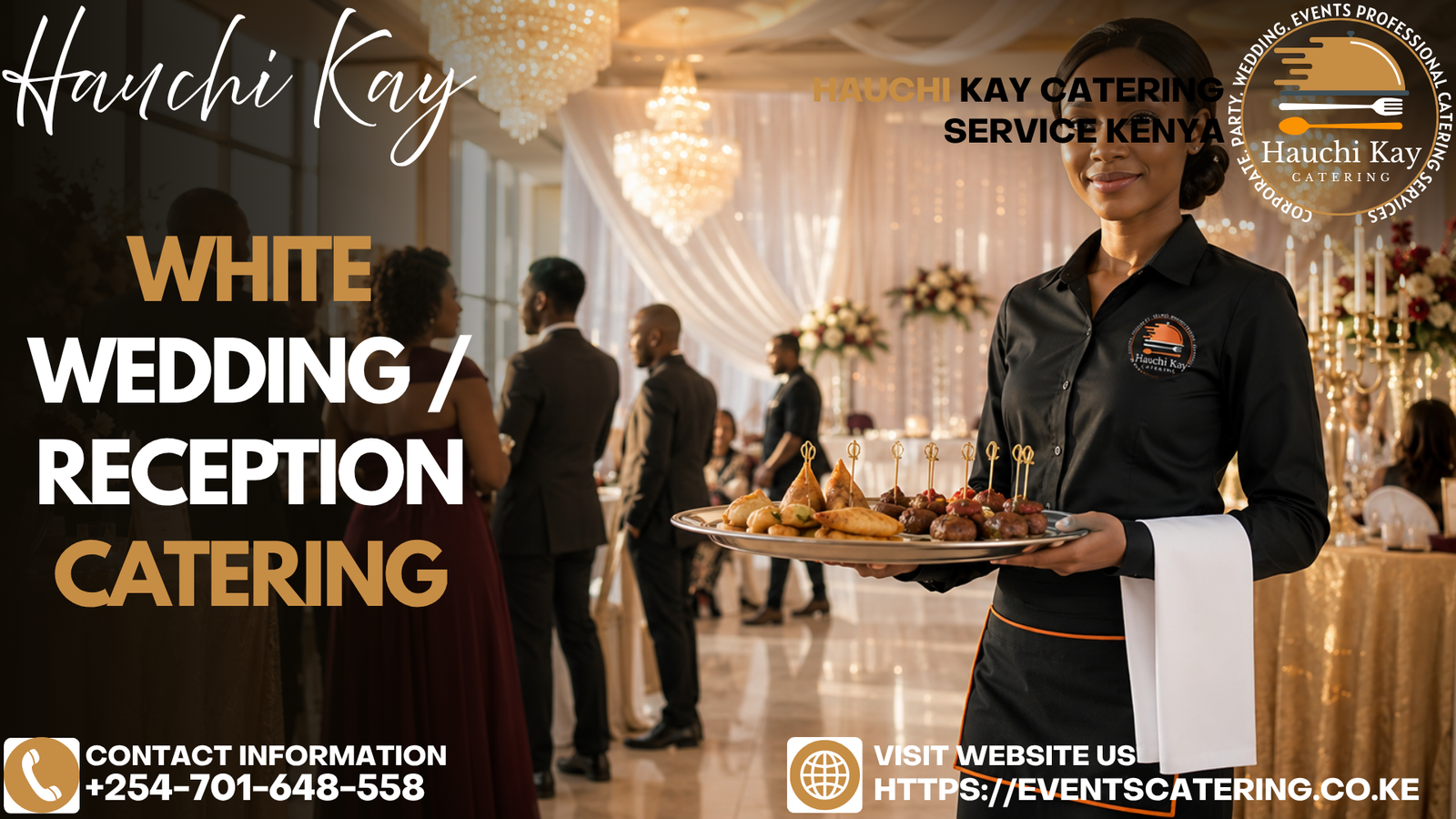
White Wedding / Reception Catering

A white wedding reception works the opposite way from a ruracio. It’s usually one structured meal built around a fixed programme, which means the kitchen is working backward from a timeline set by the MC and the couple’s schedule rather than from how long guests want to linger.

Service typically opens with welcome canapes as guests arrive and take their seats, followed by a plated or buffet main course timed around speeches and cake cutting. Dessert service is one of the tightest windows of the whole day: it has to be ready the moment the cake is cut, not ten minutes later while photographers and guests wait. This is also where staffing ratios matter most. Plated service needs enough waitstaff to clear and serve multiple tables within the same few minutes, so a reception with 300 guests on plated service needs meaningfully more staff on the floor than a buffet of the same size.

Because the whole event runs on a programme, the catering team usually works closely with the MC and the venue coordinator on timing cues, so the kitchen knows exactly when to plate mains and when to stage dessert, rather than guessing from the noise level in the room.

White Wedding Reception Catering

Garden Wedding Catering

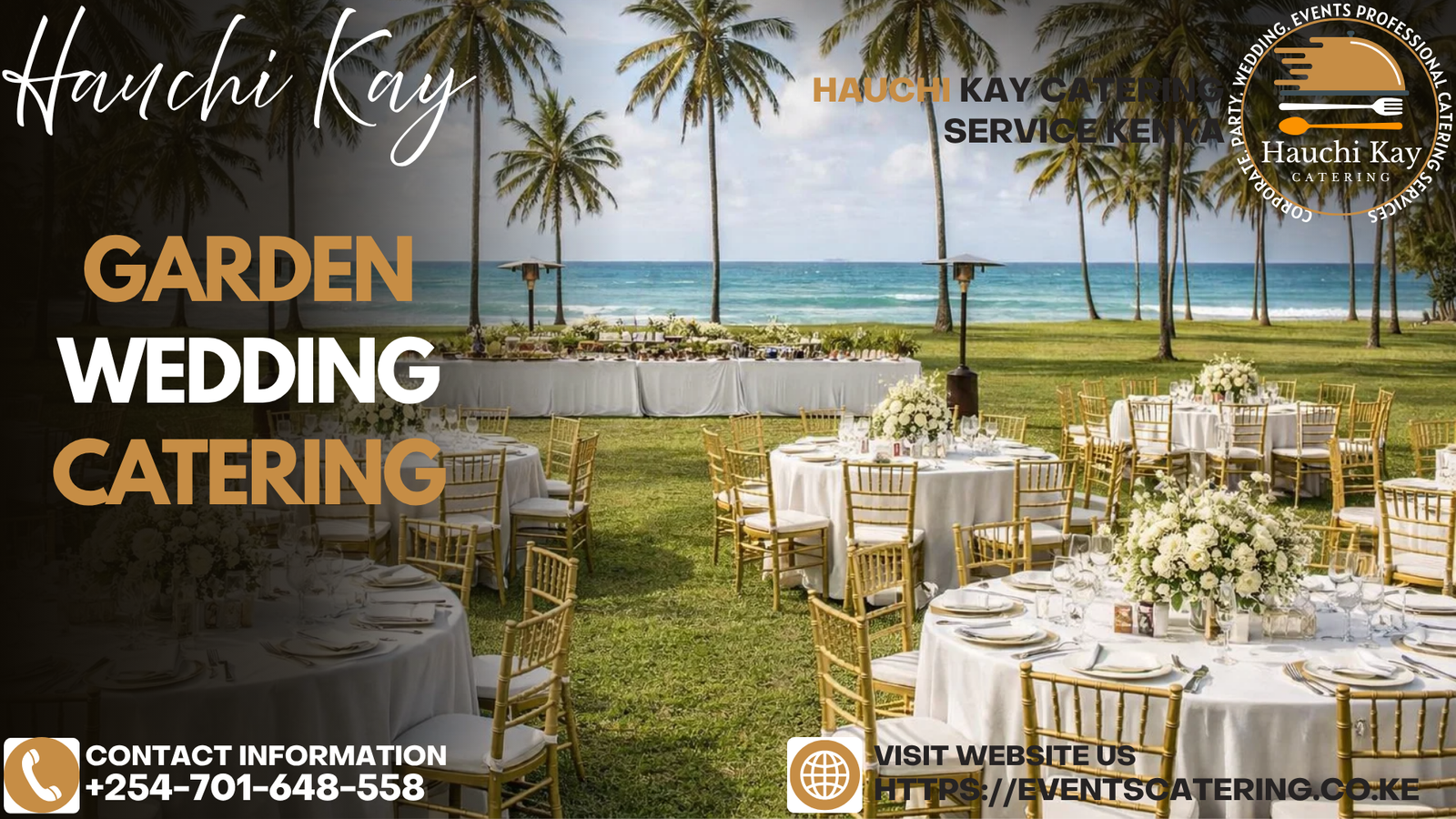
A garden wedding at a venue like Ndula Gardens, Aberdare Country Club, or one of the Karen and Naivasha properties calls for food that can sit outdoors without wilting, drying out, or attracting flies before it’s served. Heavy plated courses that need to arrive hot from a distant kitchen tent don’t always hold up well outdoors, especially in the afternoon sun or a sudden Nairobi drizzle.

Grazing tables, grilled meats from a live braai station, and fresh salads generally work better here than formal plated courses, both because they hold their quality longer outdoors and because they suit the more relaxed, mingling atmosphere most garden weddings are going for. A live grill station also doubles as entertainment, guests enjoy watching food being prepared, which fits the garden setting better than food arriving already plated from a hidden kitchen.

Outdoor weddings also need extra planning around power and water access for the catering team, since many garden venues have limited kitchen infrastructure on site, and shade or covered prep space for food safety in the heat. Hauchi Kay plans for this with generator-powered cooking equipment, weather-contingency staging, and food-safety-compliant tent configurations, so a sudden downpour or a venue without reliable mains power doesn’t put the day’s service at risk.

Garden Wedding Catering

Destination Wedding Catering

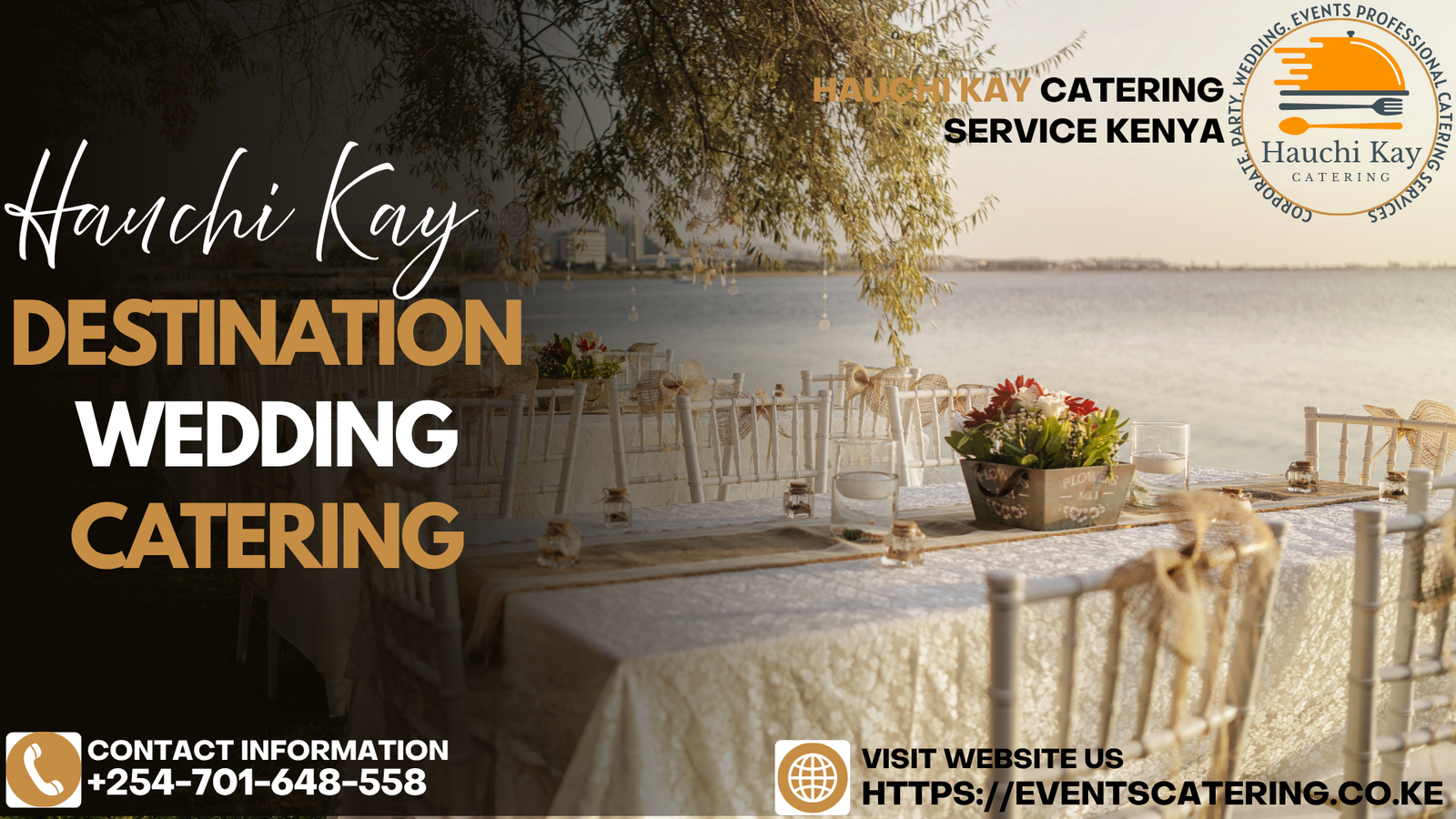
A destination wedding on the coast in Diani or Watamu, or inland at the Maasai Mara, adds a logistics problem on top of the menu itself. Ingredients, equipment, and sometimes staff need to travel with the couple, which means the planning timeline starts earlier than it would for a Nairobi wedding, and the quote reflects transport, generator hire where mains power isn’t reliable, and often accommodation for the catering team.

The menu itself tends to lean into the destination. Coastal weddings often blend Swahili dishes like coconut fish curry and biryani with the couple’s home region’s traditional dishes, giving guests a sense of place alongside the familiar. For coastal dates specifically, Hauchi Kay also plans around the long rains, April to May and October to November, when transport and outdoor setup become harder to guarantee.

Menu planning for these weddings also has to account for ingredient sourcing away from Nairobi, some items travel with the team, others are sourced locally at the destination, and knowing which is which in advance avoids last-minute scrambling two days before the wedding.

Destination Wedding Catering

Bridal Shower Catering

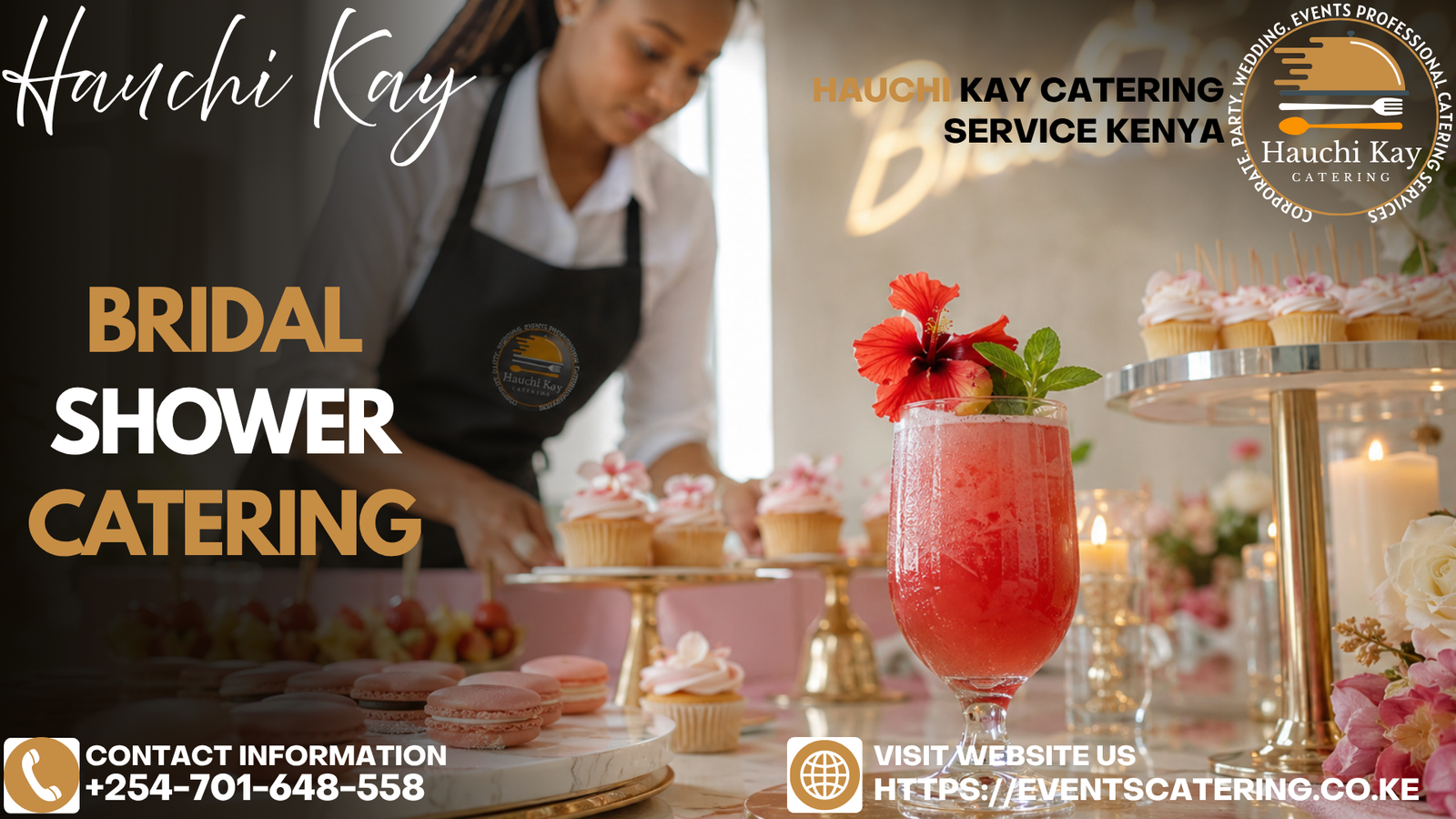
A bridal shower is built for the bride and her closest circle, and the catering has to match that scale and mood rather than being scaled down from a bigger event. Guest lists usually run between 20 and 60 people, seated for a few hours rather than moving through a long programme, which changes both the menu and the level of detail worth investing in.

Because the group is small, presentation gets more attention here than at almost any other wedding function. High tea service, mini chicken skewers, quiches, fruit platters and a properly styled dessert table tend to outperform the large-format buffet trays used for bigger functions, partly because they photograph well for social media and partly because they suit the more relaxed pace of the afternoon.

A bridal shower also gives more room for personalisation than most other wedding functions, a signature mocktail, a dessert table styled to the couple’s colour scheme, or a menu built entirely around the bride’s favourite dishes, since the guest list is small enough that individual taste can shape the whole spread.

Bridal Shower Catering

Engagement Party / Pre-Wedding Dinner Catering

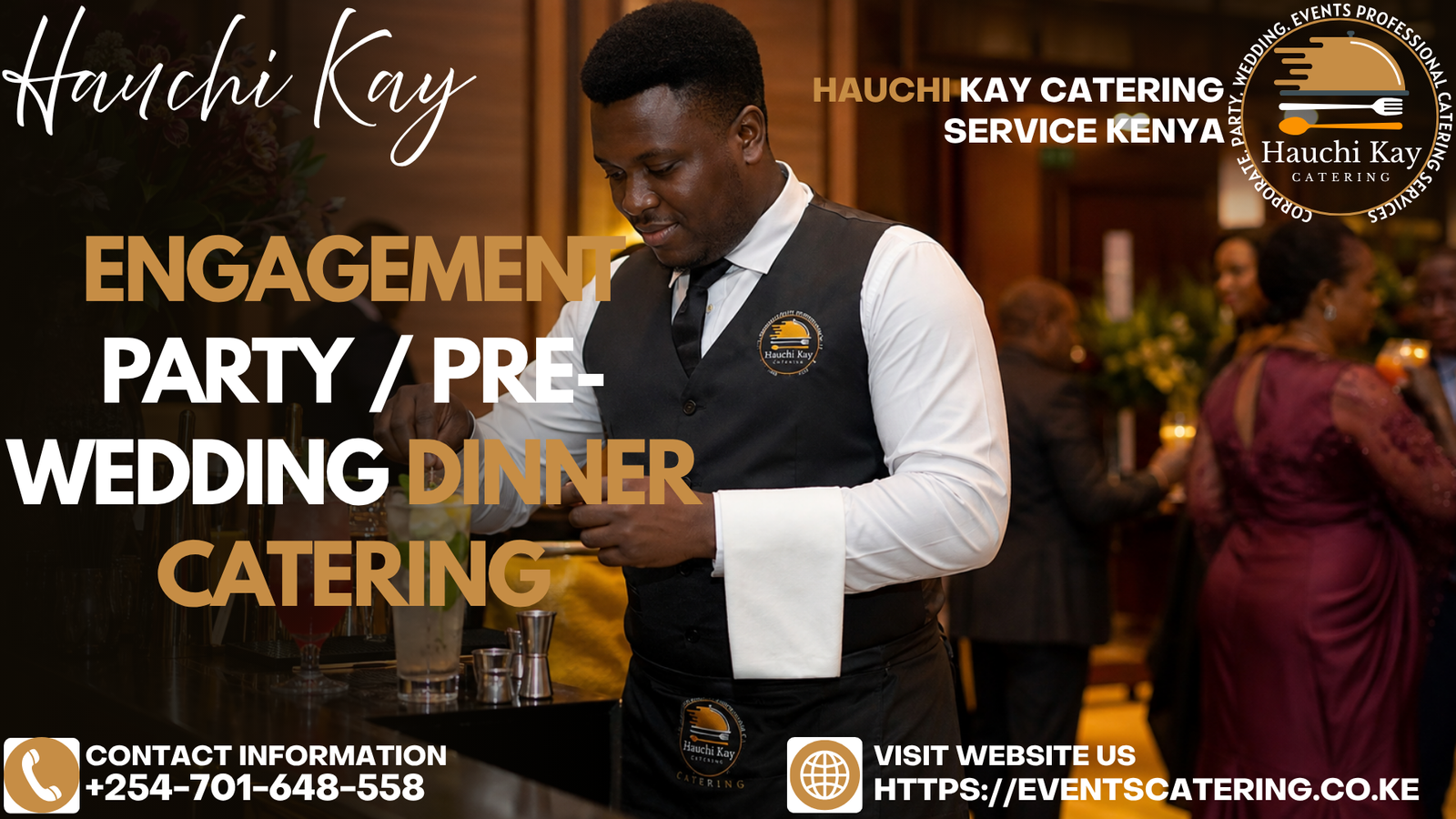
An engagement party or pre-wedding dinner sits between the intimacy of a bridal shower and the formality of the wedding reception itself. It usually brings both families together rather than just the bride’s or groom’s circle, which changes the guest list, the tone, and the style of service the event calls for.

Most engagement dinners run as a single seated meal, welcome drinks or a short cocktail hour, followed by a plated or family-style dinner, toasts, and a dessert course, rather than the multi-stage service a full wedding day needs. With guest counts typically under 100, Hauchi Kay usually recommends plated or family-style service over buffet, since the evening is built around conversation and speeches rather than guests moving through a long programme.

Because this is often the first time both families sit down together as one group, the menu tends to lean formal, a proper starter, a main course with a protein choice, and a plated dessert, opened with a welcome cocktail or mocktail service. Couples planning both an engagement dinner and a later wedding often use this event to test menu directions with Hauchi Kay before finalising the full reception package.

Each of these seven functions needs its own quantities, staffing ratio, and kitchen prep timeline. A caterer who runs the same menu template across all of them, just scaled up or down, is usually the one who runs out of food or serves something lukewarm. Hauchi Kay plans each function on the calendar as its own event, even when several of them belong to the same wedding weekend.

Engagement Party Pre-Wedding Dinner Catering

A Realistic Kenyan Wedding Food Timeline

Couples are often surprised by how many separate food moments a full Kenyan wedding day actually has. Here is how Hauchi Kay typically structures it, using named dishes rather than vague categories so you can see exactly what guests are eating at each stage.

Early morning, bridal party and vendors: Kenyan chai, fresh coffee, mandazi, chapati, boiled eggs, sliced mango and watermelon.

Guest arrival, mid-morning: Fresh passion or tamarind juice, tea and coffee service, beef samosas and vegetable spring rolls.

Main lunch service: Chicken pilau or coconut biryani, grilled goat and beef nyama choma with kachumbari, coconut fish curry for coastal menus, ugali, mukimo, sukuma wiki, managu, coleslaw and a fresh garden salad.

Afternoon high tea, during speeches and cake cutting: Kenyan tea and hibiscus dawa, assorted cakes, mini mandazi, viazi karai and a fruit skewer platter.

Evening reception dinner: Grilled tilapia or beef fillet with roast potatoes, a Kenyan side such as pilau or chapati, dessert bar alongside the wedding cake, and late-night snacks (mini kebabs, chips, sausages) for guests still dancing after 9pm.

Most couples don’t run all five stages. The typical combination is lunch plus afternoon tea plus dinner, which keeps costs sensible while still covering the day properly. Ruracio ceremonies usually skip the evening dinner stage entirely and instead extend the afternoon tea service later into the day if negotiations run long.

A Realistic Kenyan Wedding Food Timeline

What Actually Drives The Cost

Ask five different caterers for a quote and you’ll get five different numbers, often for reasons that have nothing to do with quality. Here’s what genuinely moves the price.

Guest count and overflow allowance. Per-plate costs drop as numbers rise because fixed costs like staffing and equipment spread across more guests, but every reputable caterer builds in a buffer for uninvited arrivals, which Kenyan weddings almost always get.

Service style. Plated service needs roughly one waiter per 10 to 12 guests and takes longer to execute well. Buffet service needs fewer staff but more serving equipment and a wider table footprint. Family-style, less common but growing in popularity, sits between the two.

Distance and access. A wedding in central Nairobi is straightforward. A wedding two hours outside the city, or on the coast, or in a conservancy with no mains electricity, adds transport, generator hire and sometimes accommodation for the catering team into the quote.

Menu complexity. Coconut biryani and grilled tilapia cost more to execute well than ugali and sukuma wiki, not because the ingredients are dramatically more expensive but because they need more skilled labour and tighter timing.

Season. June through December is peak wedding season in Kenya. Venues, staff and suppliers are in higher demand, and pricing reflects that. January to May, excluding the Easter period, tends to be more negotiable.

Number of sittings. A caterer running one meal service has a simpler day than one running breakfast, lunch, tea and dinner. Multi-sitting days cost more, but usually less than hiring separate caterers for each stage.

Hauchi Kay Wedding Catering Packages

Every wedding is different, so the numbers below are planning ranges, not fixed prices. What matters more than the headline figure is what’s actually included at each tier, which is why every package here comes with its menu attached rather than as a separate line item.

Custom Quote Package

Contact us for a tailored quotation based on guest numbers, menu selection, venue, staffing requirements, equipment, logistics, dietary preferences, service style and event duration. This is the right starting point for ruracio ceremonies, traditional community weddings, engagement dinners, multi-day destination weddings, or any wedding function with unusual requirements a standard tier doesn’t cover cleanly.

Premium Package

Positioned for couples who want a well-executed buffet reception without the cost of full plated service.

Menu: Welcome juice and tea on arrival, chicken pilau, grilled beef and goat nyama choma with kachumbari, sukuma wiki, coleslaw, chapati, a dessert table with cake and fresh fruit, soft drinks and water throughout service.

Indicative range: KES 2,800 to KES 3,600 per guest, all-inclusive of staffing, crockery and basic table setup.

Executive Package

Built for a full white wedding reception day with plated main course service and an afternoon tea stage included.

Menu: Canape welcome (samosas, chicken skewers), afternoon high tea with cakes and mandazi during speeches, plated main course of grilled tilapia or beef fillet with roast potatoes and vegetables alongside coconut rice or pilau, dessert bar with the wedding cake, and a late-night snack station of mini kebabs and chips.

Indicative range: KES 4,500 to KES 6,200 per guest, all-inclusive of staffing, crockery, glassware and setup.

Luxury Package

Designed for destination weddings, large traditional ceremonies with multiple sittings, or receptions with a live cooking station and full bar service.

Menu: Full-day service from morning tea through late-night snacks, live grill station with a chef preparing nyama choma and grilled fish to order, coastal-inspired coconut biryani or curry options, dedicated dessert and cake station, mocktail and cocktail bar, and a dedicated event coordinator on site for the full day.

Indicative range: KES 6,500 to KES 9,500 per guest, all-inclusive of staffing, equipment, transport within a standard radius, and on-site coordination.

Pricing Disclaimer: The prices shown are premium market estimates intended for planning purposes only. Final quotations depend on guest numbers, menu complexity, venue, staffing, transport, equipment hire, service style, seasonal ingredient costs and any special client requirements. Contact us for a customised quotation tailored to your event. These figures are not fixed prices.

Buffet, Plated or Family-Style

This is one of the most common questions we get once a couple has a rough headcount.

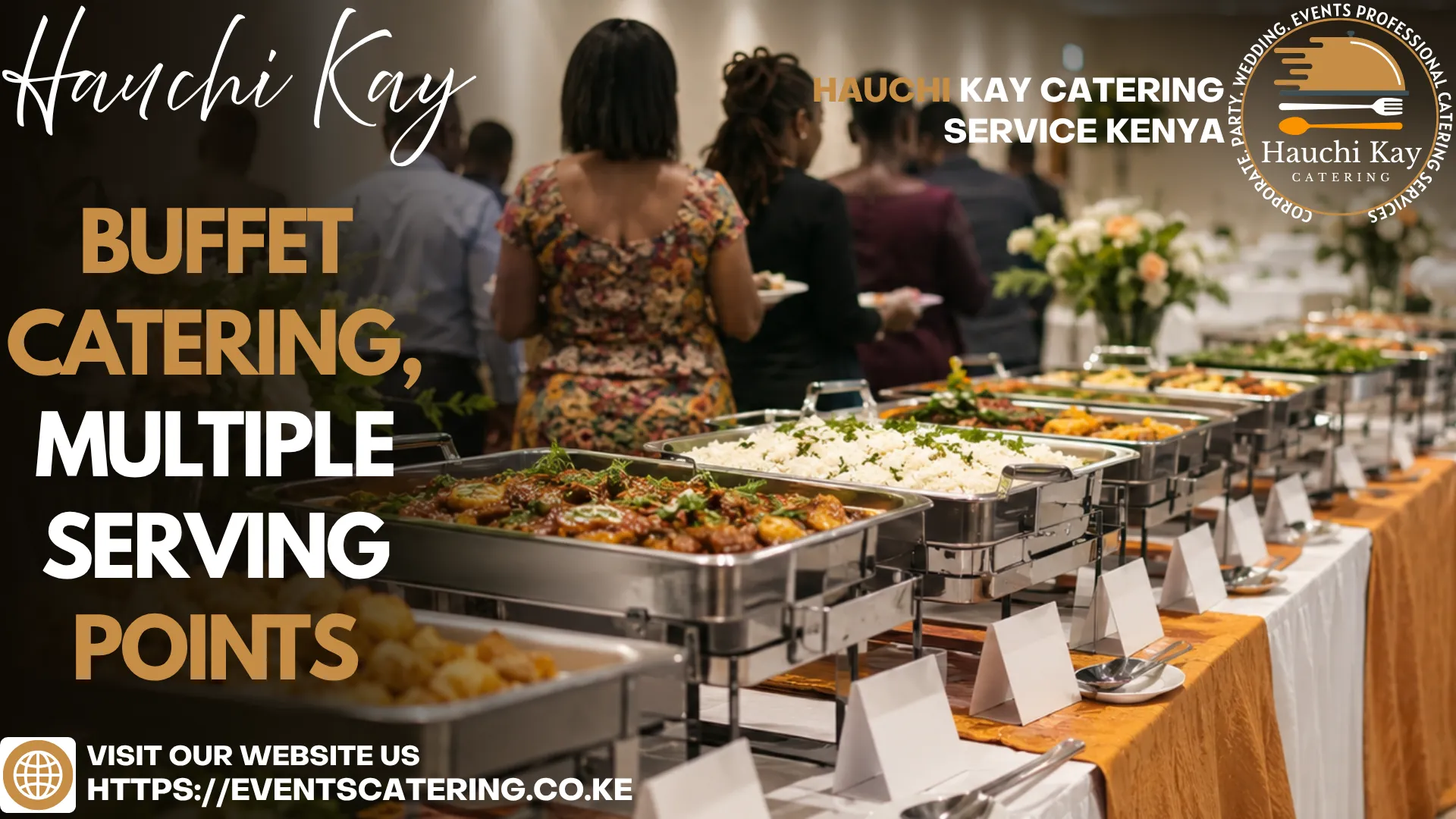
Buffet works best above 200 guests, when budget matters more than formality, and when the venue layout makes plated service logistically difficult. It also gives guests control over portions, which matters for weddings with a wide age range of attendees.

Plated service works best under 250 guests, when the couple wants a formal, timed programme, and when the reception venue has proper indoor seating with enough space between tables for waitstaff to move.

Family-style, food served in large shared platters at each table, works well for smaller, more intimate weddings under 120 guests where the couple wants a warmer, communal feel without full plated formality. It costs more per guest than buffet but less than plated, and it’s becoming a popular middle option for garden and destination weddings.

There’s no universally correct answer here. It depends on guest count, venue, budget and how formal the couple wants the day to feel.

Buffet, Plated or Family-Style

What Happens After You Enquire

Couples often ask what the actual process looks like once they reach out, so here’s the honest version.

First, a short call or WhatsApp exchange to understand your date, venue, rough guest count and which wedding functions you need catered, whether that’s just the reception or the full weekend including traditional ceremonies, ruracio and bridal shower.

Second, a draft menu and package recommendation, usually within two to three working days, built around your budget range rather than a generic template.

Third, a tasting session, typically scheduled two to six weeks before the wedding depending on availability, where you and close family can adjust seasoning, portion sizes and specific dish choices.

Fourth, a final walkthrough about a week out covering exact guest count, dietary requirements, venue access times and staffing schedule.

Fifth, event day execution with a dedicated coordinator on site so the couple’s family isn’t the ones managing the kitchen team during the reception.

This process holds for most bookings, though multi-day destination weddings and large traditional ceremonies with several sittings usually need one additional planning call to lock down logistics.

Frequently Asked Questions

How much notice do I need to give for wedding catering in Kenya?

Three to six months is comfortable for most wedding sizes. Peak season dates, June through December, book out faster, so earlier is safer if your date falls in that window.

Can Hauchi Kay cater a ruracio and the main wedding separately for the same couple?

Yes, and it’s common. Booking both with one caterer usually works out more cost-effective than hiring separate teams, since equipment, staff scheduling and menu planning overlap.

Do you handle dietary restrictions like vegetarian, vegan or halal guests?

Yes. We ask for a rough count of special dietary requirements during the initial planning call so those plates are prepared alongside the main menu rather than as an afterthought.

What happens if more guests show up than we budgeted for?

Every quotation includes a built-in overflow allowance, typically 10 to 15 percent above the confirmed headcount, precisely because Kenyan weddings rarely land exactly on the RSVP number.

Is a tasting session included in the price, or is it extra?

Tasting sessions are included for confirmed bookings above a certain guest threshold. For smaller events, a nominal tasting fee applies and is usually credited back once the contract is signed.

Can you cater a wedding outside Nairobi, like on the coast or in a rural home?

Yes. Destination and rural weddings are quoted with transport, equipment and, where needed, accommodation for the catering team built into the package, which is why these tend to sit at the higher end of our pricing range.

Do you cater engagement parties and pre-wedding dinners as standalone events?

Yes. Many couples book Hauchi Kay for the engagement dinner months ahead of the wedding date, both as a celebration in its own right and as an informal opportunity to sample menu directions before finalising the reception package.

Ready to Talk Through Your Date

If your wedding involves more than one catered event, whether that’s a traditional ceremony and ruracio followed by a white wedding, or a full destination weekend on the coast, Hauchi Kay Events and Catering Services Kenya can plan it as one coordinated food experience instead of a patchwork of separate bookings. Reach out with your date and rough guest count and we’ll put together a menu and package recommendation built around what your families actually need on the day.