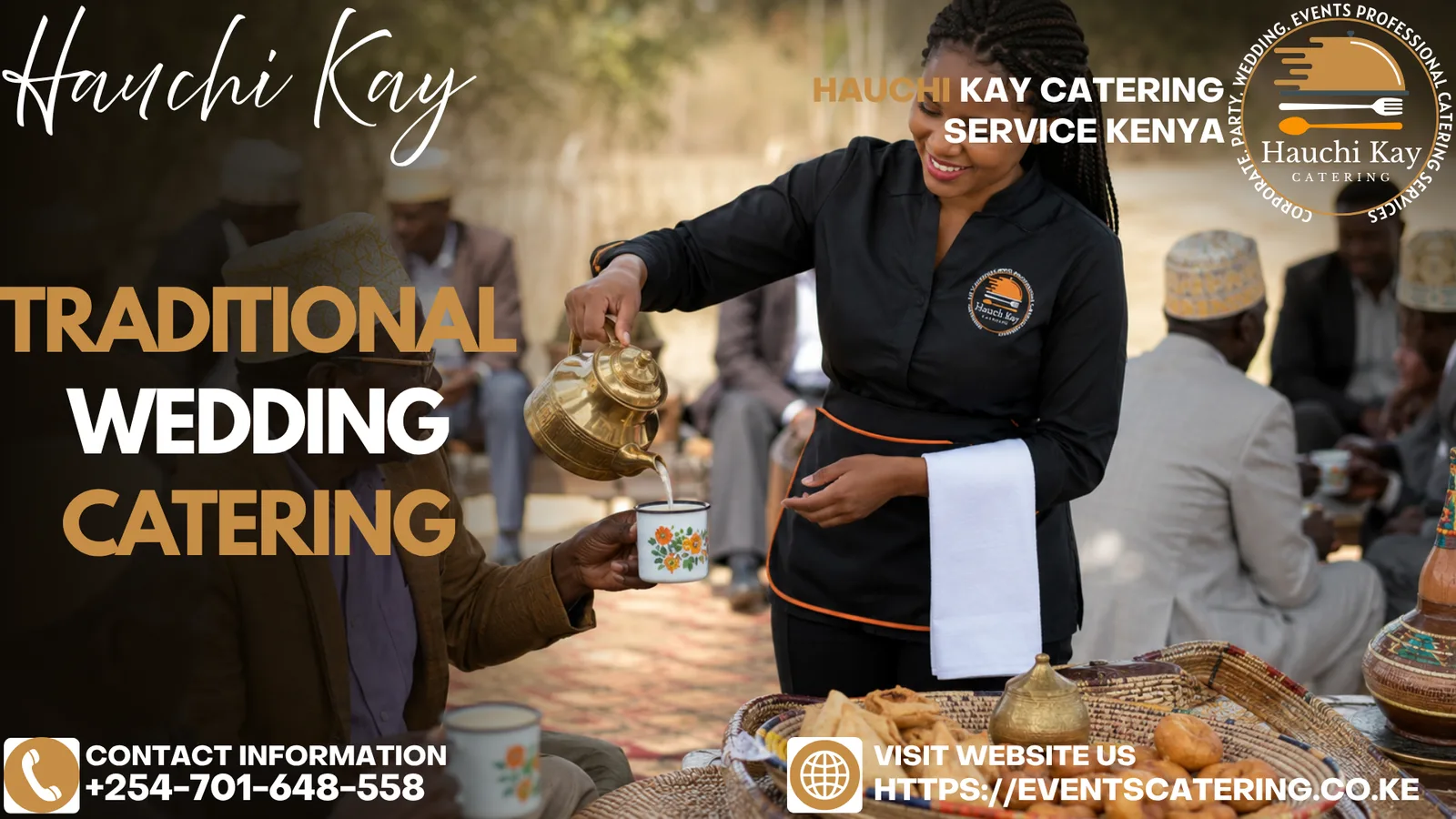
Traditional Wedding Catering

You’ve probably already called three caterers. Each one sent you a glossy PDF with photos of salmon canapés, chocolate fountains, and carved melon centerpieces. You looked at it and thought, this is not what my mother had in mind. You’re planning a traditional Kenyan wedding. You need a team that knows the difference between mukimo and ordinary mashed potatoes. You need someone who understands that the goat cannot arrive pre-cut from a supermarket chiller. You need traditional wedding catering that respects your community, your elders, and the ceremonies that matter.

That’s exactly what Hauchi Kay Events and Catering Services Kenya delivers.

Traditional wedding catering in Kenya isn’t simply about feeding guests. It’s about honoring the cultural protocols that bind two families together. Whether you’re preparing for a Kikuyu ruracio, a Luo ayie, a Kalenjin koito, or a coastal nikkah celebration, the food carries meaning beyond taste. The dishes you serve tell your guests who you are, where you come from, and how seriously you take the union you’re forming.

Most modern catering companies in Nairobi approach every wedding the same way. They bring standard chafing dishes, pre-cooked hotel-style buffets, and waitstaff in generic uniforms. That approach might work for a city hotel reception. It falls apart at a traditional ceremony in Nyeri, Kisumu, or Machakos, where your aunties are watching to see if the chapati is rolled thin enough and your uncles are judging whether the nyama choma was grilled over proper charcoal or rushed through a gas oven.

Hauchi Kay has spent years learning the details that matter. In some communities, the groom’s family must be served first. Certain dishes signal respect, while others would cause quiet offense. Village weddings often feed five hundred people or more, and running out of food before the elders have eaten is not a situation anyone wants to explain to their parents.

When you work with us, you’re not hiring a food vendor. You’re bringing in a partner who understands Kenyan wedding culture from the ground up.

What Traditional Wedding Catering Actually Means in Kenya

In Kenya, traditional wedding catering refers to food service built around the customs, dishes, and protocols of specific ethnic communities and religious traditions. It’s distinct from modern wedding catering, which often borrows heavily from Western or international banquet styles.

A traditional wedding menu centers on the staples your community recognizes as celebratory food. For Kikuyu families, that means mukimo, irio, or githeri served with slow-cooked beef or goat stew. For Luo celebrations, it means fresh fish from Lake Victoria, kuon, and traditional vegetables like osuga or dek. Luhya weddings feature ingokho, the traditional chicken dish that takes hours to prepare properly, alongside ugali and tsaka. Kamba celebrations call for mbuzi choma roasted over open coals, served with kiondo portions of traditional greens.

The service style also differs. Traditional weddings often take place in rural homesteads, church grounds, or community halls rather than hotels. Guests may sit on benches or under tents. Food is sometimes served communally on large platters, or elders receive plated service as a mark of respect. The timing follows the ceremony, not a rigid hotel schedule. If the elders are still negotiating dowry details at two in the afternoon, lunch waits. A caterer who doesn’t understand this flexibility causes stress instead of relieving it.

Hauchi Kay trains its service staff specifically for these environments. Our team knows when to wait, when to serve, and how to read the mood of a traditional ceremony. We bring equipment that works without hotel kitchens. We cook on site when required. We adapt to the pace of your day rather than forcing your day to match our kitchen timer.

The Cultural Ceremonies That Need Specialised Food Service

Kenya’s traditional wedding landscape is rich with distinct ceremonies, and each one creates unique catering demands. Hauchi Kay has served families across these traditions, and we adjust our menus, service style, and staffing to match each occasion.

Ruracio and Itara

The Kikuyu and Embu dowry negotiation ceremony, often called ruracio or itara, is a serious affair. The groom’s family arrives with gifts and negotiates with the bride’s elders. Food here is both hospitality and statement. The bride’s family must demonstrate abundance and generosity. We typically prepare goat stew, beef fry, mukimo, chapati, cabbage, and fresh fruit. The goat is often slaughtered on site to show freshness and respect. Tea flows continuously. Our staff serves elders first and maintains a quiet, respectful presence during negotiations.

Ruracio Itara - Kikuyu Dowry Negotiation

Ayie and Mal

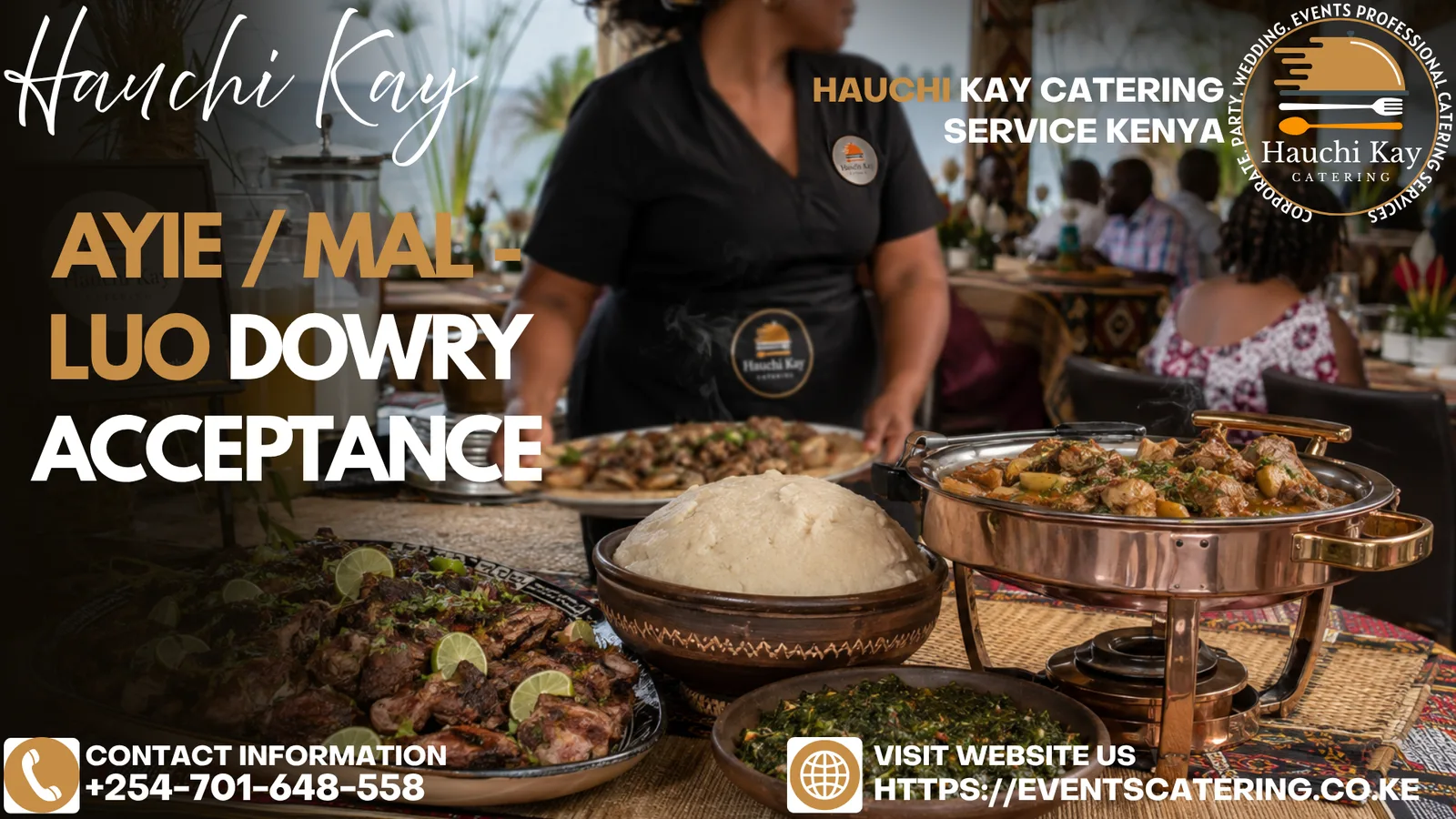
The Luo ayie involves the groom’s family visiting the bride’s home to formally ask for her hand. Food plays a central role in the acceptance ritual. Fresh tilapia or Nile perch, often brought alive and prepared on site, is essential. We serve kuon, traditional greens, and sometimes chicken stew alongside the fish. The portions must be generous. Luo weddings are known for their hospitality, and guests expect to eat well. Running out of fish before everyone has been served would be deeply embarrassing.

Ayie Mal - Luo Dowry Acceptance

Koito

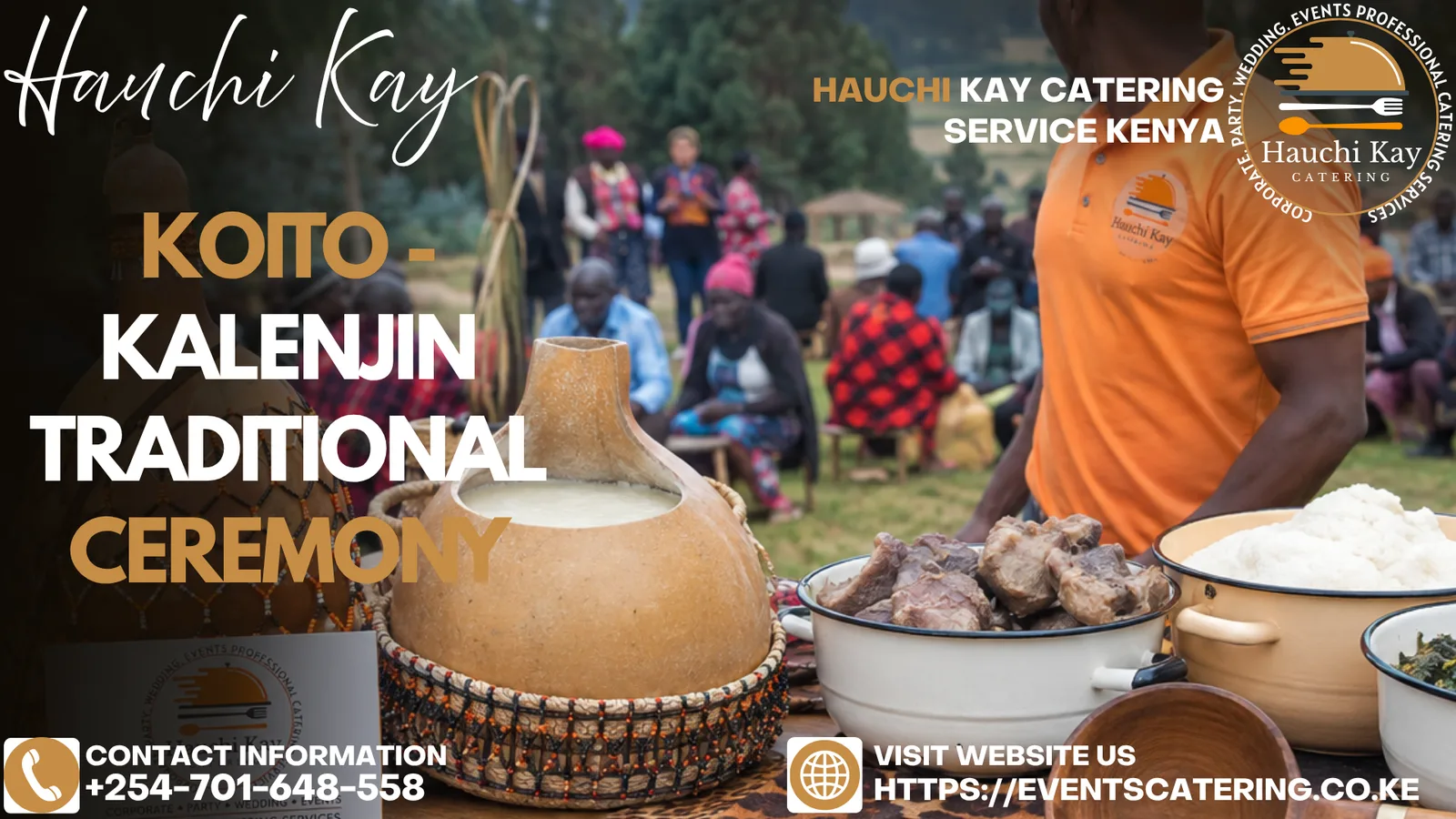
Kalenjin traditional ceremonies emphasize communal eating and specific traditional foods. We prepare mursik, the traditional fermented milk, alongside boiled meat, ugali, and traditional vegetables like sochot or chepkarta. The meat is typically boiled rather than fried, following custom. Our team understands the seating arrangements that separate age sets and the protocol around serving mursik from traditional gourds or modern hygienic equivalents.

Koito - Kalenjin Traditional Ceremony

Kuhiniga and Ekerero

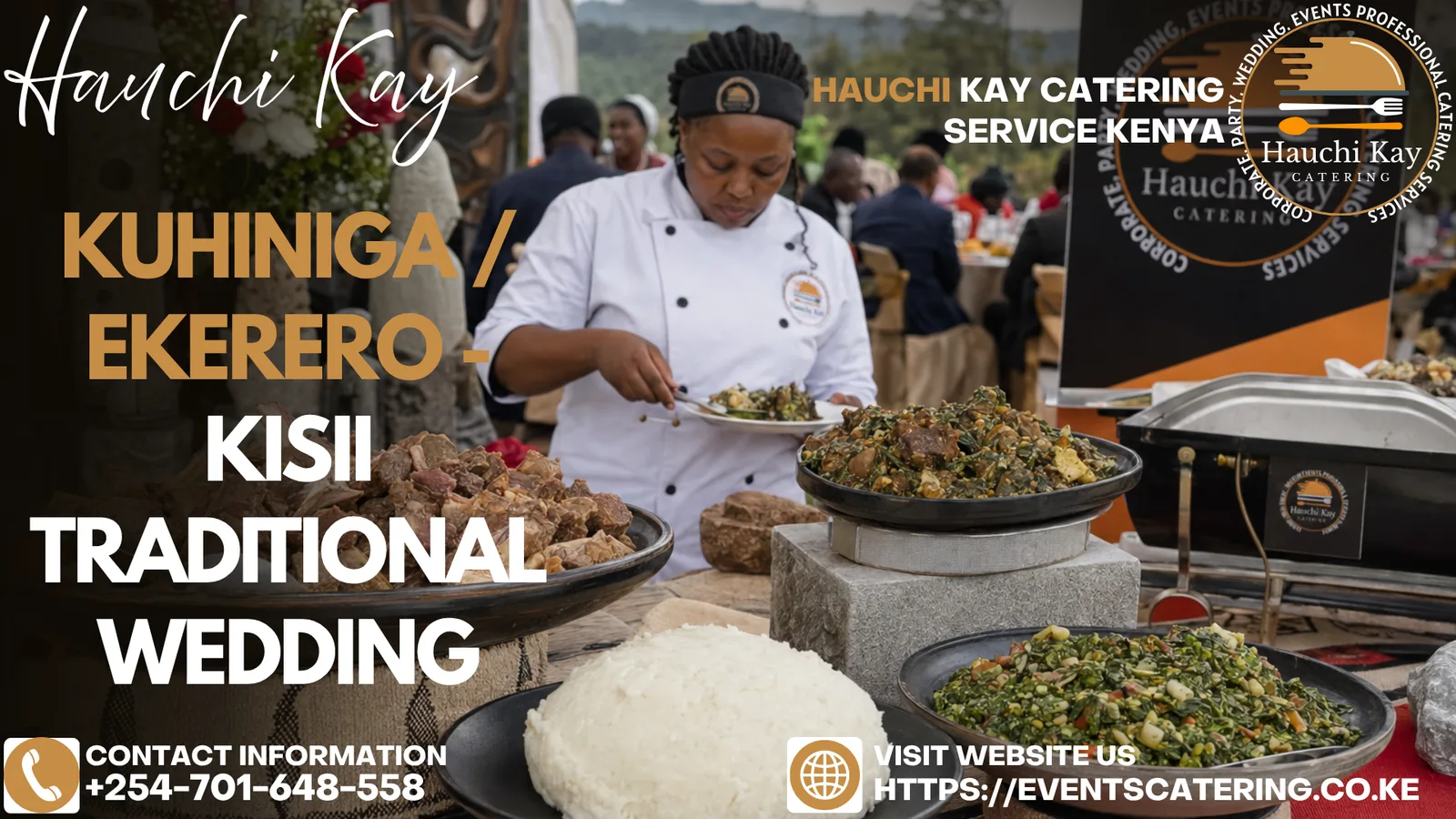
Kisii traditional weddings feature eshishe, traditional vegetables, and often chicken prepared in specific ways. We’ve served large Kisii gatherings where the menu centers on boiled meat, ugali, and a variety of greens. The portions are substantial, and the food must be ready when the clan elders give the signal.

Kuhiniga Ekerero - Kisii Traditional Wedding

Coastal Muslim Nikkah and Walima

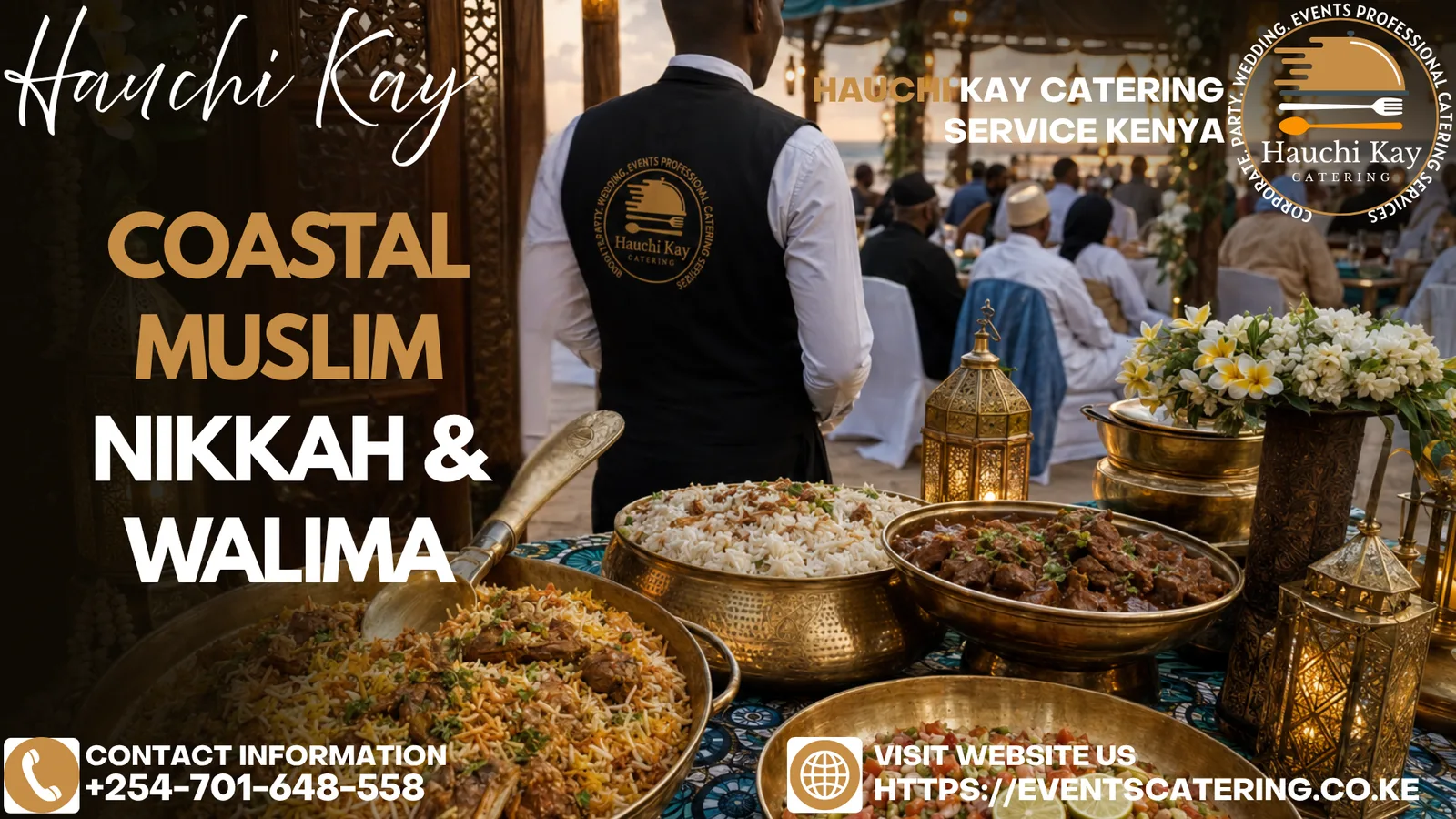
Coastal traditional weddings demand halal compliance, specific spice profiles, and dishes like biryani, pilau, samaki wa kupaka, and coconut bean stew. We source halal-certified meat, prepare coconut rice, and serve tropical fruit platters. Our staff understands gender-segregated service requirements and the importance of timing around prayer schedules.

Coastal Muslim Nikkah & Walima

Community-Specific Traditional Menus Hauchi Kay Prepares

Every Kenyan community has dishes that define celebration. We don’t offer one generic traditional menu and hope it passes. We build specific menus for specific communities, using recipes and techniques that satisfy the elders who remember how things ought to taste.

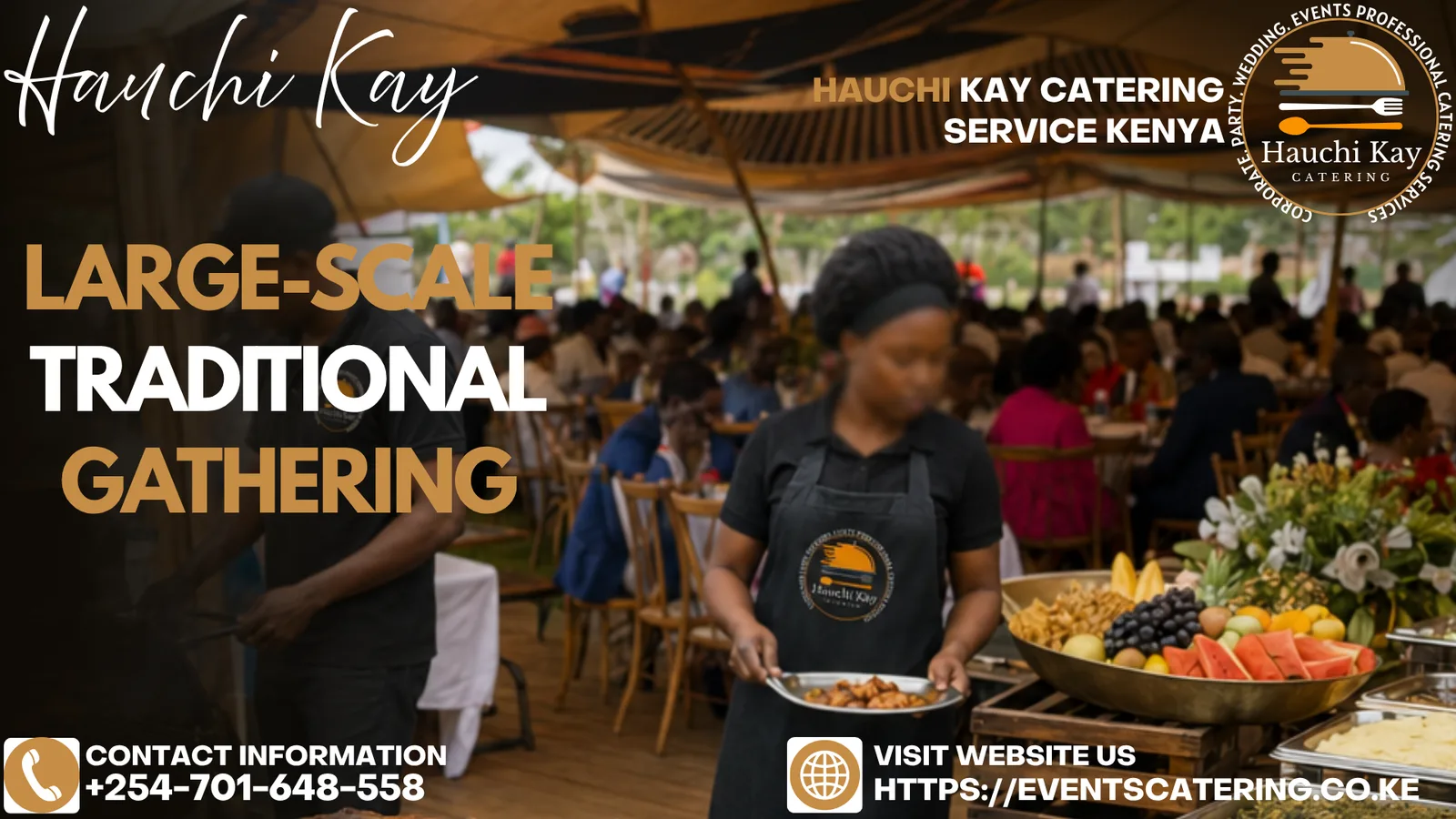
Large-Scale Traditional Gathering

Kikuyu Traditional Wedding Menu

Our Kikuyu menu starts with Kenyan tea and mahamri for the morning gathering. The main meal features mukimo made with proper green vegetables and dried corn, not shortcut versions. Beef stew slow-cooked with carrots and potatoes in a rich gravy takes center stage, alongside irio, chapati, sukuma wiki, and cabbage. Meat lovers enjoy goat fry or beef fry. Dessert brings fresh fruit salad and mandazi. This is the food Kikuyu guests recognize as home cooking, not hotel approximation.

Luo Traditional Wedding Menu

Luo celebrations demand fresh fish. Hauchi Kay sources tilapia or Nile perch and prepares it either grilled or in mild coconut sauce depending on the family’s preference. The kuon is prepared to the right consistency, firm enough to hold its shape when dipped. Traditional greens like osuga and dek appear boiled with minimal seasoning to let the natural flavor come through. Chicken stew, beef stew, and chapati round out the meal. Morning tea includes fresh juice and sweet potatoes.

Luhya Traditional Wedding Menu

The Luhya community takes ingokho seriously, and so do we. Our traditional chicken is cut and prepared using methods that respect the occasion. It arrives at the table with ugali, tsaka, and traditional vegetables like mrenda or murere. Beef stew and chapati accompany the chicken. Larger weddings also include goat stew. The meal is hearty, filling, and unmistakably Luhya in character.

Kamba Traditional Wedding Menu

Kamba weddings celebrate with mbuzi choma, slow-roasted goat over charcoal with the right balance of smoke and tenderness. Kachumbari, chapati, and traditional vegetables like kisusio or mixed greens complete the plate. Beef stew and chicken curry provide alternatives for guests who prefer variety. The morning session features Kenyan tea, mandazi, and seasonal fruits.

Coastal Swahili Traditional Wedding Menu

Our coastal menu features biryani with tender goat or chicken, coconut rice, samaki wa kupaka, and coconut bean stew. Kachumbari gets a coastal twist with lime and chili. Chapati, mixed vegetable curry, and fresh tropical fruit platters complete the spread. All meat is halal certified, and our preparation respects the spice traditions of Mombasa, Malindi, and Lamu.

How We Cook Traditional Wedding Food the Right Way

The difference between adequate traditional wedding catering and exceptional traditional wedding catering often comes down to cooking methods. Hauchi Kay invests in equipment and techniques that honor the food rather than rushing it.

Open Fire and Charcoal Grilling

For nyama choma and mbuzi choma, we bring portable charcoal grills and experienced grill masters. Gas grilling changes the flavor. Your guests can taste the difference, especially the elders who’ve eaten traditional meat for decades. We source quality hardwood charcoal that burns clean and hot.

On-Site Slaughter and Preparation

For communities that require it, we arrange on-site goat or chicken preparation. This isn’t about spectacle. It’s about freshness, cultural protocol, and the assurance your guests have that the meat was handled properly from start to finish. Our butchers work hygienically and respectfully, away from guest areas but within view of family elders who may wish to witness the process.

Traditional Vessels and Techniques

Where appropriate, we use large communal cooking pots rather than hotel-style steam trays. Some dishes, like certain stews and boiled meats, develop better flavor when cooked in traditional sufuria over low heat for extended periods. We bring heavy-duty gas burners and charcoal stoves that replicate the home kitchen environment at scale.

Fresh Preparation Timing

Traditional wedding food doesn’t hold well under heat lamps for hours. We time our cooking so that rice is fluffed just before service, chapati is rolled and cooked in batches throughout the meal, and stews reach their peak flavor when the first guest is served. This requires experienced kitchen managers who can read the pace of a traditional ceremony and adjust accordingly.

Ingredient Sourcing

We buy vegetables from local markets near your venue when possible. We select produce that looks and tastes like what your mother buys, not the polished but flavorless imports found in some supermarket chains. Our maize flour for ugali comes from trusted Kenyan millers. Our cooking oil is standard Kenyan brands your guests recognize.

Planning Food Quantities for Large Traditional Gatherings

Traditional Kenyan weddings often involve larger guest counts than city hotel receptions. It’s common to feed three hundred, five hundred, or even a thousand people, especially in rural areas where the entire community expects to attend. Getting quantities wrong isn’t a minor inconvenience. It’s a serious social misstep.

Hauchi Kay uses a practical framework to help families plan accurately.

Start with the Core List

Write down the definite guests: both families, close relatives, the bridal party, and essential community members. Then add the probable attendees: neighbors, church members, work colleagues, and friends. Finally, factor in the unannounced guests who’ll arrive with relatives or walk in from the surrounding area. In many Kenyan communities, turning away someone who’s traveled to celebrate your wedding is simply not done.

Plan for Seconds

Traditional wedding portions are generous. Guests expect to eat their fill, and many will return for a second round. We typically calculate portions at one and a half to two times what a hotel would serve for the same headcount. A hotel might plan two chapati per person. For a traditional wedding in Nyeri or Bungoma, we plan three or four.

Build in Buffer Stock

We prepare an additional fifteen to twenty percent buffer above the calculated requirement. This covers unexpected guests, larger appetites, and the possibility that the ceremony runs longer than planned. The buffer isn’t waste. It’s insurance against the one thing no family wants: an empty serving dish while guests are still seated.

Stagger the Service

For very large numbers, we often serve in waves rather than attempting one massive buffet line. Elders and VIPs receive plated or priority service. General guests eat in organized groups. This approach keeps food hot, reduces chaos, and ensures everyone receives proper attention.

Leftover Protocol

We discuss leftover handling with the family beforehand. In many communities, leftover food is distributed to neighbors or taken home by close family. We provide proper packaging and coordinate this respectfully so nothing goes to waste.

Our Traditional Wedding Catering Packages

Hauchi Kay offers four distinct approaches to traditional wedding catering. Each package is built around real Kenyan dishes, not vague categories, and priced at the premium end of the market to reflect the quality, cultural knowledge, and logistical complexity involved.

Package One: Custom Quotation

Some traditional weddings don’t fit standard packages. You might be hosting twelve hundred guests in a rural setting without electricity. You might need three days of continuous service for a complex series of ceremonies. You might require on-site slaughter, special religious compliance, or transport to a remote location. For these situations, contact us directly. We’ll visit your venue, understand your cultural requirements, and build a tailored quotation based on guest numbers, menu selection, venue conditions, staffing needs, equipment, logistics, dietary preferences, service style, and event duration.

Package Two: Premium Traditional Wedding Catering

Indicative investment: KES 3,500 to KES 4,800 per guest

This package suits traditional weddings of one hundred to two hundred and fifty guests. The menu includes Kenyan tea and mahamri for the morning session. For lunch, guests enjoy beef stew, chicken curry, chapati, mukimo, steamed rice, sukuma wiki, cabbage, coleslaw, and fresh fruit salad. We provide standard service staff, chafing dishes, and basic tenting for the kitchen area. This is our most popular choice for families who want authentic traditional food without excessive complexity.

Package Three: Executive Traditional Wedding Catering

Indicative investment: KES 5,200 to KES 7,000 per guest

Designed for two hundred to four hundred guests, this package adds live cooking stations and expanded menu options. The morning session features Kenyan tea, fresh juice, mandazi, and sweet potatoes. For the main meal, we serve goat stew, grilled chicken, fried fish or tilapia, chapati, ugali, coconut rice, mixed vegetables, managu, terere, kachumbari, green salad, and a dessert table with cake and fruit tarts. We include senior service staff, a dedicated event coordinator, generator power, and enhanced kitchen tenting. Families choosing this package often have multiple ceremony components and require flexible timing.

Package Four: Luxury Traditional Wedding Catering

Indicative investment: KES 8,000 to KES 12,000 per guest

Our luxury package is for families who want the entire experience managed flawlessly. This covers three hundred to one thousand plus guests with multiple live stations and on-site preparation.

The morning session includes Kenyan tea, fresh coffee, mahamri, pancakes, eggs, sausages, and seasonal fruits.

For the main meal, we offer whole roasted goat, beef fry, chicken curry, grilled fish, pilau, chapati, ugali, mukimo, mashed potatoes, sukuma wiki, spinach, mixed vegetables, cabbage, coleslaw, green salad, pasta salad, and a full dessert table with cake, pudding, ice cream, and fresh fruit.

Evening tea includes sandwiches, cakes, samosas, and fruit.

We also provide full bar service with traditional and modern beverages, late-night comfort food, complete outdoor kitchen construction, full generator setup, weather contingency equipment, and a full coordination team. Every detail is managed, from elder service protocol to leftover distribution.

Pricing Disclaimer

The prices shown are premium market estimates intended for planning purposes only. Final quotations depend on guest numbers, menu complexity, venue, staffing, transport, equipment hire, service style, seasonal ingredient costs, and any special client requirements. Contact us for a customised quotation tailored to your event.

Considering a Modern Reception as Well?

If your wedding celebration includes both a traditional ceremony and a modern reception, you’ll find broader menu inspiration on our main wedding catering page. We cover garden weddings, hotel receptions, and blended celebrations that combine cultural traditions with contemporary service styles. Visit our wedding catering in Kenya page for a complete overview of how Hauchi Kay handles every type of wedding celebration.

Frequently Asked Questions

What Makes Traditional Wedding Catering Different from Standard Wedding Catering?

Standard wedding catering typically follows a hotel buffet model with international dishes and rigid timing. Traditional wedding catering respects community protocols, serves culturally specific dishes, and adapts to the pace and structure of ceremonies like ruracio, ayie, or koito. The food, service style, and timing all reflect Kenyan cultural expectations rather than Western banquet norms.

Can Hauchi Kay Handle On-Site Goat Slaughter for My Traditional Ceremony?

Yes. We arrange hygienic on-site preparation for communities where this is expected. Our butchers work respectfully and maintain full food safety compliance. We coordinate the timing with your family elders so the process aligns with ceremony requirements and guest arrival patterns.

How Far in Advance Should I Book Traditional Wedding Catering?

We recommend booking at least six to nine months ahead, especially for rural venues and peak wedding seasons. Traditional weddings often require special ingredient sourcing, advance venue visits, and coordination with community leaders. Early booking gives us time to understand your specific cultural requirements and plan logistics properly.

Do You Offer Halal Traditional Wedding Catering for Muslim Celebrations?

Absolutely. We provide fully halal-compliant menus for coastal and Muslim traditional weddings. All meat comes from certified halal suppliers. We prepare dishes like biryani, pilau, samaki wa kupaka, and coconut bean stew using traditional coastal spice profiles. Our staff also understands gender-segregated service and prayer schedule coordination.

How Do You Manage Food for Very Large Traditional Weddings with Five Hundred or More Guests?

We use a wave service system rather than one massive buffet line. Elders and VIPs receive priority service. General guests eat in organized groups. We prepare substantial buffer stock above the calculated headcount, and we station kitchen managers on site to monitor consumption and adjust portion flow in real time. Running out of food is not something we allow to happen.

What Areas of Kenya Do You Serve for Traditional Weddings?

Hauchi Kay serves traditional weddings across Nairobi, Kiambu, Machakos, Kajiado, Nakuru, Naivasha, Nyeri, Murang’a, Kirinyaga, Embu, Meru, Kisumu, Kakamega, Bungoma, Vihiga, Busia, Mombasa, Kwale, Kilifi, and surrounding areas. Remote rural venues require advance logistics planning, and we’re experienced in building temporary outdoor kitchens in locations without existing catering infrastructure.