+254-701-648-558 | support@eventscatering.co.ke
Executive Meeting Catering
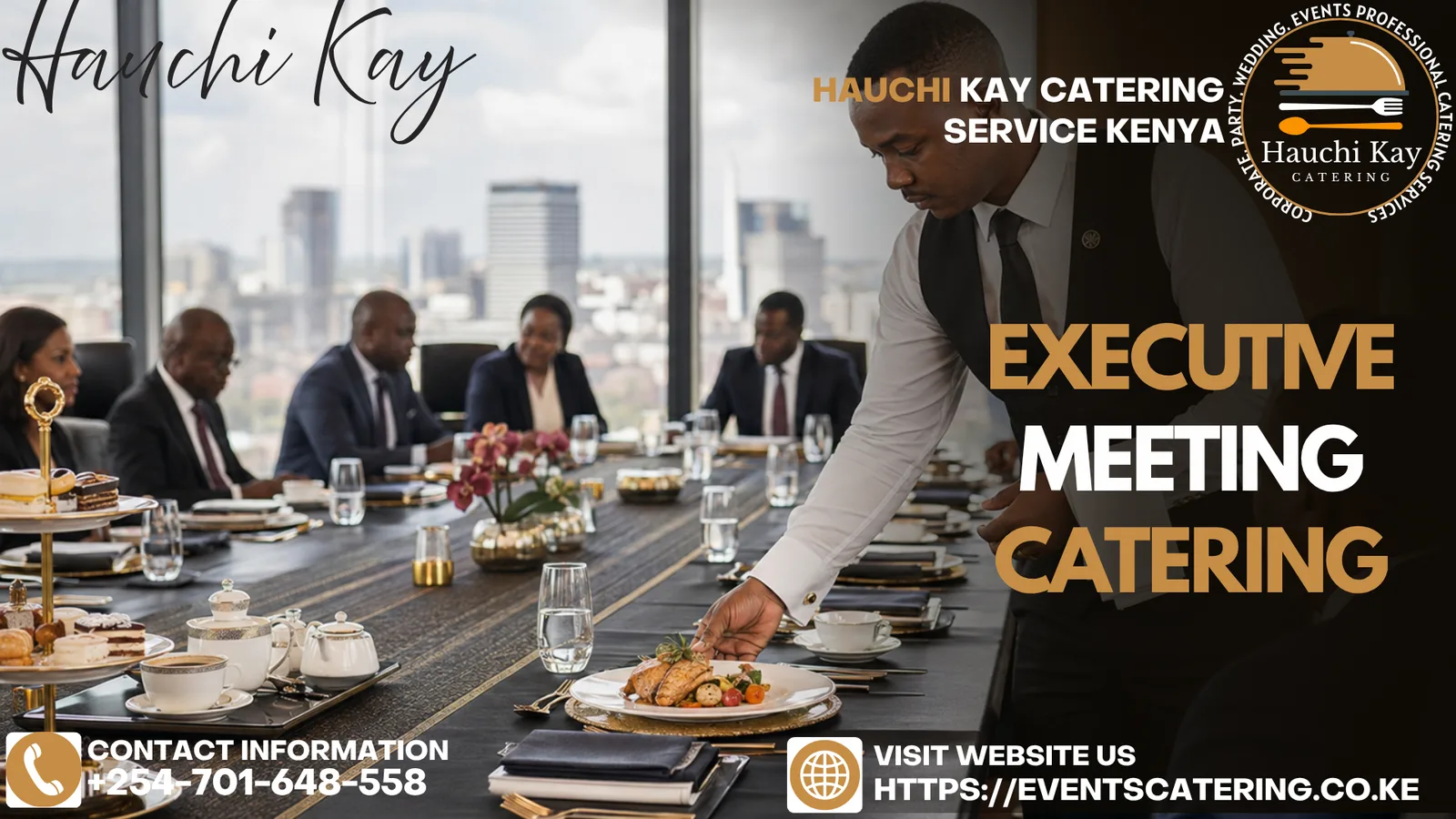
Executive meeting catering is the food and beverage service built specifically around board meetings, executive committee sessions, investor briefings, and other high-level business discussions where discretion, timing, and presentation matter more than volume or variety. It differs from a standard office lunch in almost every respect: smaller guest counts, quieter service, finer presentation, and a menu designed to support concentration rather than fill a room. For a Nairobi business preparing for a board meeting, an audit committee session, or a shareholder briefing, getting this right is less about the food itself and more about protecting the tone of the meeting.
Quick answer: Executive meeting catering typically covers tea and coffee service, finger platters, or a full plated lunch, delivered quietly around an active discussion, with pricing in Nairobi ranging from roughly KES 1,200 per person for a premium tea service to KES 8,500 per person for an all-day boardroom package. The right format depends on meeting length, guest seniority, and how much the room needs to stay uninterrupted.
What Executive Meeting Catering Actually Means
Ask ten Nairobi office managers what “executive catering” means and you will get ten slightly different answers. Some picture a tray of samosas dropped off at the boardroom door. Others picture a full plated lunch with a dedicated server standing quietly by the sideboard. Both can be correct, depending on the meeting.
What separates executive meeting catering from ordinary office catering is the operating context. A board meeting or executive committee session is not a social event. People are reviewing financial statements, negotiating terms, or making decisions that carry legal and financial weight. Catering that clatters trays, interrupts a presentation, or requires guests to queue at a buffet line works against the meeting rather than supporting it.
Hauchi Kay treats this category as its own discipline, separate from the volume-driven world of office lunches or conference catering. Portions are smaller and more considered. Service is minimal and quiet. Presentation leans toward fine china, proper table settings, and a single trained server rather than a full catering team moving through the room.
Types of Executive Meetings and What Each One Actually Needs
Not every “executive meeting” carries the same catering brief. The format that suits a two-hour audit committee review is wrong for a half-day board strategy session, and both differ from a quiet one-on-one investor conversation.
Board meetings. Formal, agenda-driven, often quarterly or monthly, with anywhere from five to fifteen directors. These typically need a discreet tea and coffee service at the start, followed by a light lunch if the meeting runs past midday. Timing is fixed and non-negotiable; a board rarely waits for food.
Executive committee (Exco) meetings. Smaller groups of senior managers meeting more frequently, sometimes weekly. Because these happen often, businesses tend to favour a simpler, repeatable format: a premium tea and coffee station with light pastries, kept consistent so it never becomes a distraction or a recurring cost surprise.

Investor and shareholder briefings. Higher stakes, often involving external guests who are forming an impression of the business. Presentation matters more here than in an internal Exco meeting, which usually justifies a finger platter or a short plated course rather than a basic tea service.
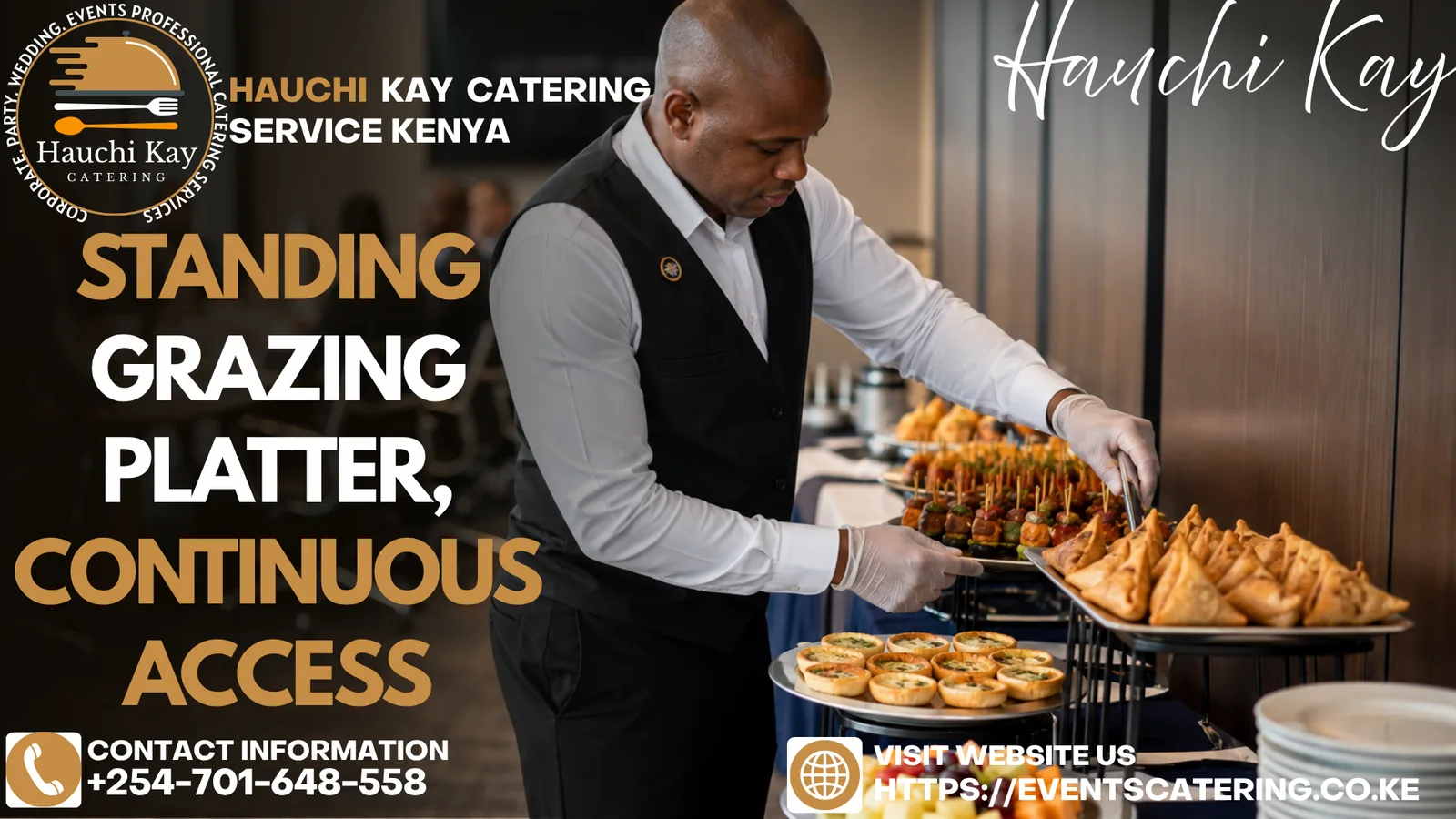
Due diligence and negotiation sessions. These can run for several hours, sometimes across a full day, with legal or financial advisors present. Food needs to be available without pulling focus, which typically means a standing platter guests can access between sessions rather than a seated service that forces a pause.

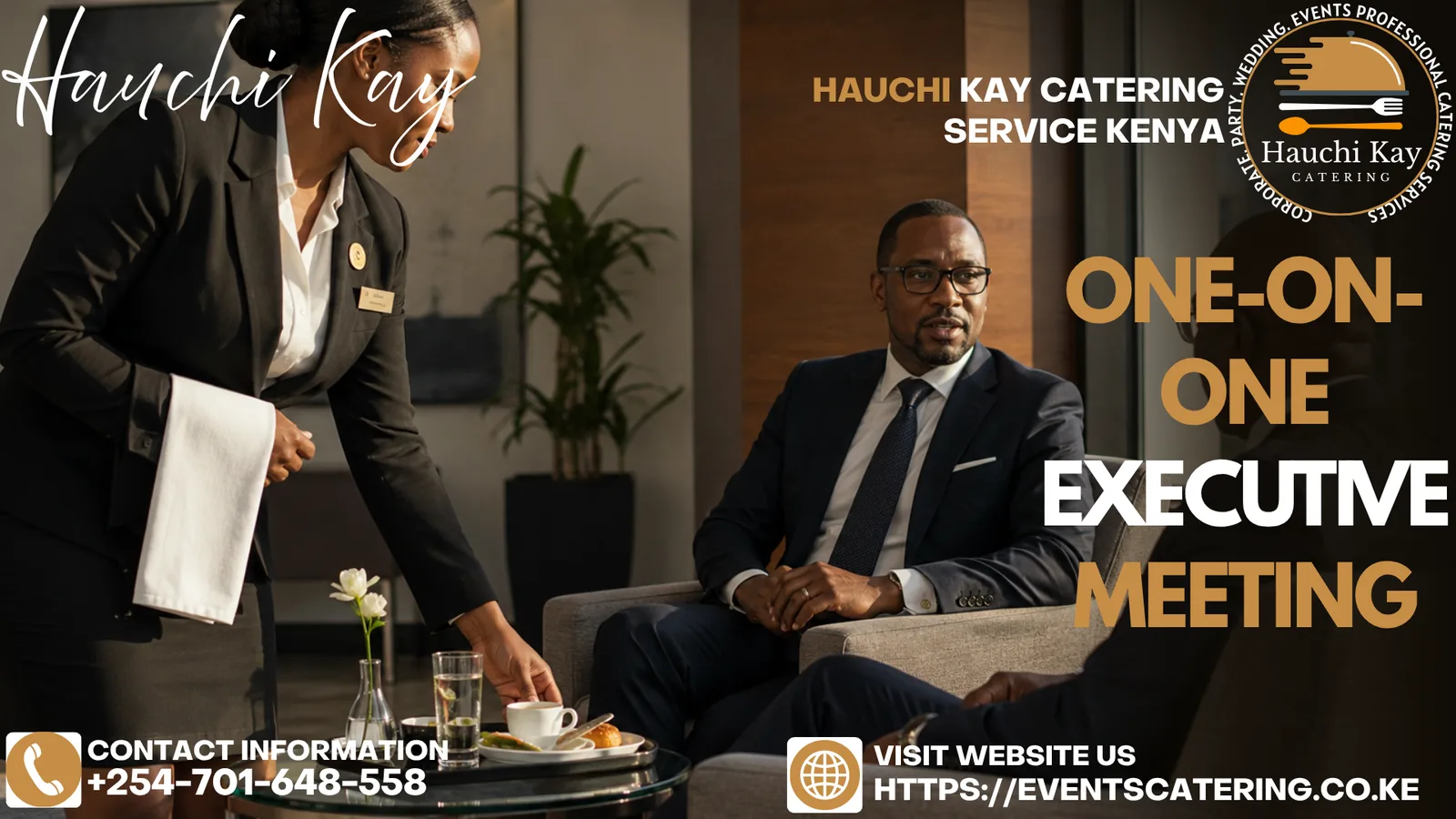
One-on-one or small executive meetings. A CEO meeting a major client, or two senior partners discussing a deal. Here, a light, high-quality offering, good coffee, a small pastry, perhaps sparkling water, says more than a large spread ever could.

Each of these calls for a different balance of formality, quantity, and service style, which is why a single fixed “executive meeting menu” rarely works well across all of them.
Choosing the Right Service Format
Rather than guessing, most Nairobi businesses can work through three questions to land on the right catering format for a given meeting.
How long is the meeting? Anything under 90 minutes rarely needs more than tea, coffee, and a light platter. A half-day or full-day session needs a proper lunch, and possibly a mid-morning and mid-afternoon tea break as well.
Who is in the room? Internal-only Exco meetings can run leaner. Meetings with external directors, investors, auditors, or regulators generally warrant a more polished presentation, since food quality is quietly read as a signal of how seriously the business treats its guests.
Can the meeting pause for service, or must it run continuously? Negotiations and due diligence sessions often cannot stop. A standing platter or grazing station that people can approach without disrupting the discussion works better than a seated course that forces a break.
| Meeting Scenario | Recommended Format | Why It Fits |
| Short board meeting (under 2 hours) | Premium tea and coffee service | Minimal disruption, no pause required |
| Half-day board or Exco session | Finger platter plus tea service | Keeps energy up without a formal break |
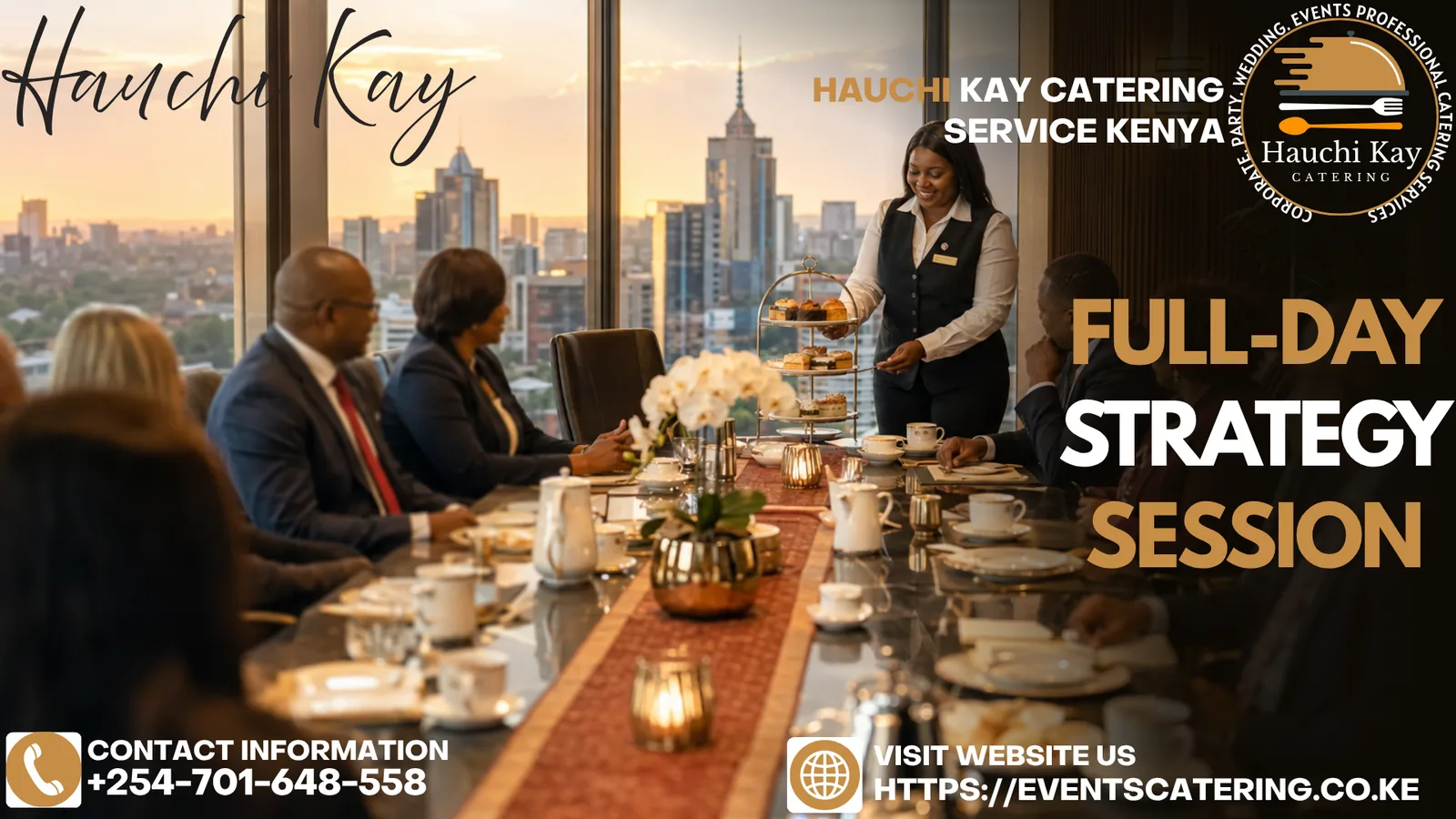
| Full-day board strategy meeting | All-day boardroom package | Covers breakfast, lunch, and two tea breaks |
| Investor or shareholder briefing | Plated lunch, discreet waitstaff | Presentation signals seriousness to external guests |
| Due diligence or negotiation session | Standing platter, continuous access | No pause required, guests self-serve |
| One-on-one executive meeting | Premium coffee and light pastry | Personal, understated, no service disruption |
Discretion and Etiquette Rules That Separate This From Ordinary Lunch
Executive meeting catering succeeds when nobody in the room really notices it happening. That sounds simple, but it takes a specific set of habits.
Service staff need to move quietly and know when to stay out of the room entirely. A server refilling water glasses mid-sentence during a sensitive discussion is a service failure, even if the coffee itself was perfect. The best boardroom staff read the room from the doorway before entering.
Confidentiality matters more here than in almost any other catering category. Board packs, financial figures, and merger discussions are often left open on the table. Staff working these events should be briefed on discretion the same way office cleaning staff might be, and should never linger near documents or screens.
Noise control is easy to overlook until it becomes a problem. Chafing dish lids, cutlery on china, and trolley wheels all carry further than people expect in a quiet boardroom. Setting up before guests arrive, and clearing away during a scheduled break rather than mid-session, avoids most of this.
Timing precision is non-negotiable. A tea service that arrives five minutes into a board meeting has already missed its window. Executive clients notice punctuality more than menu creativity, and it is usually the first thing a new caterer gets tested on.
A short checklist worth keeping on file for recurring board meetings:
- Confirm arrival time at least 20 minutes before the meeting start, not the scheduled start itself
- Brief serving staff on confidentiality before every booking, not just the first one
- Set a fixed re-entry window for clearing plates, agreed with the board secretary
- Keep menu changes minor and predictable for recurring meetings, since surprises are rarely welcome mid-agenda
- Confirm dietary requirements at least 48 hours ahead, since asking on the day disrupts the room
What a Realistic Executive Meeting Menu Looks Like in Nairobi
Menus for this category should look noticeably different from a standard office lunch spread, both in portion size and in tone.
Premium tea and coffee service. Kenyan tea, specialty coffee brewed fresh rather than from a flask, imported tea options for guests who prefer them, and a small selection of petit fours or shortbread. No sugary pastries piled high; the goal is refinement, not volume.

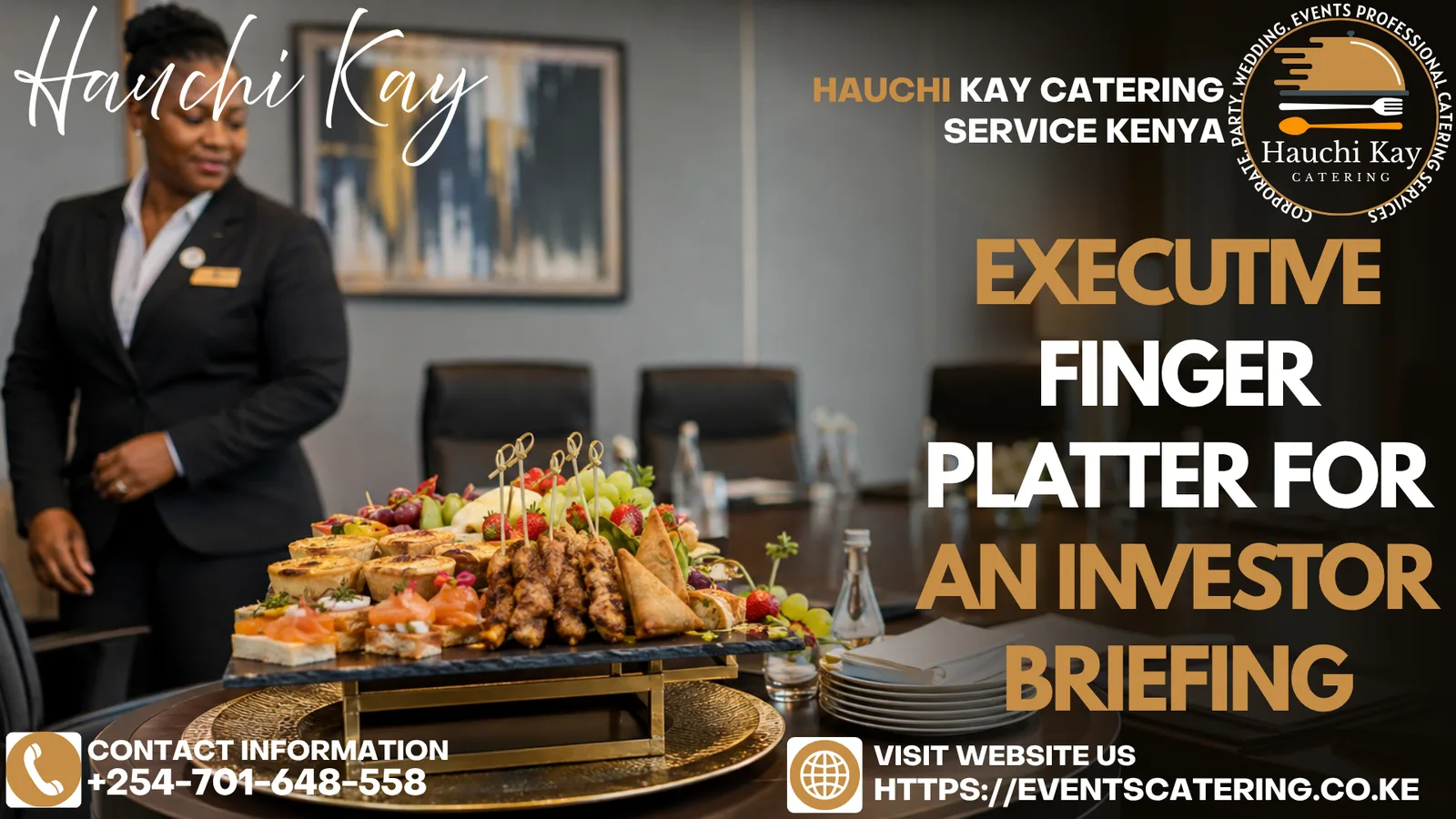
Executive finger platter. A curated selection rather than a large buffet: mini quiches, smoked salmon bites, chicken skewers, vegetable samosas, and a fruit platter. Portions are designed to be eaten standing or seated without cutlery, so guests can keep talking.

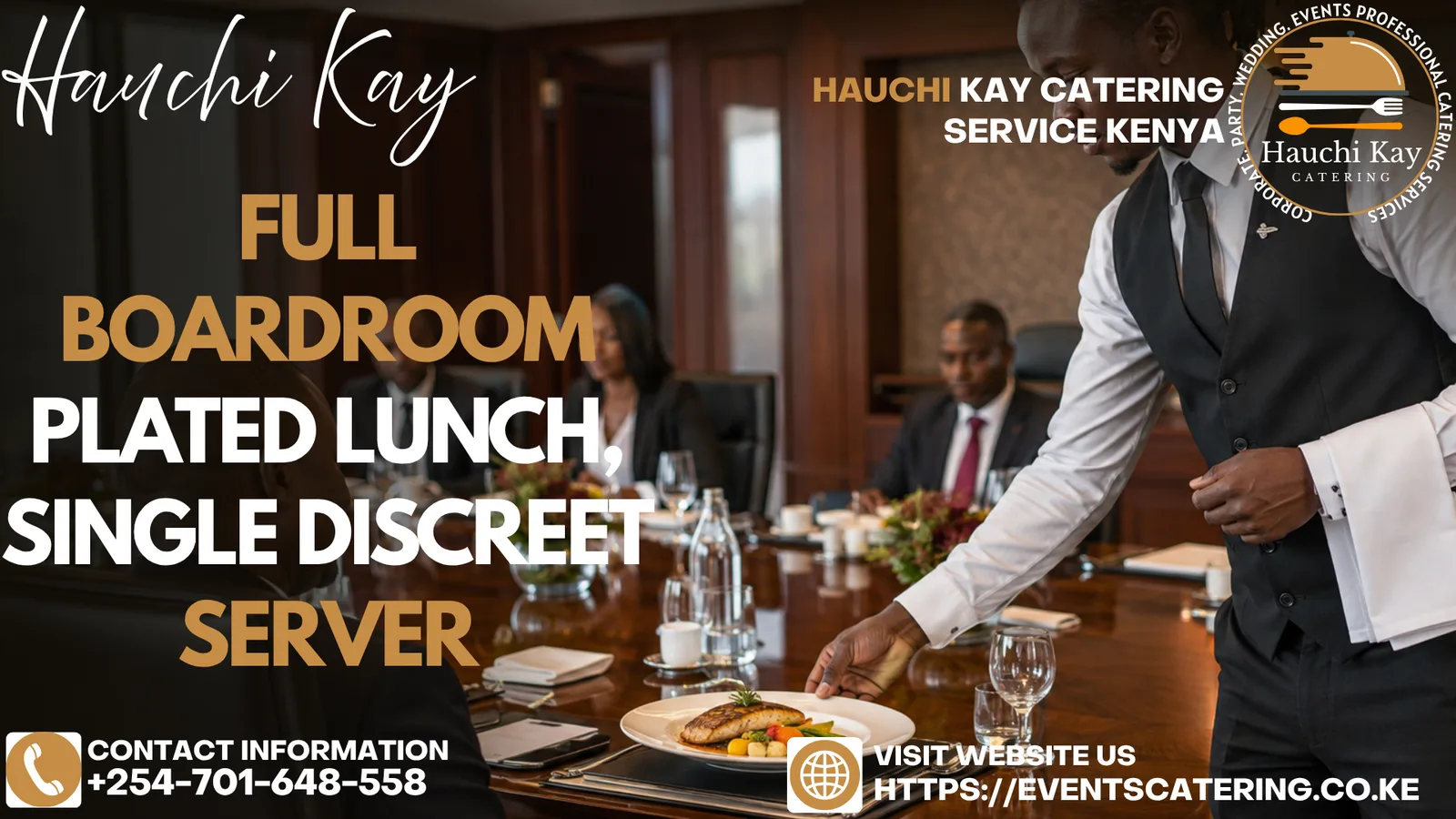
Full boardroom lunch. A plated three-course option works well for half-day and full-day sessions: a light starter, a main built around grilled fish, chicken, or beef fillet with seasonal vegetables, and a simple dessert. This is served, not self-served, with a single discreet waiter managing the room.

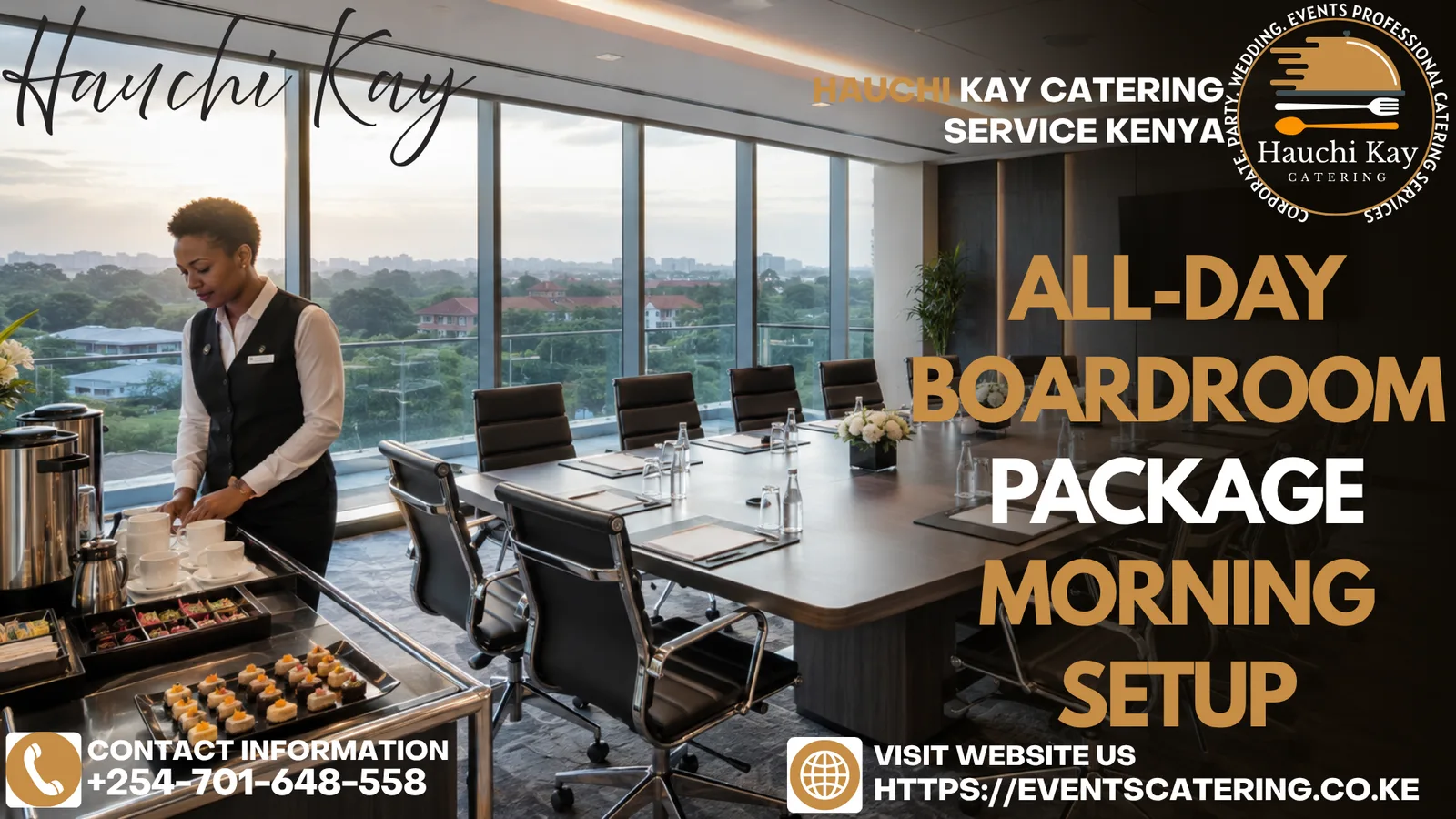
All-day boardroom package. Breakfast tea and coffee on arrival, mid-morning tea, a full lunch, and an afternoon tea service before the meeting closes. This suits full-day strategy sessions or annual planning meetings where directors are in the room from 8 a.m. to late afternoon.

Menus should never repeat week to week for recurring Exco meetings. A rotation across three or four simple options keeps things fresh without turning catering into a talking point at every meeting, which is exactly the outcome most executives want.
A quick reference for what each tier includes and what it costs per person:
| Service Tier | Menu Highlights | Price per Person (KES) |
| Premium Tea and Coffee Service | Kenyan tea, specialty coffee, imported tea options, petit fours or shortbread | 1,200 – 1,800 |
| Executive Finger Platter | Mini quiches, smoked salmon bites, chicken skewers, vegetable samosas, fruit platter | 2,000 – 2,800 |
| Full Boardroom Lunch | Plated starter, grilled fish, chicken or beef fillet with seasonal vegetables, dessert | 4,000 – 5,500 |
| All-Day Boardroom Package | Arrival tea, mid-morning tea, full plated lunch, afternoon tea | 6,500 – 8,500 |
How Executive Meeting Catering Costs Break Down
| Never presented as fixed pricing: contact Hauchi Kay for a tailored quotation based on guest numbers, menu selection, venue, staffing requirements, equipment, logistics, dietary preferences, service style, and event duration. |
That said, businesses budgeting ahead of a formal quote can use the indicative premium and executive-tier ranges below as a planning reference.
| Package | Price per Person (KES) | What It Covers | Best For |
| Custom Quote | Contact for pricing | Tailored to guest count, menu, venue, staffing, and duration | Any recurring or one-off executive meeting |
| Premium Package | 1,200 – 2,000 | Premium tea/coffee service with a light platter | Short internal Exco meetings |
| Executive Package | 2,800 – 5,500 | Finger platter or plated lunch with discreet waitstaff | Board meetings, investor briefings |
| Luxury Package | 6,500 – 8,500 | Full-day boardroom package with all-day service | Full-day board strategy or planning sessions |
Pricing Disclaimer: The packages above are premium market estimates intended for planning purposes only. Final quotations depend on guest numbers, menu complexity, venue, staffing, transport, equipment hire, service style, seasonal ingredient costs, and any special client requirements. Contact Hauchi Kay for a customised quotation tailored to your executive meeting.
Planning Timeline: How Far Ahead to Book
Recurring board or Exco meetings with a known monthly or quarterly slot can often be confirmed a few days ahead once a working relationship is established. First-time bookings, or anything involving external guests, benefit from more lead time.
A rough planning window that works well for most Nairobi businesses: confirm the meeting date and guest count at least a week ahead, finalise the menu and any dietary requirements 48 to 72 hours before, and reconfirm arrival logistics the day before, particularly for venues with strict building access or security screening. Boards meeting inside secure office towers in Upper Hill or Westlands, or within diplomatic and multinational compounds around Gigiri, often need extra lead time simply to clear catering staff and equipment through security.
For a first booking with a new caterer, it is worth allowing two to three weeks so staff briefing on confidentiality and room protocol can happen properly, rather than being rushed on the day.
Executive Meeting Catering vs Other Corporate Catering Formats
Businesses sometimes default to conference catering or standard office lunch service for board meetings simply because it is the format they already use for larger events. The comparison below shows why that often falls short.
| Factor | Executive Meeting Catering | Conference Catering | Standard Office Lunch |
| Typical guest count | 5 to 20 | 50 to 300+ | 10 to 100 |
| Service style | Plated or curated platter, discreet | Buffet, multiple stations | Buffet or boxed |
| Noise tolerance | Very low | Moderate | High |
| Presentation level | High, fine china common | Moderate, functional | Casual |
| Staffing ratio | High, one server per small group | Lower, shared across stations | Minimal |
| Confidentiality briefing | Standard practice | Not typically needed | Not typically needed |
A board meeting run on standard office lunch service usually feels out of step with the seriousness of the discussion. A twenty-person board reviewing a merger does not need five buffet stations. It needs a quiet, precise service that gets out of the way.
Common Mistakes Businesses Make When Booking Executive Meeting Catering
A few patterns show up repeatedly among businesses booking this category for the first time.
Treating it as a smaller version of office lunch catering, rather than a genuinely different service style, is the most common one. Ordering the same buffet spread used for weekly staff lunches, just scaled down for a smaller room, misses the point entirely. It is not about quantity. It is about tone.
Under-communicating on confidentiality is another. Businesses often assume a caterer will “know” to be discreet without being briefed, which is not a safe assumption for a new vendor working a boardroom for the first time.
Booking too close to the meeting date, particularly for first-time external bookings, leaves no room for staff briefing or dietary confirmation. This tends to show up as small service hiccups: a wait staff member unfamiliar with the room, or a dietary requirement missed because it was flagged an hour before the meeting rather than two days ahead.
Finally, some businesses over-order out of caution, filling the room with food that was never going to be eaten during a two-hour session. A tighter, well-chosen platter almost always reads better than an oversized spread nobody has time to touch.
Frequently Asked Questions
What is the difference between executive meeting catering and boardroom catering?
In practice, the terms are used interchangeably in Nairobi. Both describe discreet, low-disruption catering built around board meetings, executive committee sessions, and similar high-level business discussions.
How many guests is executive meeting catering suitable for?
Typically five to twenty guests. Above that, the service style usually shifts toward conference or seminar catering formats, which are built for larger, less formal groups.
Can executive meeting catering be arranged for a recurring monthly board meeting?
Yes. Many Nairobi businesses set up a standing arrangement for monthly or quarterly board meetings, which usually allows for shorter lead times once the caterer knows the room, the timing, and any standing dietary requirements.
Is tea and coffee service alone enough for a two-hour board meeting?
For most short meetings, yes, particularly if the meeting starts mid-morning or mid-afternoon. A light platter is worth adding if the meeting spans a mealtime.
Do executive meetings require dedicated waitstaff?
For plated lunches and finger platters, a single discreet server is standard. A basic tea and coffee service can sometimes run without dedicated staff if the room is small and the client prefers minimal presence.
How is confidentiality handled during executive meeting catering?
Staff assigned to these bookings should be briefed ahead of time on discretion, kept away from documents and screens, and given a clear window for entering and leaving the room rather than moving freely during the session.
What happens if a board meeting runs longer than scheduled?
A good caterer builds in flexibility for this, particularly for lunch and all-day packages. It is worth flagging the possibility of overrun when booking so extra tea or coffee can be kept ready without a rushed second delivery.
Can dietary restrictions be handled without disrupting a board meeting?
Yes, provided they are flagged at least 48 hours ahead. Last-minute dietary requests are harder to manage discreetly and sometimes require a visible adjustment mid-service, which is exactly what this category tries to avoid.
Is fine china required, or can disposable service work for smaller meetings?
Fine china is standard for plated lunches and formal board settings. For very short internal Exco meetings, a simpler but still tidy presentation is acceptable, though disposable service is generally avoided at the executive level.
How far in advance should a first-time executive meeting booking be made?
Two to three weeks is a safe window, allowing time for menu confirmation, staff briefing on the specific room and protocol, and any building access clearance.
Does executive meeting catering cost more per person than standard office lunch?
Generally yes, because of the higher staffing ratio, finer presentation, and smaller guest numbers over which fixed costs are spread. The trade-off is a service built specifically to support a high-stakes meeting rather than simply feed a room.
Can executive meeting catering be booked for venues outside Nairobi?
Yes. Hauchi Kay covers board and executive meetings in regional business hubs including Mombasa, Kisumu, and Nakuru, alongside its core Nairobi coverage across Upper Hill, Westlands, Kilimani, the CBD, and Gigiri.
What is the typical service style for an investor briefing?
A plated short course or a curated finger platter with discreet waitstaff tends to work best, since presentation carries more weight when external investors are forming an impression of the business.
Should catering be paused during sensitive negotiation sessions?
Ideally the service should not require a pause at all. A standing platter guests can access without interrupting the discussion is usually the better choice for negotiations or due diligence sessions.
How does executive meeting catering handle full-day board strategy sessions?
An all-day boardroom package covering arrival tea, mid-morning tea, lunch, and afternoon tea keeps directors fuelled through a long agenda without requiring separate bookings for each segment of the day.
Where This Fits Within Hauchi Kay’s Corporate Catering
Executive meeting catering sits alongside eleven other corporate catering categories that Hauchi Kay handles across Nairobi and wider Kenya, from breakfast and lunch catering through to gala dinners and product launches. For a full comparison of all corporate catering options, including AGM catering, conference catering, and staff appreciation events, the Corporate Catering in Kenya page brings together indicative pricing and guidance across every category, useful for businesses deciding which format fits before narrowing in on a boardroom-specific booking.
Executive meeting catering is best understood as the most discreet and precision-driven end of that spectrum, built for the moments where the meeting itself, not the food, needs to hold everyone’s attention.
Request a Tailored Quote: share your meeting type, guest count, and date with Hauchi Kay’s events team for a proposal built around your board or executive session, with premium menu options available from tea service through to a full plated lunch.