+254-701-648-558 | support@eventscatering.co.ke

Corporate Gala Dinner / Award Ceremony Catering
Three weeks before the company’s annual awards night, the run of show finally lands in your inbox. It has courses timed to the minute between award categories, a wine service that can’t overrun, and a dessert plate that needs to land on the table exactly as the lights come up for the closing speech. Corporate Gala Dinner/Award Ceremony Catering exists for this exact problem: feeding two hundred, three hundred or five hundred guests a formal, multi-course meal on a schedule set by an emcee and a stage programme, not by a kitchen’s own pace.
We plan the kitchen backwards from the run of show rather than forwards from a fixed menu template. That’s the difference between a caterer who can produce good food and one who can land that food on cue while an MC calls the next award category.
In practical terms, gala dinner and award ceremony catering covers a specific set of moving parts:
- A cocktail reception with passed canapés before doors open to the main room
- A seated, plated dinner of two to four courses, timed around the awards programme rather than served straight through
- Wine service paired to each course, alongside a mocktail bar for guests who don’t drink
- A cocktail bar that typically opens once the formal part of the evening winds down
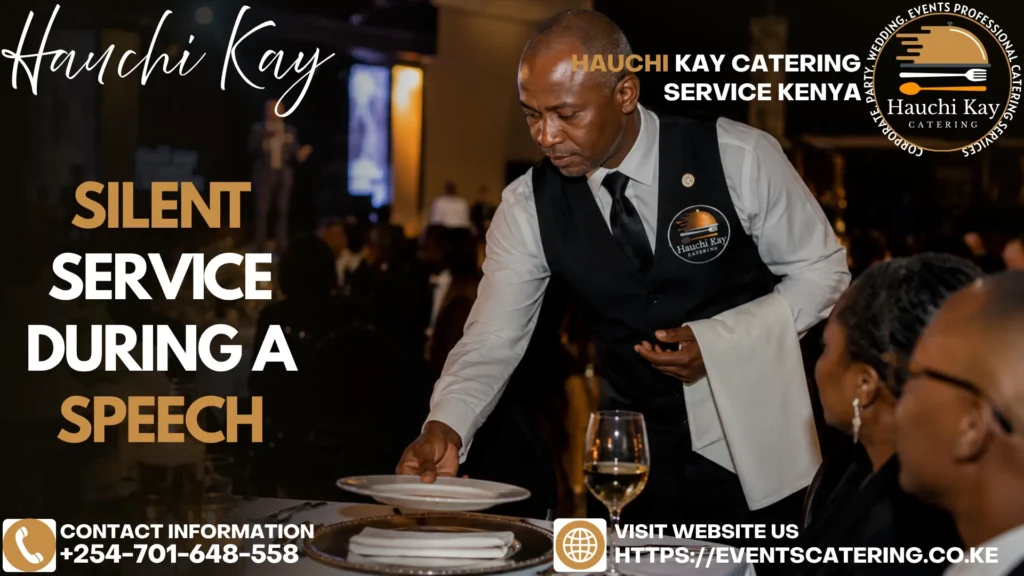
- Waitstaff trained to clear plates and refill glasses without drawing attention while someone is mid-speech on stage
There’s a decision worth making early, before you even get to menus. If your guest count sits under 150 and the format leans towards standing and mingling rather than assigned seating, a cocktail-style awards night with canapé stations usually works better than a full sit-down gala. Above 150 guests, and especially once there’s a formal programme with multiple award categories, plated service keeps the room moving and the kitchen predictable.
That single decision, seated or standing, is the one most event committees get wrong when they book catering before confirming the programme format with their MC.
How Gala Dinner and Award Ceremony Catering Differs From Everyday Office Catering
A lot of corporate catering in Kenya is really about feeding people through a working day: breakfast before a board sitting, a buffet lunch during a training session, tea trays between meetings. If that’s what you’re planning, our corporate catering in Kenya page covers structured daily and meeting-based catering across breakfast, lunch and tea service in far more detail than makes sense here.
Gala dinners and award ceremonies are a different discipline entirely. The meal has to work as theatre as much as nutrition. Courses are cued by a stage manager or an MC’s script, not by a kitchen’s own timing, and mistakes are visible: a plate served too early collides with an award announcement, and one served too late leaves guests staring at empty tables while the programme stalls.
There’s also the formality of the room itself. A boardroom lunch can run on chafing dishes and a self-service line without anyone thinking twice. A black-tie gala with a stage, lighting rig and possibly a livestream camera needs silent, plated service, glassware that matches the tablescape, and a bar programme that shifts in tone from a polished cocktail reception to a full open bar once the trophies are handed out. This is the kind of brief we plan for regularly across Nairobi’s banking, insurance, telecom and SACCO sectors, where an annual awards night sits on the calendar as a fixed date rather than an occasional extra.
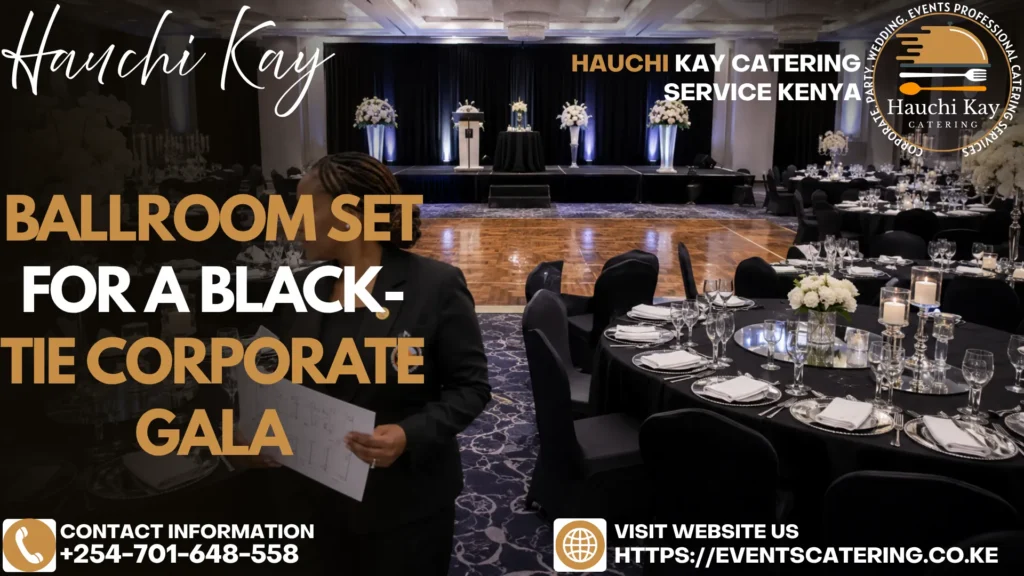
Timing a Gala Menu Around the Awards Programme
Ask any experienced event captain what makes gala catering hard, and the answer is rarely the food itself. It’s the clock. A typical Nairobi corporate gala runs on a structure close to the one below, and every course on the menu has to survive it.
| Time | Programme | Kitchen Cue |
| 6:00 PM | Doors open, cocktail reception begins | Canapés, mocktails, welcome cocktail |
| 6:45 PM | Guests move to seating | Bread service, water poured |
| 7:00 PM | Welcome remarks and opening act | Starter plated and served |
| 7:45 PM | First block of awards | Course cleared before lights dim |
| 8:15 PM | Main course served during the interval | Kitchen works to a 20-minute plating window |
| 9:00 PM | Second block of awards, keynote address | Plates cleared, no service during speeches |
| 9:45 PM | Dessert plated as closing remarks begin | Coffee service alongside dessert |
| 10:15 PM | Formal programme ends, bar opens fully | Cocktail bar, late-night bites if included |
We ask for a copy of the run of show as early as we can get one, because it decides staffing numbers, plating windows and even which dishes make the final menu. A dish that needs a sauce finished tableside is a poor fit for a course with eleven minutes to land before the next award category. Something simpler, plated further in advance and held correctly, often serves the room better than an ambitious dish that can’t survive a delayed keynote address.

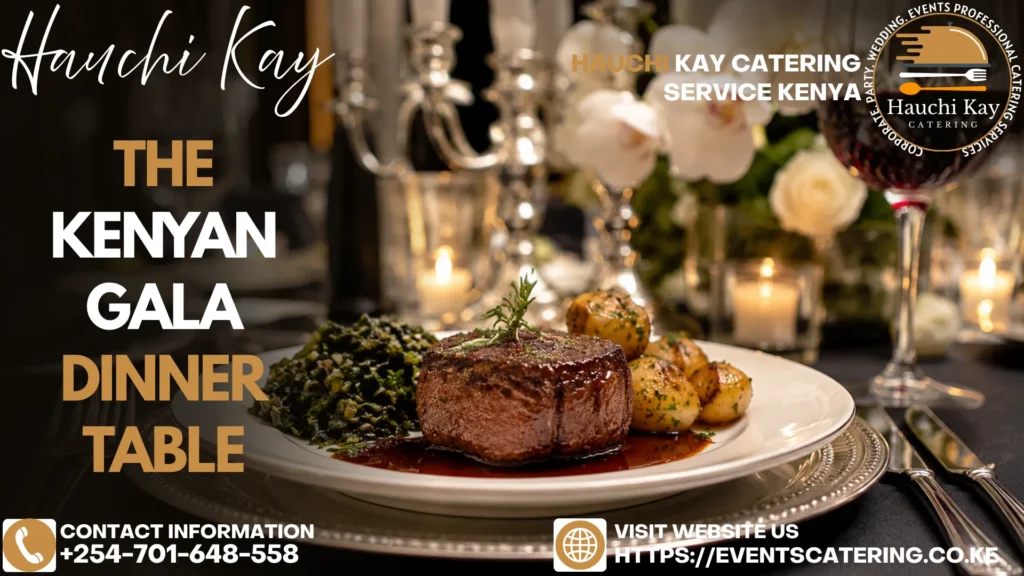
The Kenyan Gala Dinner Table
The food needs to read as premium on a stage-lit table without turning into something guests don’t recognise. Most of our gala menus lean into Kenyan ingredients and cooking techniques dressed in a more formal plating style than you’d see at a wedding buffet or an office lunch.
A herb-crusted beef fillet with a red wine jus and sukuma wiki finished in garlic reads as an upscale plate while still being unmistakably Kenyan on the table. Grilled tilapia with coconut rice and a bright kachumbari does the same job for guests who prefer fish. Starters built around a butternut and coconut soup, or a mango and avocado salad with passion fruit vinaigrette, hold their texture through a delayed service window, which happens more often than event planners expect once an award category runs long.
We also build a vegetarian option into every gala menu as standard rather than an afterthought, usually a roasted vegetable and coconut curry, because a guest list of 200 or more will almost always include several guests who need it and nobody wants that request handled at the last minute in the kitchen.
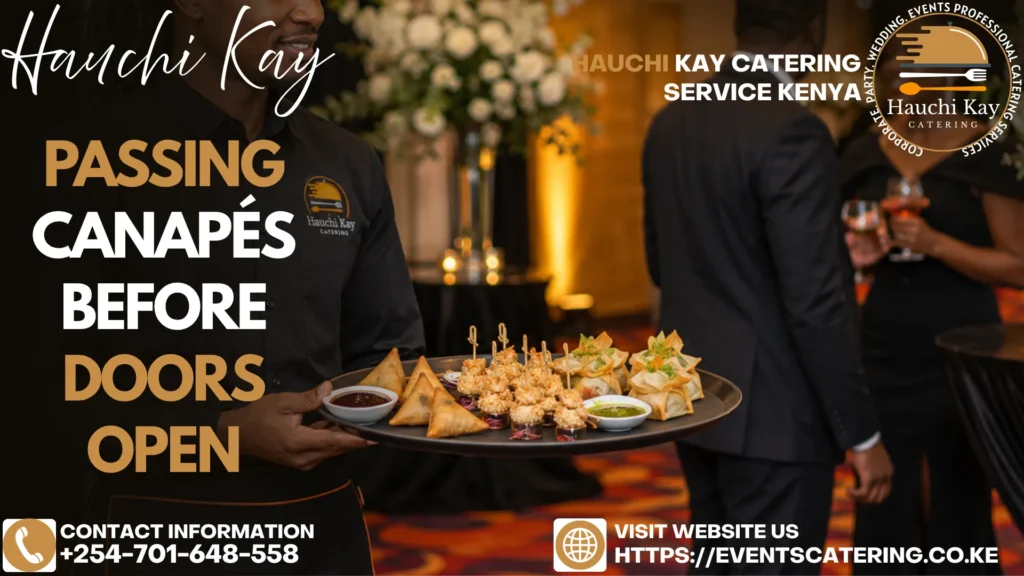
The Reception: Canapés and the First Ten Minutes
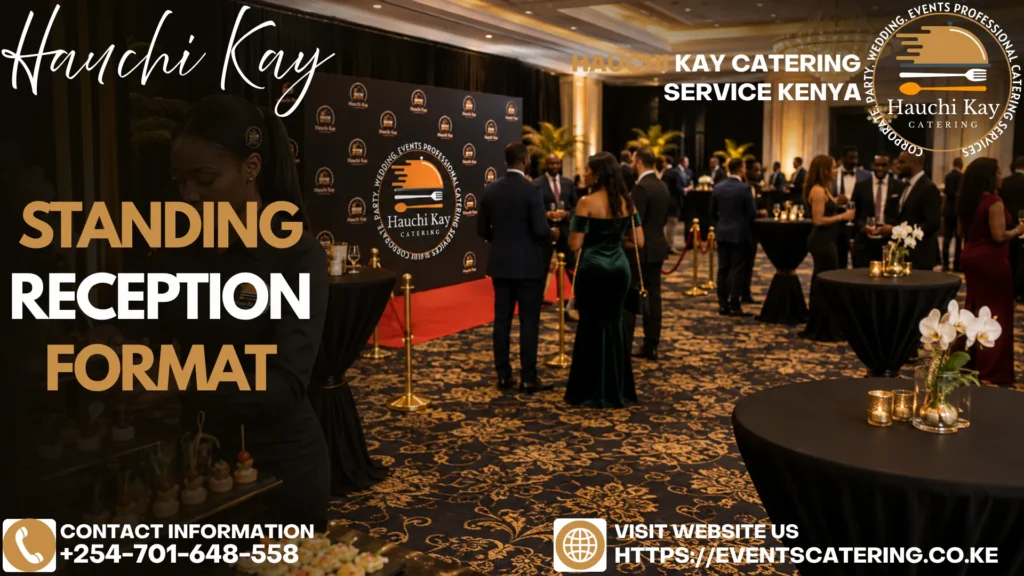
Guests form their first impression of the evening in the ten minutes after they walk through the door, before a single award has been announced. That’s what the reception is for, and it’s served as passed canapés rather than a plated course so people can hold a conversation and a glass at the same time.
- Mini beef samosas with a tamarind dipping sauce
- Coconut-crusted prawn skewers with dhania chutney
- Nyama choma bites on rosemary skewers with a kachumbari salsa
- Sukuma wiki and feta filo parcels
- Tilapia fish cakes with a mango and chilli aioli
Six to eight canapé pieces per guest across a 45 to 60 minute reception is usually enough, served on rotation so the room never feels like it’s waiting on the next tray. For award ceremonies with a media presence or a livestream, we time the last canapé pass to finish before guests are called to their seats, so nobody’s caught mid-bite when the welcome remarks start.
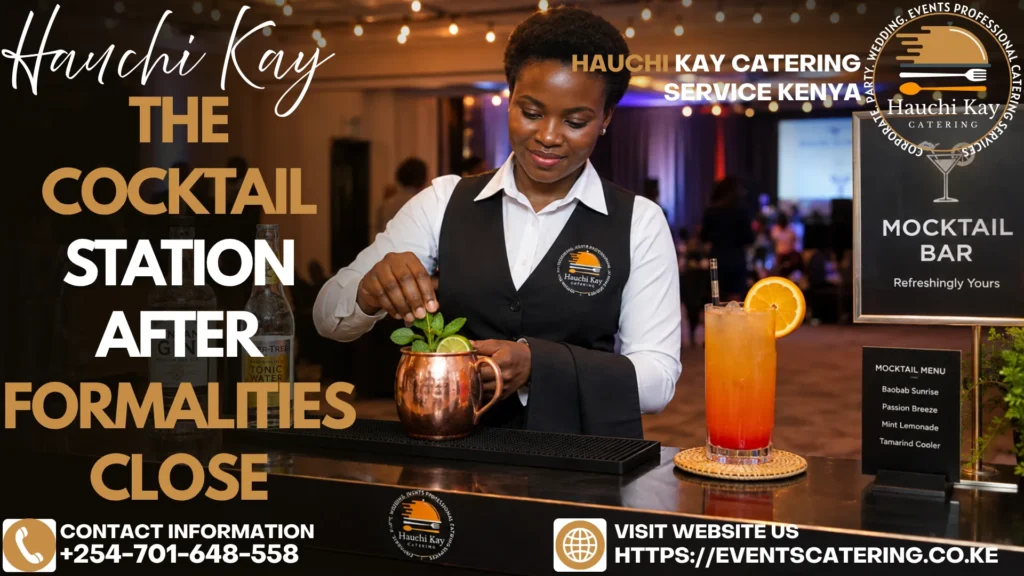
Building the Bar: Wine, Mocktails and Cocktails for a Staged Evening
Bar service for a gala shifts in character across the night, and getting that shift right matters more than most planning committees expect.
During the reception, we lean towards mocktails and a lighter cocktail offering. Guests are networking, some are about to give a speech, and nobody wants a room that’s already loose before the awards even start. A Dawa mocktail made with honey, lime and crushed mint or a Baobab Sunrise built around mabuyu purée, orange and ginger both work well here, alongside a welcome sparkling wine for guests who do drink.
Once the room is seated, wine service follows the meal rather than leading it. A Sauvignon Blanc or Chenin Blanc pairs with the starter and any fish course, while a Merlot or Shiraz comes out with beef or chicken mains. We hold the full cocktail bar back until the formal programme closes, usually around the point the last award has been handed out and the closing remarks are done. That’s when guests actually want to relax, and it’s also when the room can afford a slightly longer bar queue without holding up a stage cue.
A properly staffed gala bar in Nairobi also has to account for guests who don’t drink at all, and this isn’t a small minority at Kenyan corporate events. We run the mocktail bar as a full menu in its own right, not a single fallback option bolted onto the wine list.
For the after-party stretch once formalities end, cocktails like a Nairobi Mule made with Kenyan gin, ginger beer, lime and mint, or a Passion Old Fashioned, tend to do well with a Nairobi corporate crowd looking to unwind after a long, well-run programme.
Staffing a Black-Tie Room: Service Style and Ratios
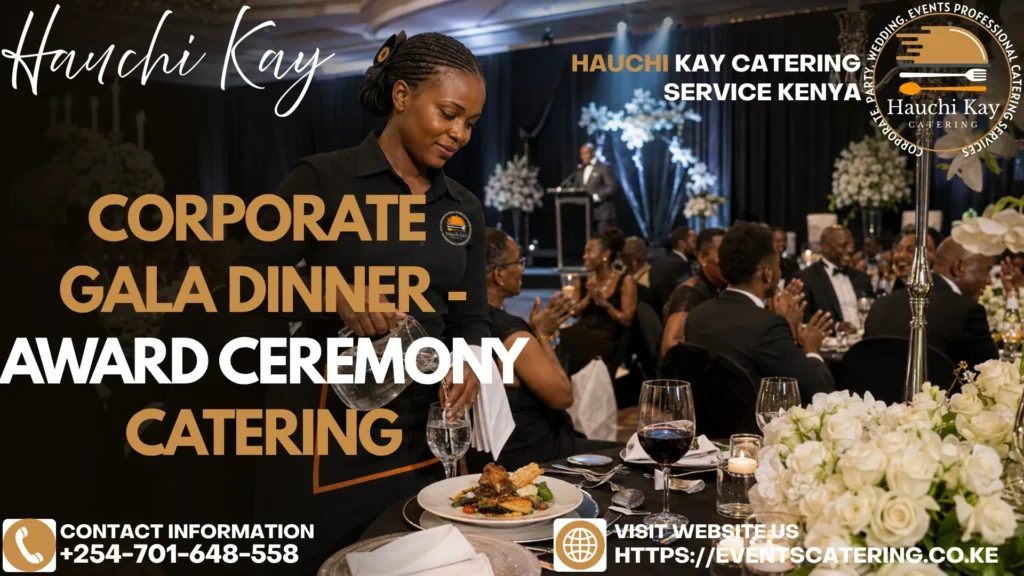
The food matters, but service style is what actually protects the run of show. For plated gala dinners, we typically staff at one waiter for every ten to twelve guests, tighter than the ratio used for a standing cocktail event, because plated service has to move as a coordinated wave rather than guest by guest.
Every gala booking gets a dedicated event captain, someone whose entire job for the evening is watching the stage, not the kitchen. They’re the person cueing the kitchen pass when the MC starts wrapping up a segment, and the one holding a course back three minutes if a speech runs long. Without that role, even a well-planned menu falls apart the first time the programme deviates from the printed schedule, and it almost always does.
Clearing is done quietly, from the right side wherever possible, and never while someone is mid-sentence on the microphone. For events with a livestream or broadcast camera, the floor team is briefed specifically on camera sightlines so nobody’s crossing in front of the stage during an award presentation. It’s a small detail, but it’s the kind of thing that separates catering that disappears into the background of a good evening from catering that becomes the story guests tell afterwards for the wrong reasons.
Sit-Down Gala vs Cocktail-Style Awards Night
Not every award ceremony needs a full seated dinner, and it’s worth deciding this early rather than defaulting to whichever format the last event used. So how do you decide between the two?
| Factor | Seated Gala Dinner | Cocktail-Style Awards Night |
| Guest count | Works best above 150 guests | Comfortable from 50 to 300+ guests |
| Programme length | Suits a longer, multi-category awards programme | Suits a tighter, faster-paced programme |
| Staffing | Higher ratio, plated service | Lower ratio, stationed and passed service |
| Budget per guest | Higher, full course service | Generally lower, more flexible |
| Formality | Black-tie, assigned seating | Smart formal, open floor |
Neither format is better on its own. It comes down to the guest list, the venue and how long the MC genuinely needs on stage.
Choosing a Package
Gala dinner and award ceremony pricing is built around four tiers, because a 500-guest bank awards night and a 120-guest SACCO recognition dinner need genuinely different scopes, not the same menu simply scaled up or down.
Custom Quote
Contact us for a tailored quotation based on guest numbers, menu selection, venue, staffing requirements, equipment, logistics, dietary preferences, service style and event duration. This route works best for particularly complex programmes, government or NGO events with procurement requirements, or galas with unusual venue constraints.
For events that fit a more standard shape, the three tiers below set out exactly what’s included at each level, with the menu built directly into the package rather than quoted separately from the price.
| Package | Per Guest | What’s Included |
| Premium | KSh 6,500 | Reception canapés (beef samosas, sukuma wiki and feta filo parcels), butternut and coconut soup starter, choice of rosemary chicken supreme with pilau or grilled tilapia with coconut rice, mango and passion fruit tart, house wine and a Dawa mocktail station |
| Executive | KSh 10,200 | Reception canapés (coconut-crusted prawn skewers, nyama choma bites, tilapia fish cakes), avocado and mango salad starter, choice of three mains (herb-crusted beef fillet, grilled tilapia, rosemary chicken supreme, or roasted vegetable coconut curry), dark chocolate mousse with a coffee tuile, full wine pairing across courses, signature cocktail bar and Baobab Sunrise mocktail station |
| Luxury | KSh 15,800 | Reception canapés (seared beef carpaccio with kachumbari salsa, grilled lamb cutlets with mint dhania chutney, smoked salmon and avocado bites), four-course plated dinner (butternut and coconut velouté, grilled coastal red snapper, dry-aged beef fillet or lamb rack, trio of Kenyan-inspired desserts), champagne toast for award announcements, premium wine and spirits bar, dedicated mixologist and a late-night nyama choma station |
| Pricing Disclaimer: The prices shown are premium market estimates intended for planning purposes only. Final quotations depend on guest numbers, menu complexity, venue, staffing, transport, equipment hire, service style, seasonal ingredient costs and any special client requirements. Contact us for a customised quotation tailored to your event. | ||
A Kenyan Award Ceremony Catering Checklist Before You Book
Before signing off on a caterer for a corporate gala or award ceremony, a short checklist saves most of the last-minute problems event committees tend to run into.
- Confirm guest numbers and the RSVP deadline, then share the final count with your caterer at least a week out
- Share the run of show or draft programme, even in rough form, ahead of the menu tasting
- Flag dietary requirements such as vegetarian, halal and nut allergies as part of the RSVP process, not on the night
- Confirm the venue’s alcohol licensing and any restrictions on open bar service
- Check kitchen access, power supply and whether the venue allows open-flame cooking or generator use
- Agree camera sightlines and stage clearance zones with your caterer if the event is being filmed or livestreamed
- Confirm parking, loading access and setup time with both the venue and the caterer
Handled early, none of this is difficult. Handled two days before the event, any one of these can derail an otherwise well-planned evening.
Frequently Asked Questions
How far in advance should we book catering for a corporate gala or award ceremony?
For a gala or award ceremony with 150 guests or more, book at least four to six weeks ahead. That gives enough time for a menu tasting, run-of-show planning with your event captain, and bar licensing checks at the venue if it isn’t one we already work with.
Can you run plated service for a black-tie gala with 300 or more guests?
Yes. Plated service for events this size is staffed at roughly one waiter per ten to twelve guests, with a dedicated event captain coordinating the kitchen pass against the stage programme rather than working to a fixed clock.
What’s the real difference between a cocktail-style awards night and a seated gala dinner?
A cocktail-style event uses stationed and passed canapés with a lower staffing ratio and suits anywhere from 50 up to around 300 guests with a faster-paced programme. A seated gala runs a full plated menu, needs a tighter staffing ratio, and suits a longer awards programme above roughly 150 guests.
Do you provide both wine service and a non-alcoholic mocktail bar at the same event?
Yes, and the mocktail bar is treated as a full menu in its own right rather than a single backup option, since a meaningful share of guests at Kenyan corporate events don’t drink alcohol.
Can you cater an award ceremony at a venue we’ve already booked, such as a hotel ballroom or KICC?
Yes. Most gala bookings are at venues the client has already secured. We coordinate directly with the venue’s banqueting or events team on kitchen access, power and setup timing ahead of the event.
What happens if the awards programme runs long and throws off the plated dinner timing?
This is exactly what the event captain role is for. Courses are held or released based on real-time cues from the stage rather than a fixed schedule, so a keynote running fifteen minutes over doesn’t mean guests get a cold plate or an awkward gap between courses.
If your event is closer to a working lunch or a staff breakfast than an evening awards programme, our corporate catering in Kenya page covers that side of things in more depth. For everything built around a stage, a run of show and a room in black tie, this is the version built specifically for that brief. Get in touch with Hauchi Kay Catering Services with your guest count, venue and draft programme, and we’ll put together a menu and a service plan built backwards from your evening rather than forwards from a template.