+254-701-648-558 | support@eventscatering.co.ke

Garden Wedding Catering
Garden Wedding Catering in Kenya demands more than a beautiful menu. It demands a team that understands generators, wind guards, rain contingencies, and the reality of plating food on uneven ground. Most couples spend months choosing flowers and photography, then assume catering works the same outdoors as it does in a hotel ballroom. It does not.
The difference between a seamless garden reception and a logistical disaster usually comes down to five factors: assessing the venue for power, water, and kitchen placement before proposing a menu; designing the menu for outdoor hold times, wind exposure, and afternoon heat; using generator backed equipment and wind stable serving stations; staffing to account for the extra steps of outdoor service; and having a genuine weather contingency that protects food, guests, and staff without killing the atmosphere.
Hauchi Kay approaches every garden wedding catering request with a site assessment mindset. We visit the venue, measure access for our mobile kitchen units, confirm power availability, and identify where the backup tenting goes if weather turns. Only then do we talk about pilau, nyama choma, or dessert tables. This guide explains what that process looks like, what questions you should ask any caterer bidding on your outdoor wedding, and how to protect your investment from the risks that only exist outside four walls.

The Real Challenge of Feeding Guests Under Open Skies
Why Indoor Experience Does Not Transfer Outdoors
A hotel kitchen has climate control, fixed gas lines, reliable electricity, and loading docks built for delivery trucks. A garden in Karen or a lakeside property in Naivasha has none of these. The caterer who wins awards inside a Nairobi hotel may arrive at your garden venue and realise they need to build an entire temporary kitchen from scratch, bringing generators, gas cylinders, water containers, hand washing stations, refrigeration units, and every piece of serving equipment.
The ground is rarely level. The wind picks up just as guests line up for chapati. The afternoon sun turns a beautifully arranged fruit platter into a dried display within twenty minutes. These are not minor inconveniences; they are operational realities that reshape every decision, from which proteins you serve to how many staff you need per guest.

The Hidden Costs of Poor Outdoor Planning
Couples who choose a caterer without garden experience often face last minute surprises: an uncosted generator, a water supply that cannot handle washing stations for fifty staff, or a buffet tent that was not secured properly and shifts in the wind. Each problem cascades. Delays in setup push back the ceremony timeline, and cold food sits too long because chafing dishes could not maintain temperature in open air.
At Hauchi Kay, we itemise every piece of outdoor infrastructure in our proposal. You see exactly which generators we bring, how many serving tents we erect, where the hand washing stations go, and what happens if rain starts during the cocktail hour.
Assessing Your Garden Venue Before You Choose a Menu
Access Roads and Load-In Points
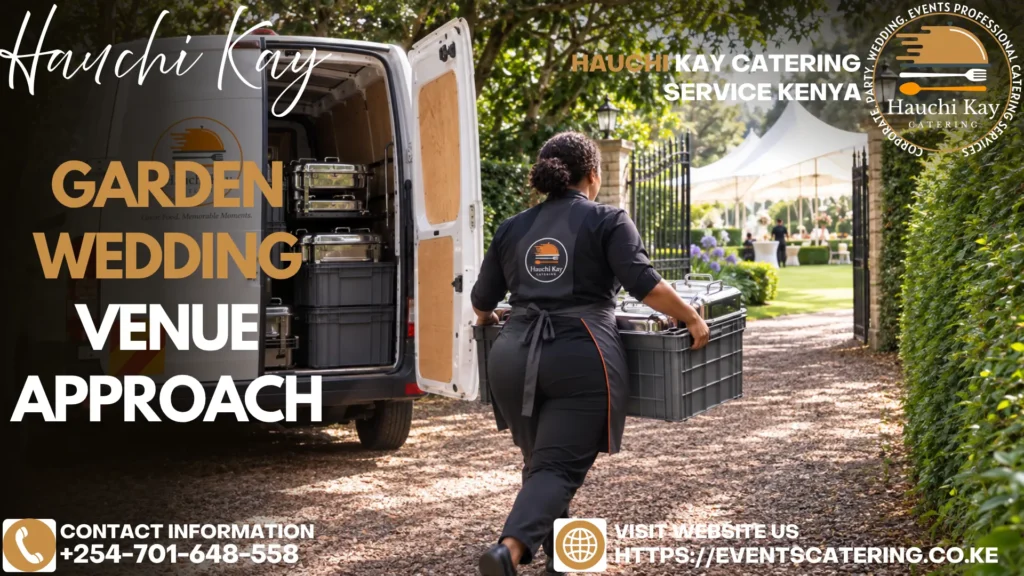
The most beautiful garden venues in Kenya sometimes have the worst access. A narrow driveway in Tigoni, a steep approach in Runda, or a soft lawn in Naivasha after rain can stop a catering truck from getting close to the setup area. We always conduct a venue access assessment before confirming any booking, looking at gate widths, turning circles, surface stability, and proximity to the reception area. If access is limited, we switch to modular refrigeration, lighter gas setups, and more load-in staff.
Power Availability and Generator Requirements
Most garden venues in Kenya do not offer sufficient power for a full catering operation. A standard wedding kitchen running multiple chafing dishes, refrigeration, lighting, and hot water needs a generator between 10kVA and 25kVA depending on guest count and menu complexity. If a caterer asks to plug into the venue’s domestic socket, that is a warning sign.
Hauchi Kay brings silent generator sets specifically sized for each event, along with fuel reserves, extension distribution boards, and weatherproof cable management, so the kitchen runs silently while the ceremony stays peaceful.

Water Supply and Washing Stations
Outdoor catering generates serious washing requirements for pots, pans, utensils, plates, and staff hands. A garden venue with one outdoor tap cannot support a wedding for two hundred guests. We calculate water needs based on guest count, menu complexity, and service style, and our proposals include exact water volumes, delivery methods, and waste collection so the venue’s garden stays intact.

Tent Configuration and Kitchen Placement
Where the catering tent sits matters more than most couples realise. It needs to sit close enough for efficient service but far enough that cooking smells, generator noise, and staff movement do not intrude on the reception atmosphere, with level ground, proximity to the access road, and a backup location if wind direction changes. Hauchi Kay maps tent placement during the site visit, identifying prevailing wind directions, sun angles, guest flow patterns, and photographer sightlines.

How Weather Shapes Every Decision About Outdoor Wedding Food
The Hot Afternoon Problem
Kenyan afternoon sun is intense, particularly January through March and September through November. Cream based desserts melt, buttercream cakes soften, leafy salads wilt, and mayonnaise dressed coleslaw becomes a food safety risk after ninety minutes in direct heat. We design menus around the season and time of day: pilau and coconut rice hold well in chafing dishes, grilled proteins with dry rubs outperform heavy cream sauces, fruit displays sit on ice beds, and cakes stay in refrigerated holding until the moment of cutting.
Rain Contingency That Actually Works
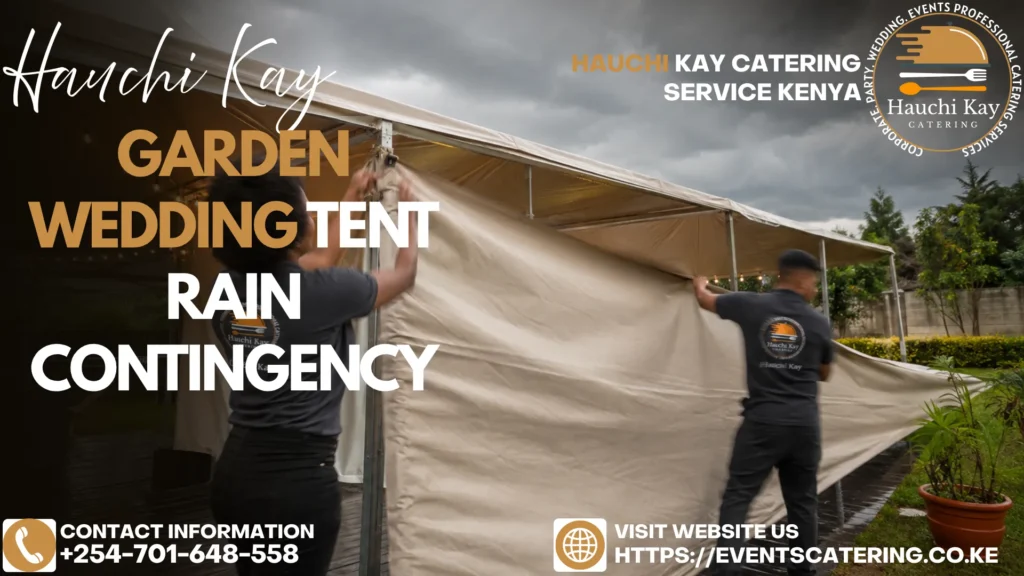
Rain in Kenya often arrives fast and hard. A caterer who only promises to set up a tent if it rains has not planned seriously, since tenting takes time. Real contingency means pre positioned backup tents with sidewalls, waterproof flooring that prevents mud from entering the buffet line, and covered walkways between kitchen and service tents. Hauchi Kay watches forecasts from seventy two hours out and arrives with sidewalls, flooring, and extra canopy coverage even when the forecast looks clear.
Wind and Dust Considerations
Wind blows tablecloths, topples lightweight serving dishes, sends napkins flying, and cools chafing dishes faster than intended; in dusty areas like parts of the Rift Valley, it also deposits grit onto exposed food. Our garden setups use weighted serving stations, wind guards on chafing dishes, clip secured linens, and covered canapé trays, with passed service by trained waiters replacing exposed buffet tables for cocktail hour items.
Building a Menu That Works in Wind, Heat, and Changing Light

Foods That Hold Well in Open Air
The best garden menus feature dishes that tolerate temperature fluctuation and brief exposure without losing quality. Pilau maintains its fragrance and texture in a covered chafing dish, nyama choma carved fresh at a live station stays hot and interactive, chapati held in insulated carriers remains soft for hours, and grilled chicken with dry marinades holds better than fried items that turn soggy in humidity. Reliable starches include ugali, mukimo, and coconut rice.
Dishes to Avoid at Garden Receptions
Some beautiful dishes simply do not work outdoors: delicate soufflés collapse in wind, ice sculptures melt in twenty minutes, butter based sauces separate when held in chafing dishes, and fried foods turn limp in outdoor humidity. We advise couples honestly when a requested dish creates unnecessary risk, and adjust service style or setting to protect it rather than promising perfection and delivering disappointment.
Balancing Heavy and Light Options Across the Day
A full day garden wedding moves from cool morning through hot afternoon into potentially chilly evening, and guest appetites shift with the temperature. We structure menus to match these energy curves: fresh juices, light proteins, and fruit in the morning; satisfying starches and proteins at the main reception; smaller, social bites in the evening; and late night comfort stations with warm chai and mandazi for tired dancers.
Service Styles That Function in Garden Settings
When Live Stations Make Sense
Live cooking stations create atmosphere and guarantee freshness, and in garden settings they also solve the holding problem because food moves from heat to plate in seconds. Hauchi Kay positions live stations with clear sightlines for guests but safe separation from flammable materials, and our grill chefs work on stabilised equipment with wind shields and fire suppression readiness.
Why Plated Service Is Rarely Practical Outdoors
Plated service requires every guest to receive an identical dish at the same moment, which outdoors means either pre plating far in advance, risking temperature loss, or building a full plating station in the garden, requiring enormous temporary infrastructure and more staff per guest. For most garden weddings we recommend buffet or family style service; if a couple insists on plated service, we require a fully enclosed kitchen tent and level flooring to the guest tables.
Family-Style and Buffet Logistics
Buffets in gardens need careful flow design so the line does not block photographer sightlines or force guests across soft lawn in heels, with canopy coverage throughout. For weddings over two hundred guests, we often run dual buffet lines; for intimate weddings under eighty guests, a single beautifully appointed buffet with station chefs feels personal and elegant.
Timing and Vendor Coordination

Caterer Arrival and Setup Windows
Garden wedding catering requires longer setup than indoor events. For an afternoon reception starting at one in the afternoon, Hauchi Kay typically arrives by six in the morning, allowing three hours for load in, two hours for kitchen setup and equipment testing, one hour for food prep commencement, and two hours of buffer. Evening receptions starting at five o’clock may see our team arriving by midday, since generator testing, water connection, refrigeration stabilisation, and tent securing all take time.
Aligning with Photographers, DJs, and Speeches
A professional garden wedding catering team coordinates with every vendor to create a master timeline. Hauchi Kay assigns an event coordinator to every garden wedding who liaises with the photographer, DJ, MC, and venue manager throughout the day, adjusting holding temperatures and dessert timing as the programme shifts.
The Transition from Ceremony to Reception
The most logistically intense moment of any garden wedding is the transition between ceremony and reception, when staff must clear ceremony chairs, reset tables, activate buffet stations, and begin bar service, often in the same physical space. We plan this transition during the initial site assessment, sometimes using a rolling transition where guests move to a welcome drinks area while staff transform the ceremony space.
Equipment Your Garden Caterer Must Provide

Generator-Powered Kitchens
Every piece of cooking and holding equipment in a garden wedding runs on power the venue does not supply. Hauchi Kay brings silent diesel generators sized for the full electrical load, backup generators for critical refrigeration, distribution boards, weatherproof cabling, and earth leakage protection. The power system is tested before dawn on the wedding day, and a technician remains on site throughout service.
Chafing and Holding Equipment Built for Wind
Standard chafing dishes work fine in hotel ballrooms, but in gardens wind blows out flame warmers and cools food below safe temperatures. We use wind resistant chafing setups with stable bases, protective covers, and supplemental electric warming where generators allow, plus hot holding cabinets on wheels and ice bed cold displays.
Refrigeration and Food Safety Compliance
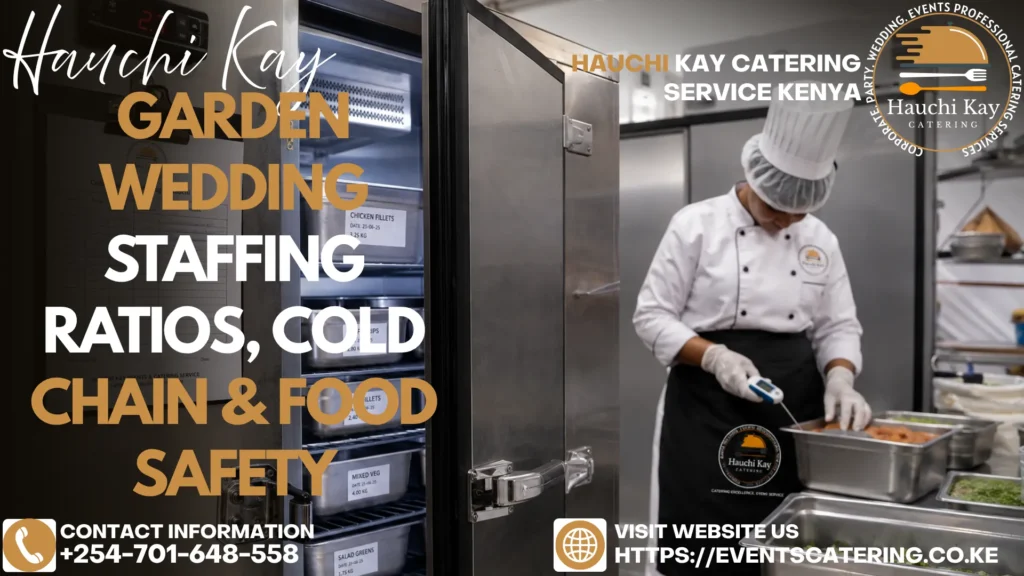
Outdoor heat is the enemy of food safety. Kenyan regulations and basic hygiene demand that perishable foods stay below five degrees Celsius until service. Hauchi Kay maintains refrigerated transport from our commissary to the venue, establishes a cold chain zone that never loses power, documents temperatures throughout the day, and discards anything outside safe parameters. No exceptions.
Staffing Ratios and What They Mean for Service Quality
Servers per Guest for Outdoor Buffets
Indoor buffet service typically requires one server per twenty five guests. Outdoor garden wedding catering demands one server per fifteen to twenty guests because of the extra walking distance, wind challenges, and terrain difficulties, so a wedding for two hundred guests needs twelve to fifteen floor staff, not eight.
Station Chefs and Live Cooking Management
A nyama choma grill master at a garden wedding is part chef, part performer, and part safety officer, managing fire, wind, smoke direction, carving technique, and guest flow around the station. Hauchi Kay station chefs train specifically for outdoor environments, adjusting flame height for gusts and positioning themselves so smoke drifts away from guests.
Bar Staff and Cocktail Circulation
We staff garden bars with one bartender per fifty guests for beer and wine service, or one per thirty five guests if signature cocktails feature prominently. Circulating waiters carry canapés on covered trays, moving through guest clusters rather than waiting for guests to find a stationary table.
Red Flags That Separate Professional Garden Caterers from Risky Ones
Questions They Should Ask You
A caterer experienced in garden wedding catering will ask about the venue, power availability, water sources, surface types, tent permissions, backup indoor options, guest flow between ceremony and reception, and the season and typical weather patterns. If a caterer only asks how many guests and what menu you want, they are treating your garden wedding like an indoor hotel event.
Warning Signs in Their Proposal
Watch for proposals that omit generator costs, water supply, extra staffing for outdoor service, weather contingency equipment, or extended setup hours, and for caterers who assume they can use the venue kitchen without inspecting it. A professional proposal reads like an operational plan, not just a food list. Hauchi Kay proposals run ten to fifteen pages because we detail every element that protects your day.
Investment Framework and Service Packages
Every garden wedding carries different requirements based on guest count, venue complexity, menu ambition, and service duration. Hauchi Kay structures outdoor wedding catering around four service levels, each including the infrastructure, equipment, staffing, and food necessary for that tier. Menus shown are indicative; final quotations depend on seasonal ingredient availability, transport distance, venue access, and dietary requirements.
| Package | Investment (per guest) | What’s Included |
| Essential Garden Service | KES 2,500 – 3,500 | Generator power for kitchen and service tents, standard chafing and holding equipment, professional service staff at outdoor ratios, and a complete buffet menu (chai and juice welcome, samosas and spring rolls, beef stew, grilled chicken, pilau with goat, chapati, ugali, sukuma wiki, coleslaw, salad, fruit platter, cake service). |
| Premier Outdoor Reception | KES 4,000 – 5,500 | Silent generator sets, wind resistant serving equipment, enhanced tent configuration with sidewall contingency, circulating waitstaff, live nyama choma station, coastal biryani, herb crusted lamb, grilled tilapia, full salad bar, dessert table, and limited open bar. |
| Signature Estate Celebration | KES 6,500 – 9,000 | Multiple generator sets with technician oversight, full weather contingency equipment, premium outdoor kitchen setup, complete bar with signature cocktails, dedicated event coordination, multiple live cooking stations, whole roasted goat, grilled Nile perch, elaborate dessert table, and late night comfort station. |
| Custom Quotation | Tailored to event | For unique venues, mixed cultural celebrations, or weddings requiring specialised equipment such as multiple live stations, full open bars, or extended late night service. Contact Hauchi Kay for a tailored quotation. |
Pricing Disclaimer: The prices shown are premium market estimates intended for planning purposes only. Final quotations depend on guest numbers, menu complexity, venue, staffing, transport, equipment hire, service style, seasonal ingredient costs, and any special client requirements. Contact Hauchi Kay for a customised quotation.
Frequently Asked Questions
How far in advance should I book garden wedding catering in Kenya?
We recommend six to twelve months for peak season weddings from January through March and August through December. For upcountry destinations like Nyeri, Kisumu, or Meru, nine to eighteen months is advisable due to transport and accommodation logistics for our team.
Can you cater a garden wedding if the venue has no kitchen at all?
Yes. In fact, most garden venues in Kenya have no kitchen facilities. Hauchi Kay builds a complete temporary kitchen on site using generator power, mobile refrigeration, water bowsers, and tenting. This is standard practice for our garden wedding catering operations, not an exception.
What happens if it rains during my outdoor wedding reception?
Every Hauchi Kay garden proposal includes weather contingency equipment: pre positioned backup tents with sidewalls, waterproof flooring, and covered walkways. If rain threatens, we deploy protection before guests notice, and your reception proceeds with minimal disruption.
How do you keep food safe in outdoor heat?
We maintain cold chain integrity from our commissary to your venue using refrigerated transport, keep perishables below five degrees Celsius on site, and hold hot food above sixty degrees Celsius in wind guarded, electrically warmed chafing dishes. We document temperatures throughout the day and discard anything outside safe parameters.
Should I choose buffet or plated service for my garden wedding?
For most garden settings, we recommend buffet or family style service, since these handle outdoor temperature variation better and need less temporary infrastructure. Plated service is possible outdoors but needs fully enclosed kitchen tents, level flooring to tables, and significantly more staff.
Do you provide halal, vegetarian, or other dietary accommodations for outdoor weddings?
Absolutely. Hauchi Kay prepares fully halal compliant menus using certified suppliers and separate preparation protocols, offers vegetarian and vegan options such as coconut beans, sautéed spinach, and roasted vegetable medleys, and accommodates Hindu and South Asian requirements including satvik vegetarian options and appropriate spice profiles.