+254-701-648-558 | support@eventscatering.co.ke

Religious Event Catering
A church committee calling three caterers before a crusade usually hears the same thing from all three: “yes, we can handle that.” Few of them can actually explain how they will keep a thousand plates warm through an outdoor evening service, or how they separate a halal order from the rest of the kitchen on a day when two events run back to back. Religious event catering is one of the few areas of hospitality where getting the food merely tasty is not enough. The timing has to match the ritual, the dietary rules have to hold up under real scrutiny, and the team on the ground has to understand why a service cannot simply start twenty minutes late because a queue formed at the buffet.
Hauchi Kay Events and Catering Services Kenya has built its religious catering practice around that reality. We have fed church conferences in Nairobi that ran three days straight, prepared satvik thalis for temple festivals where a single grain of onion in the wrong pot would have mattered, and staged Iftar service for mosques where maghrib arrived to the minute and the food had to be there first.
In short, religious event catering covers the planning, sourcing, preparation and timed delivery of food for church, mosque and temple gatherings, built around the specific ritual clock, dietary law and venue conditions each faith community requires rather than a standard event timeline. A few things separate a caterer who genuinely handles this well from one who is only willing to try it for the first time on your event:
- Food ready at the exact ritual moment, whether that is a maghrib call, a communion blessing or a puja sequence
- Halal or satvik compliance built into sourcing and kitchen practice, not added as a label at the end
- Contingency stock for attendance that runs higher than the official invitation count, common at crusades, festivals and Eid gatherings
- Equipment that keeps working through a power cut or a sudden downpour, since Kenya’s infrastructure is not always predictable
- Pricing built around Kenya’s cost environment rather than a template borrowed from a different market
If you are comparing caterers right now, the fastest way to separate a serious one from a hopeful one is to ask how they would handle a ninety minute delivery delay on the day of an Eid celebration, or how they keep a beef stew away from a vegetarian dhal inside the same kitchen. The answer usually tells you more than any menu card. This page sets out what religious event catering with Hauchi Kay looks like across churches, Christian weddings, mosques and temples, how to choose the right partner for your congregation, what it costs at a premium standard, and what a committee should expect from the food itself.
Why Religious Event Catering Needs a Different Kind of Caterer
Most catering companies plan around a single fixed moment: a speech, a toast, a keynote. Religious events plan around a ritual clock instead, and that clock does not move for anyone. A maghrib prayer falls at a specific minute each evening. A communion service reaches its point of blessing at a moment the congregation, not the caterer, controls. A puja reaches the stage where prasad must be distributed on its own schedule.
There is also the dietary question, which goes well beyond a menu preference. Halal preparation for a mosque event is a sourcing and kitchen practice, not a label added at the end. Satvik cooking for a Hindu temple function excludes onion and garlic entirely and needs its own dedicated pots, boards and utensils to avoid cross contamination. Fasting periods such as Lent or Ramadan change what a congregation expects on the table, and a caterer who does not plan around that ends up serving food nobody can eat that day.
Then there is scale. A Sunday service might comfortably seat two hundred people, but a crusade advertised for the same number can draw considerably more once word spreads locally. Religious gathering catering across Kenya has to plan for that swing rather than treat the invitation count as fixed.
Nairobi and the wider Kenyan market add a practical layer on top of all three. Traffic on routes like Thika Road, Waiyaki Way and Mombasa Road can delay a delivery van without warning, so timing has to build in a buffer rather than assuming a clear run. Power outages from KPLC still happen with little notice, which is why serious religious caterers carry holding and serving equipment that does not depend on mains electricity for the final stage of service. The long rains between March and May, and the shorter rains from October to December, can turn an open field crusade site muddy within an hour, so outdoor bookings need tented, raised serving areas built into the plan rather than added as an afterthought once the weather turns.
Hauchi Kay approaches every religious booking with these factors together: the ritual timing, the dietary standard, Kenya’s physical logistics, and a realistic range for attendance rather than a single number pulled from an invitation list.
How to Choose a Caterer for a Religious Event
Faith based event catering is not a purchase where the cheapest quotation is automatically the safest one, and it is also not a service to select on reputation alone. A committee choosing between two or three caterers is really weighing two things: how well the caterer understands the specific tradition being served, and how reliably they can execute under real conditions on the day.
Before signing with any caterer for a church, mosque or temple event, it helps to ask six direct questions:
- Can they name the specific dietary standard your event needs, rather than simply agreeing to it when asked. Halal, satvik and Lenten fasting requirements each mean something different in the kitchen.
- Do they use separate preparation equipment for different dietary standards, or only a verbal assurance that everything is fine.
- Have they served an event of your denomination or tradition before, and can they describe how the timing worked on the day.
- What is their contingency plan if attendance comes in thirty percent higher than the confirmed number.
- Do they carry backup power and food holding equipment for outdoor or lower infrastructure venues.
- Is their pricing structured around your actual guest range, or is it a flat rate that ignores how religious events tend to fluctuate in size.
A caterer who answers all six with specifics, rather than general reassurance, is one worth trusting with a congregation’s celebration. Hauchi Kay’s coordinators walk every client through this same checklist during the first consultation, because a committee that knows what to ask for ends up with a noticeably better outcome than one that simply hopes the caterer has it handled.
It is worth being honest about a limitation here too. No caterer, including Hauchi Kay, can promise a perfectly smooth event if a committee changes the guest count from two hundred to six hundred with four days’ notice. What actually separates a strong catering partner from a weak one is not the absence of surprises. It is how fast and how gracefully they absorb them once they happen.
Church Event Catering
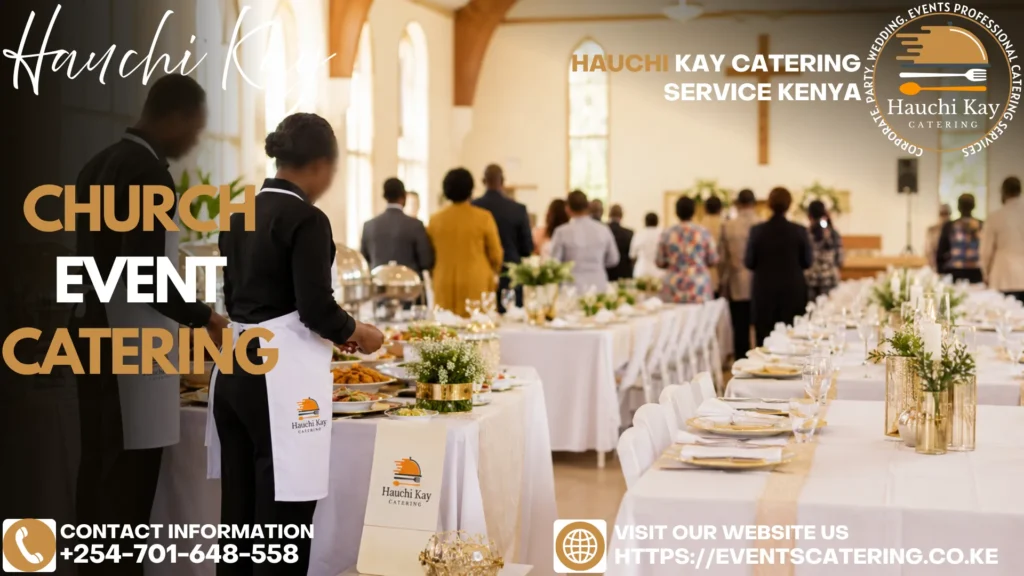
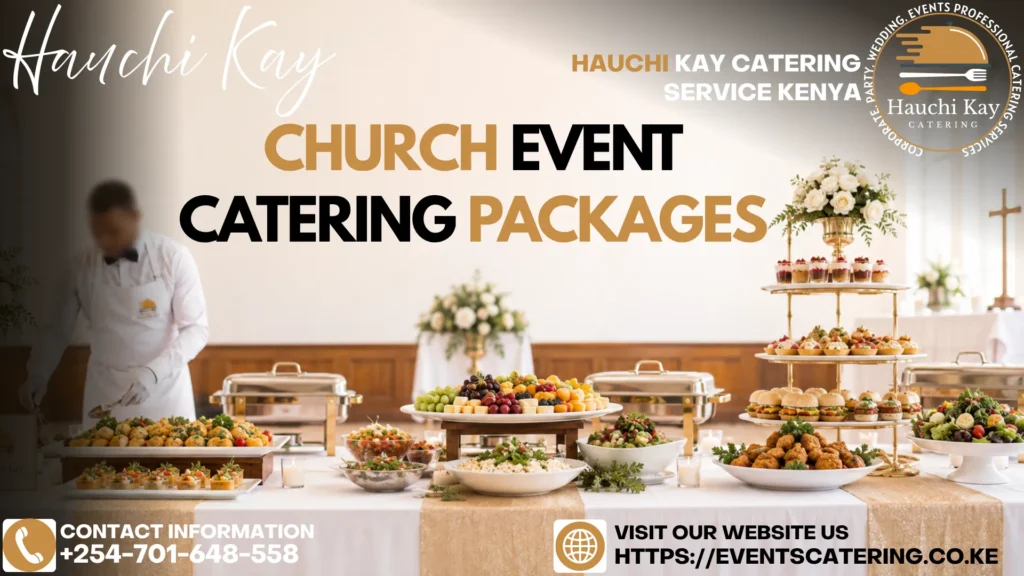
Church event catering forms the largest share of our religious bookings, ranging from a Sunday fellowship lunch for eighty people to a national conference running several days. What holds these events together is a need for food that serves large groups efficiently without losing the warmth of a shared church meal.
A typical Sunday fellowship menu from Hauchi Kay includes pilau or steamed rice, beef stew or grilled chicken, sukuma wiki, kachumbari, and a simple dessert of fresh fruit or cake, served buffet style so volunteers can help themselves quickly between services. Larger gatherings shift toward a wider spread with morning tea and evening tea stations bracketing the main meal.
Church Conference Catering
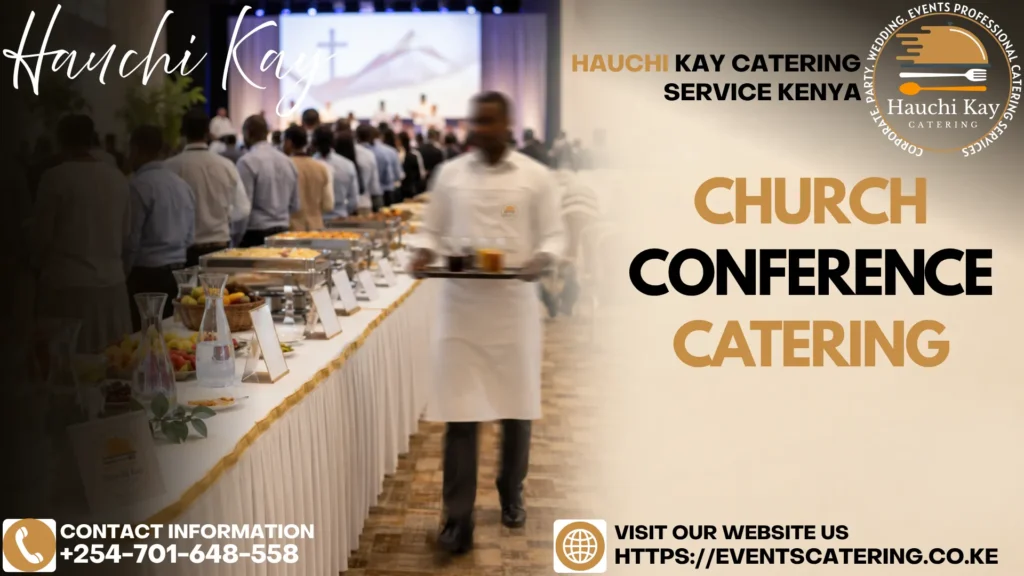
Multi day conferences bring their own logistics. Delegates need breakfast, lunch and dinner served on a strict schedule that fits around sessions, plus tea and coffee breaks that do not eat into programme time. Our church conference catering typically covers a breakfast of Kenyan tea, fresh coffee, mandazi, sausages, eggs and seasonal fruit, a lunch buffet built from pilau, chapati, beef fry or fried tilapia, spinach and a green salad, and an evening meal that shifts toward ugali, ndengu and vegetable sides for a heartier close to the day. VIP dining for bishops and guest speakers is arranged separately, usually with a slightly more elevated plated option.
Church Fundraiser Catering
Fundraiser dinners, particularly building fund and pledge events, work best with plated service rather than a buffet. It slows the evening down in a good way and keeps the room’s attention on the programme rather than a queue. A fundraiser menu from Hauchi Kay might open with a small soup course, move into grilled chicken or beef fillet with roast potatoes and vegetables, and close with a dessert plate and coffee service, all timed to specific points in the pledge programme.

Crusade Catering
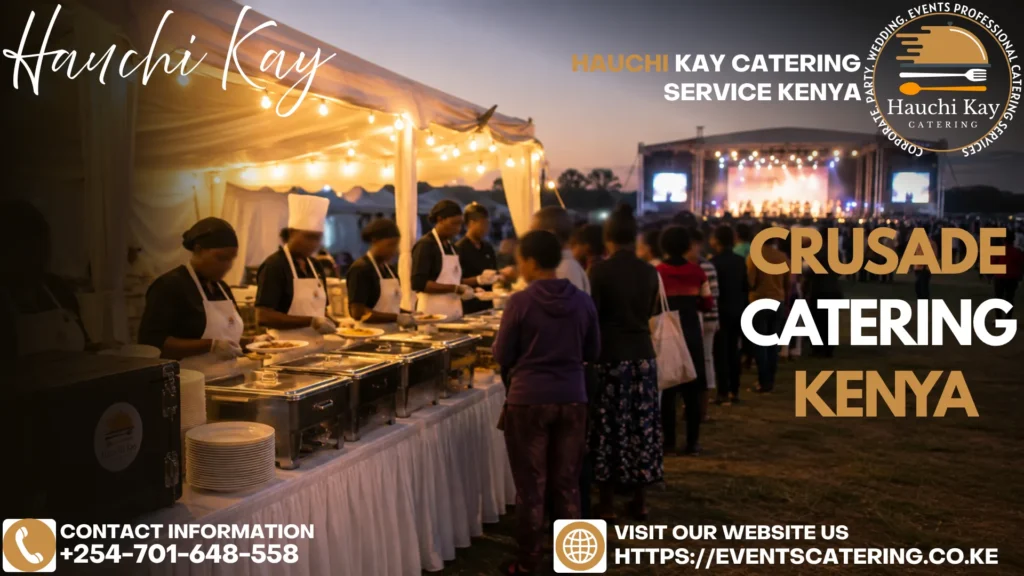
Crusade catering is the least predictable category we handle, and we plan for that from the start. Menus lean toward large batch dishes that hold up well over hours of outdoor service, such as pilau, beef stew, and ugali with sukuma wiki, served from insulated holding equipment rather than plated individually. We carry a contingency stock of fifteen to twenty five percent above the confirmed attendance figure for every crusade booking, because open invitation events routinely draw more people than the official number suggests.
Youth Camp Catering
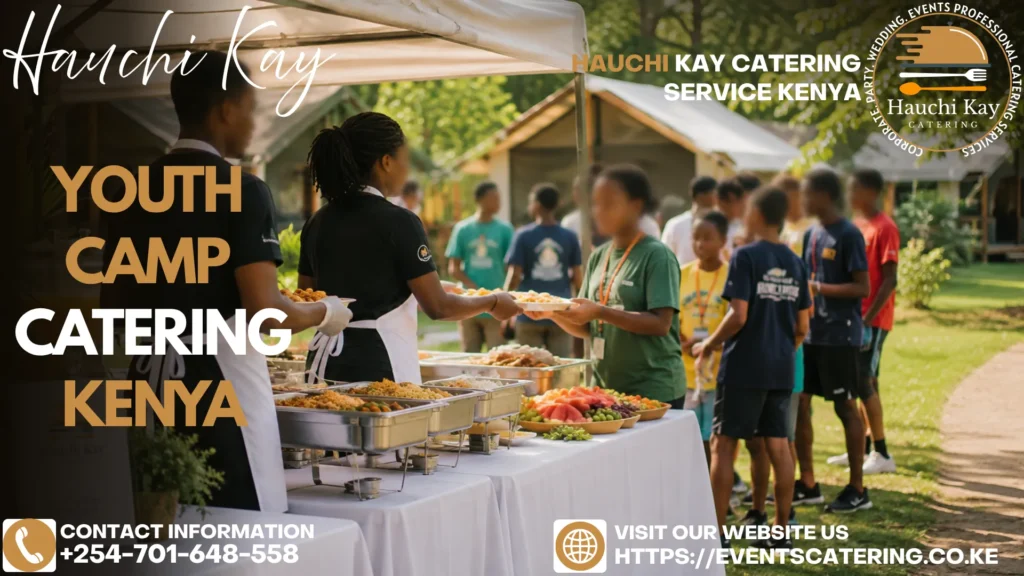
Youth camp catering covers multi day residential camps and retreats, where the food has to keep teenagers fed and energised across several days without becoming repetitive. Our youth camp menus rotate through themed days, pairing breakfast items like pancakes, sausages and fresh juice with lunch options such as chapati and beef curry, and a late night snack service that campers consistently mention as a highlight. Common allergies are flagged and accommodated as part of the standard package rather than an add on.
Christian Wedding Catering
Christian wedding catering blends formality with celebration, and the reception menu usually reflects both the couple’s background and the church’s expectations for the day. Hauchi Kay builds Christian wedding menus around a cocktail hour of samosas, spring rolls and fresh juice, followed by a plated or buffet reception featuring dishes such as pilau, coconut rice, grilled chicken, beef fillet, tilapia, sukuma wiki, kachumbari and a wedding cake service timed to the programme.
Multi ethnic families often ask for a blend of traditional Kenyan dishes alongside more international options, and we build that into the menu design from the first consultation rather than treating it as a late request.

Mosque and Islamic Event Catering
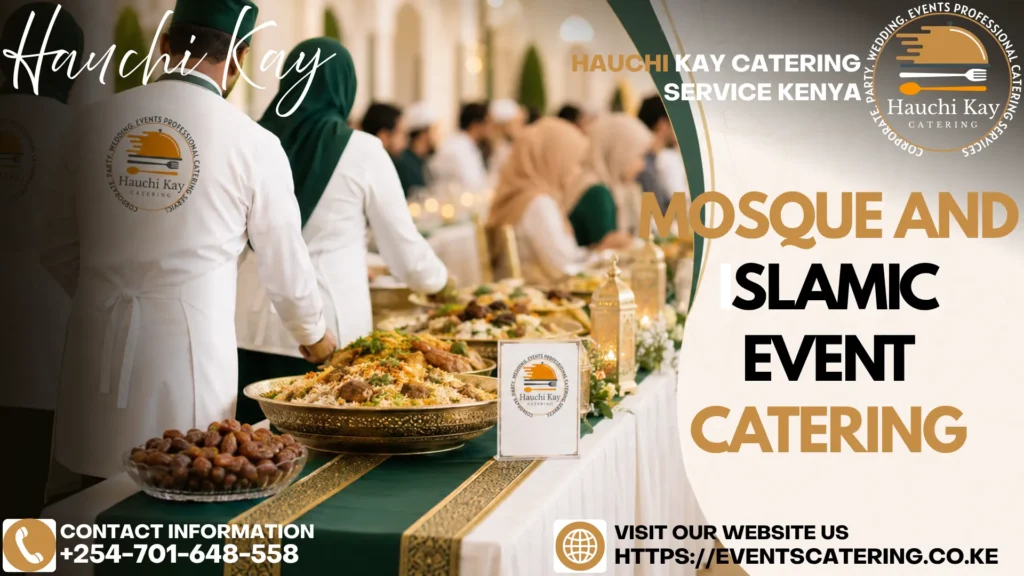
Mosque and Islamic event catering runs on halal sourcing from start to finish, not just the final protein choice. Every dish we serve for a mosque booking uses halal certified meat and ingredients, prepared in equipment kept separate from any non halal work, and documentation is available to mosque committees on request, whether the booking is with Jamia Mosque, a smaller neighbourhood mosque in Eastleigh, or a private family gathering.
Eid Catering
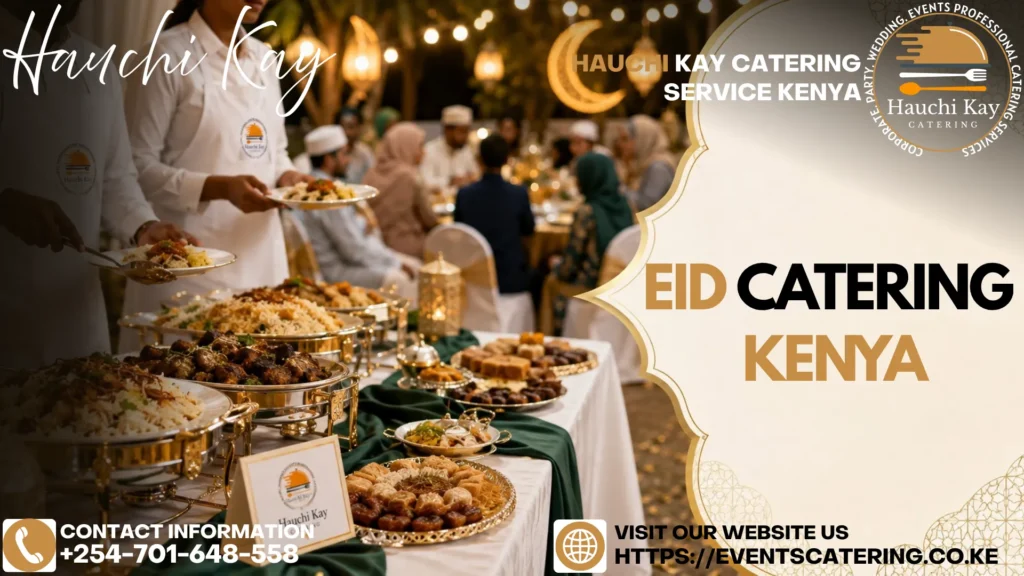
Eid catering, for both Eid al Fitr and Eid al Adha, is built around celebration. A typical Eid menu includes pilau or biryani rice, a whole roasted or grilled protein centrepiece, beef samosas, kachumbari, and a dessert table of mahamri, sweets and fresh fruit. Eid al Adha bookings often centre the Qurbani meat as the main course, prepared according to the family or mosque committee’s specific instructions.
Ramadan Iftar Catering
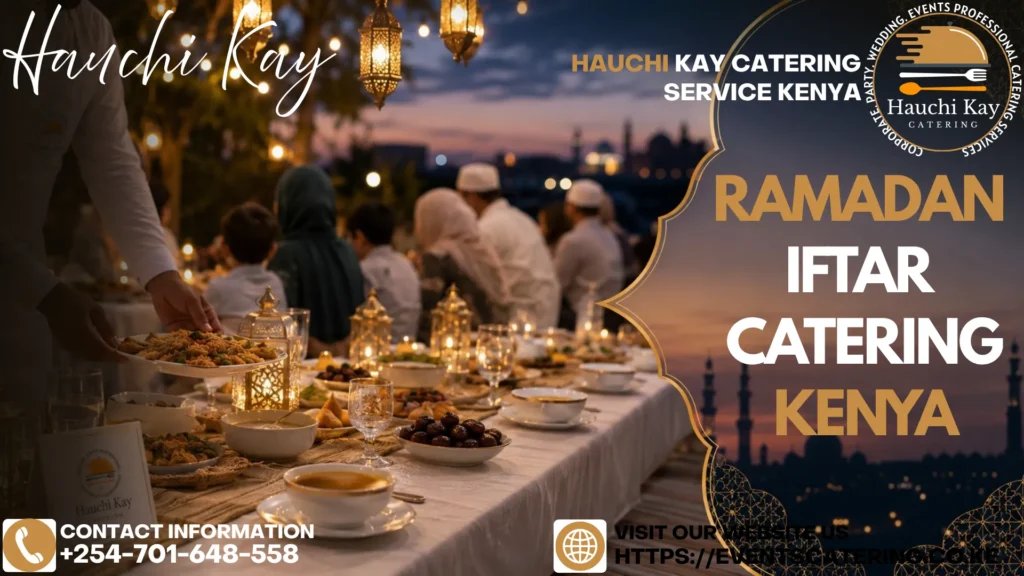
Ramadan Iftar catering is the most time sensitive service we offer. Food has to be staged and ready the exact minute maghrib is called, every single night across the month, with no room for a late delivery. Our Iftar service opens with dates and chilled water for the fast breaking moment, followed immediately by a hot meal of pilau, grilled chicken or beef, lentil soup and kachumbari. For mosques hosting a nightly community Iftar throughout Ramadan, we coordinate delivery timing against the shifting maghrib time each evening rather than using a single fixed schedule for the whole month.
Madrasa Event Catering
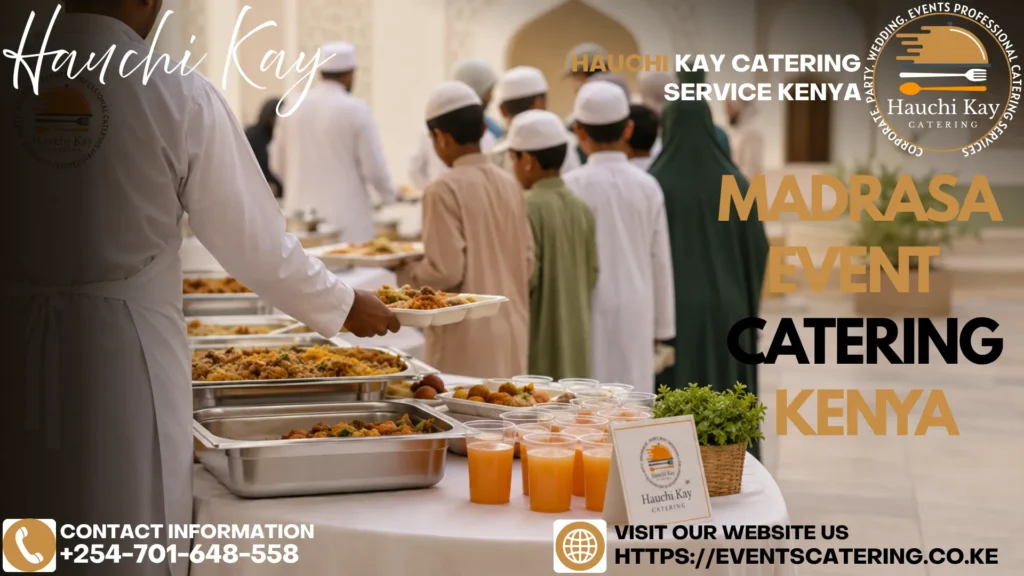
Madrasa event catering covers graduations, Hifz completions and other educational milestones, usually celebrating children and young students. These menus stay halal and celebratory without becoming overly elaborate, typically a buffet of pilau or biryani, grilled chicken, samosas, soft drinks and a dessert table suited to a younger crowd.
Temple and Hindu Event Catering
Temple and Hindu event catering follows a strict satvik standard for many bookings, meaning no onion or garlic anywhere in the dish, prepared using dedicated pots, boards and utensils kept apart from any non vegetarian kitchen work. Hauchi Kay maintains this separation as standard practice for temple contracts, whether the event sits with a temple under the Hindu Council of Kenya or a smaller community shrine, rather than treating it as a special request.

Religious Festival Catering
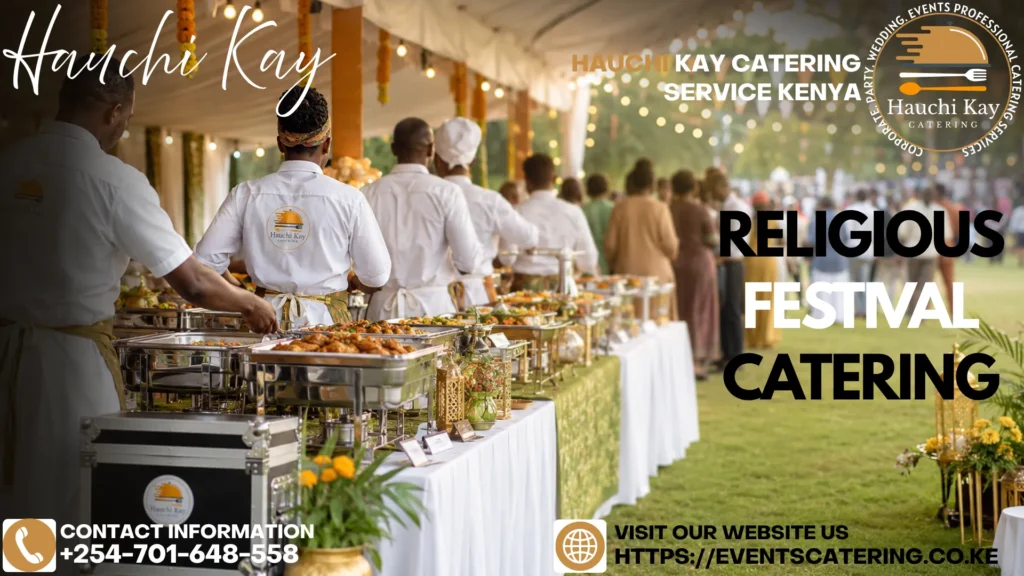
Religious festival catering for occasions such as Diwali, Navratri and Ganesh Chaturthi centres on prasad distribution alongside a full festive meal for devotees. A typical festival menu includes coconut rice, mixed vegetable curry, dhal, chapati, a fresh salad and a sweets table of ladoo and halwa, timed carefully against the puja schedule so prasad reaches devotees at the correct point in the ceremony. For larger community festivals drawing well over a thousand devotees in a single day, we scale production toward efficient, high volume prasad service alongside a smaller sit down thali option for trustees and guests of honour.
Buffet Service Compared With Plated Service
Committees often ask which service style suits their event, and the honest answer depends on the occasion rather than a fixed rule. The comparison below outlines how the two styles differ for a religious event specifically.
| Factor | Buffet Service | Plated Service |
| Best suited for | Sunday fellowship, crusades, festivals, Iftar | Weddings, fundraiser dinners, VIP or clergy dining |
| Guest flow | Faster for large, informal crowds | Slower, more controlled, suits a structured programme |
| Staffing needed | Lower, roughly one server per twenty to twenty five guests | Higher, roughly one server per ten to fifteen guests |
| Cost impact | Lower per guest cost | Twenty to forty percent higher per guest on average |
| Ritual timing fit | Works well when guests move at their own pace | Works well when food must land at a specific programme moment |
Faith Based Catering Packages and Pricing
Pricing for religious catering in Kenya should never be treated as a fixed number, since guest counts, menu complexity, venue conditions and service style all move the final figure. For the most accurate cost, contact us for a tailored quotation based on guest numbers, menu selection, venue, staffing requirements, equipment, logistics, dietary preferences, service style and event duration.
A church fellowship lunch and a plated Christian wedding reception do not belong in the same price bracket, and an Iftar service running nightly for a month has different production demands from a single temple festival day. Rather than force every category into one generic price list, Hauchi Kay uses the same three tier structure, Premium, Executive and Luxury, across all four religious categories, with the pricing and named menu inside each tier adjusted to fit the event type. The tier names stay consistent so committees can compare like for like, while the figures reflect what each category actually costs to deliver well.
The four categories sit on a single pricing ladder rather than four unrelated price lists. Church catering forms the baseline, since it typically involves standard buffet production. Temple and Hindu catering sits slightly above that baseline to account for dedicated satvik equipment kept fully separate from the general kitchen. Mosque and Islamic catering sits a step above temple pricing, reflecting halal sourcing requirements and the added coordination Ramadan’s nightly Iftar schedule demands.
Christian wedding catering carries the highest range of the four, since plated service, cake coordination and decor integrated presentation add cost that a standard buffet event does not carry. Within every category, the gap between Premium and Executive stays close to four hundred to five hundred shillings per guest, and the gap between Executive and Luxury stays close to one thousand shillings per guest, so the step up between tiers feels consistent no matter which category a committee is booking.
Church Event Catering Packages
| Package | Indicative Price Per Guest (KES) | What It Includes |
| Premium Package | 3,500 to 4,800 | Full buffet service for fellowship lunches or conference meals, standard chafing and holding equipment, serving staff, setup and breakdown |
| Executive Package | 5,200 to 7,000 | Multi day conference catering with breakfast, lunch and dinner, dedicated on site coordinator, tea and coffee break stations, backup power equipment |
| Luxury Package | 8,000 to 11,000 | Plated fundraiser dinner service, one server per every ten guests, elevated VIP or clergy dining option, decor integrated presentation |
Premium Package sample menu: pilau or steamed rice, beef stew or grilled chicken, sukuma wiki, kachumbari, seasonal fruit platter, tea and coffee service.
Executive Package sample menu: Kenyan tea, coffee, mandazi and eggs for breakfast, a lunch buffet of chapati, beef fry or fried tilapia with spinach and green salad, an evening meal of ugali, ndengu and vegetable sides.
Luxury Package sample menu: a soup course, grilled chicken or beef fillet with roast potatoes and vegetables, a plated dessert course, and a full coffee and tea service timed to the programme.
Christian Wedding Catering Packages
| Package | Indicative Price Per Guest (KES) | What It Includes |
| Premium Package | 4,200 to 5,700 | Full reception buffet, cocktail hour snacks, standard chafing equipment, serving staff, setup and breakdown |
| Executive Package | 6,200 to 8,400 | Elevated buffet or semi plated reception, dedicated on site coordinator, cake cutting service, enhanced beverage station |
| Luxury Package | 9,500 to 13,000 | Full plated multi course reception, one server per every ten guests, live cooking or carving station, decor integrated food presentation |
Premium Package sample menu: samosas and spring rolls for the cocktail hour, pilau and coconut rice, grilled chicken, sukuma wiki, kachumbari, wedding cake service.
Executive Package sample menu: a wider cocktail spread, pilau, grilled chicken and beef fillet served together, fried tilapia option, coleslaw and green salad, a dessert table alongside the cake.
Luxury Package sample menu: a plated starter course, a choice of two mains such as beef fillet and grilled fish, a live carving or grilling station, a plated dessert course, and a full beverage and coffee bar.

Mosque and Islamic Event Catering Packages
| Package | Indicative Price Per Guest (KES) | What It Includes |
| Premium Package | 3,800 to 5,200 | Full halal buffet service for Eid or community Iftar, standard chafing and holding equipment, serving staff, setup and breakdown |
| Executive Package | 5,600 to 7,600 | Elevated Eid or nightly Iftar menu, dedicated on site coordinator who tracks maghrib timing across the month, enhanced dessert station |
| Luxury Package | 8,600 to 11,800 | Whole roasted protein centrepiece service, one server per every ten guests, live grilling station, decor integrated presentation for large Eid celebrations |
Premium Package sample menu: dates and chilled water for fast breaking, pilau, grilled halal chicken, lentil soup, kachumbari, mahamri and fresh fruit.
Executive Package sample menu: biryani rice, a whole roasted halal protein centrepiece, beef samosas, kachumbari, a dessert table of mahamri and traditional sweets.
Luxury Package sample menu: a live grilling station for Qurbani meat, pilau and biryani served together, three side dishes, a full sweets and dessert table, and a beverage station suited to a large Eid gathering.
Temple and Hindu Event Catering Packages
| Package | Indicative Price Per Guest (KES) | What It Includes |
| Premium Package | 3,600 to 4,900 | Full satvik buffet service, dedicated onion and garlic free preparation equipment, serving staff, setup and breakdown |
| Executive Package | 5,300 to 7,200 | Elevated satvik menu, dedicated on site coordinator who tracks puja and prasad timing, enhanced sweets table |
| Luxury Package | 8,200 to 11,300 | Full satvik thali service for trustees and guests of honour alongside high volume prasad distribution for devotees, decor integrated presentation |
Premium Package sample menu: coconut rice, mixed vegetable curry, dhal, chapati, a fresh salad, a sweets table of ladoo and halwa.
Executive Package sample menu: a wider satvik thali with an additional vegetable dish, coconut rice and chapati, dhal, a fresh salad, and an expanded sweets table.
Luxury Package sample menu: a full sit down satvik thali for trustees and guests of honour, a separate high volume prasad station for devotees, an expanded sweets table, and a beverage station.
Pricing Disclaimer: The prices shown are premium market estimates intended for planning purposes only. Final quotations depend on guest numbers, menu complexity, venue, staffing, transport, equipment hire, service style, seasonal ingredient costs and any special client requirements. Contact us for a customised quotation tailored to your event.
How Booking Works With Hauchi Kay
Religious event catering, whether the booking sits in Nairobi, Kiambu, Machakos or Kajiado, follows a consistent process so committees know what to expect from the first enquiry to the last plate cleared.
- Initial consultation, where we ask about denomination or tradition, expected guest numbers, venue, and any dietary or ritual timing requirements.
- Site assessment, particularly for outdoor or non standard venues, to confirm access roads, parking, kitchen space and power availability.
- Menu proposal, built from the event specific menus described above rather than a generic template.
- Package selection and quotation, tailored to guest numbers and the tier that fits the committee’s budget.
- Contract confirmation and deposit, typically secured through bank transfer or M-Pesa for smaller deposits.
- Pre event coordination call, usually three to five days before the event, to confirm final numbers and any last minute changes.
- Delivery, setup and service on the day, with a dedicated coordinator present throughout for events above one hundred and fifty guests.
- Breakdown and cleanup, returning the venue to its original state before we leave.
This structure exists because religious committees are usually volunteers juggling the catering decision alongside a dozen other responsibilities for the same event. A clear, repeatable process removes one source of stress from an already demanding role.
Planning a Religious Event Catering Budget in Kenya
A few factors move the final cost more than any other choice a committee makes. Plated service costs meaningfully more than buffet service, generally twenty to forty percent higher per guest, because it needs a larger, more skilled serving team. Staffing ratio matters just as much: a premium service level runs one server for every ten to fifteen guests rather than one for every twenty five, and that difference shows up directly in the final invoice. Contingency stock is the factor committees most often forget to budget for, and it is the one that saves an event when attendance runs higher than expected. We recommend fifteen to thirty percent above the confirmed guest count for any open invitation religious gathering, including crusades, festivals and Eid celebrations.
Faith based event catering across Kenya also has to account for transport distance and venue conditions. A booking in central Nairobi with reliable road access costs less to service than one in a more remote county, where fuel, travel time and backup equipment all add to the operational cost behind the scenes, even if the per plate menu price stays the same. Committees in neighbourhoods with tighter parking and older infrastructure, common in parts of Eastlands and around some older church compounds in the city, should also factor in a slightly longer setup window than a venue in an area like Karen or Westlands would need.
Why Committees Across Kenya Choose Hauchi Kay
Catering for religious events is not a side offering for us. It is a specific discipline our team has built around halal certification, satvik kitchen practice, ritual timed service and the kind of large scale, unpredictable crowds that crusades and festivals bring. Committees working with Hauchi Kay get a coordinator who has actually run this kind of event before, named menus built for the specific tradition rather than a generic buffet list, and pricing built to survive Kenya’s cost environment rather than falling apart the moment guest numbers change.
We have worked inside church halls in Eastlands with two working sockets, mosque compounds during Ramadan where the serving line had to stay clear of the main prayer space, and temple grounds where a single shared spoon between two pots would have broken the satvik standard entirely. That kind of hands on experience is what separates a caterer who can genuinely deliver religious event catering from one who is simply willing to try it for the first time on your event.
Our coordinators also stay close to Kenya’s overlapping religious calendar each year, since Ramadan, Easter, Diwali and Christmas season bookings can cluster within a few weeks of each other depending on how the lunar and liturgical calendars fall. Committees who mention their date early get first access to our halal certified suppliers and satvik dedicated kitchen equipment during these busier stretches, rather than competing for availability at the last minute.
If your church, mosque or temple has an event on the calendar, reach out to Hauchi Kay Events and Catering Services Kenya for a quotation built around your congregation’s size, tradition and celebration.
Frequently Asked Questions
How far in advance should we book religious event catering in Kenya? For most church, mosque or temple events under three hundred guests, six to eight weeks ahead is usually enough. Large conferences, crusades, or bookings during a busy overlapping season, such as Ramadan falling close to a major Hindu festival, are safer booked three to four months out.
Can you cater a mixed dietary event with halal and vegetarian guests together? Yes. We regularly run halal, satvik and standard menus within the same event using separate preparation stations and serving equipment, which keeps every dietary standard properly maintained rather than blended together.
Do you provide staff and equipment, or only the food? Our standard packages are full service, including delivery, setup, chafing and holding equipment, serving staff and cleanup afterward. A drop off only option is available for congregations with their own volunteer serving team, typically at a reduced rate.
How do you handle sudden attendance increases at a crusade or festival? Every open invitation booking includes a contingency stock allowance, generally fifteen to thirty percent above the confirmed number, along with a rapid production plan that can turn around additional servings within thirty to forty five minutes if numbers surge.
Is your halal sourcing verified? Yes. All proteins and key ingredients used for mosque, Eid, Iftar and madrasa bookings come from halal certified suppliers, and documentation is available to mosque committees on request.
Can you cater an outdoor religious event during Kenya’s rainy season? Yes. Outdoor bookings during the long or short rains include tented cooking and serving areas, raised flooring to keep food away from standing water, and extra buffer stock in case rain delays the event’s start.