+254-701-648-558 | support@eventscatering.co.ke
Dowry Catering Kenya
You have spent months negotiating the bride price, coordinating with elders, and preparing gifts. Now the Ruracio date is fixed and you realize feeding two hundred relatives for an entire day is nothing like planning a simple family lunch. The groom’s delegation will leave Nairobi at dawn. Elders will sit under tents from mid-morning through late afternoon. Children will run between homesteads.
And somewhere between the goat negotiations and the final blessings, everyone expects to eat. Not just once. Multiple times. With food that respects Kikuyu tradition while keeping energy high through ten hours of ceremony. That is exactly why families across Central Kenya and Nairobi trust Hauchi Kay Events and Catering Services Kenya for Dowry (Ruracio) Catering.
We do not treat your Ruracio like a shortened wedding reception. We treat it like the distinct, culturally significant, all-day event that it is. From the first thermos of spiced tea at 7:00 AM to the final evening plates of warmed nyama choma, we manage the rhythm, the portions, and the presentation so your family can focus on the ceremony itself.
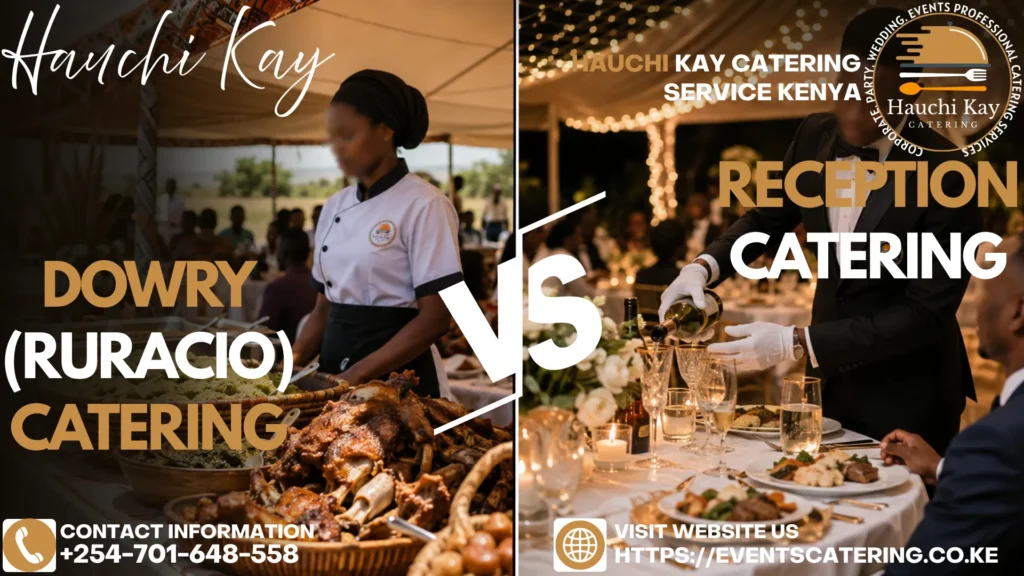
Dowry (Ruracio) Catering vs Reception Catering
A wedding reception is typically a four to six hour evening event. Guests arrive, eat, dance, and leave. A Ruracio is not a three-hour party. It is a structured negotiation that commonly stretches from early morning until evening. The food must match this pace. Serve too much too early and guests become sluggish during the critical negotiation phase. Serve too little and elders grow irritable while discussing dowry terms. The menu must honor Agikuyu culinary tradition while accommodating modern dietary preferences and the sheer physical endurance required of an all-day outdoor event.
Most wedding caterers in Kenya are optimized for reception events. They arrive, set up a buffet, serve for three hours, and leave. A Ruracio demands something entirely different. The caterer must manage food safety across ten hours of outdoor service. They must coordinate with elders who have specific cultural expectations. They must pace meals so guests are neither hungry nor overstuffed during sensitive negotiations.
Hauchi Kay brings mobile kitchen equipment designed for rural homesteads without commercial kitchen facilities. Our generators power warming equipment. Our refrigerated trucks keep meat and dairy safe in upcountry heat. Our staff understand that during negotiation phases, they must be nearly invisible. And when the celebration begins, they must be present, efficient, and hospitable.
The Full-Day Ruracio Timeline and Meal Rhythm
Understanding the ceremony flow is essential before choosing your menu. Here is how a typical Ruracio unfolds in Central Kenya and how Hauchi Kay aligns food service to each stage.
Phase One: Dawn Departure and Arrival (6:00 AM to 9:00 AM)
The groom’s delegation often gathers at a Nairobi residence before departing for the bride’s rural home. Some families serve a light breakfast here. Others wait until arrival. Hauchi Kay can station a small team at the departure point or travel with the delegation.
Typical service at this stage includes Kenyan tea brewed with ginger and cardamom, soft mandazi, boiled eggs, and sliced bread with butter and jam. For delegations traveling two or more hours, we pack travel refreshments. Fresh fruit, bottled water, and juice boxes prevent dehydration during the drive through Thika Road traffic and into the central highlands.

Phase Two: Morning Welcome and Gift Presentation (9:00 AM to 11:30 AM)
Upon arrival, the groom’s party is greeted. Gifts are presented. Introductions are made. This is a socially intense period where people are standing, moving between groups, and observing protocol. Food at this stage must be discreet, portable, and culturally appropriate.
Hauchi Kay serves a circulating morning tea station. Waitstaff move through the compound with trays of hot tea, coffee, and fresh passion fruit juice. We pair this with bite-sized snacks. Mini samosas, sausage rolls, and soft mandazi are easy to eat while standing. We avoid messy foods during this phase because guests are dressed in their best attire and moving between the main house, tents, and outdoor spaces.

Phase Three: The Negotiation Period (11:30 AM to 2:00 PM)
This is the heart of the Ruracio. Elders retreat to discuss dowry terms. Other guests wait in designated areas. The energy shifts from social to serious. Food during this period serves a practical purpose. It sustains patience.
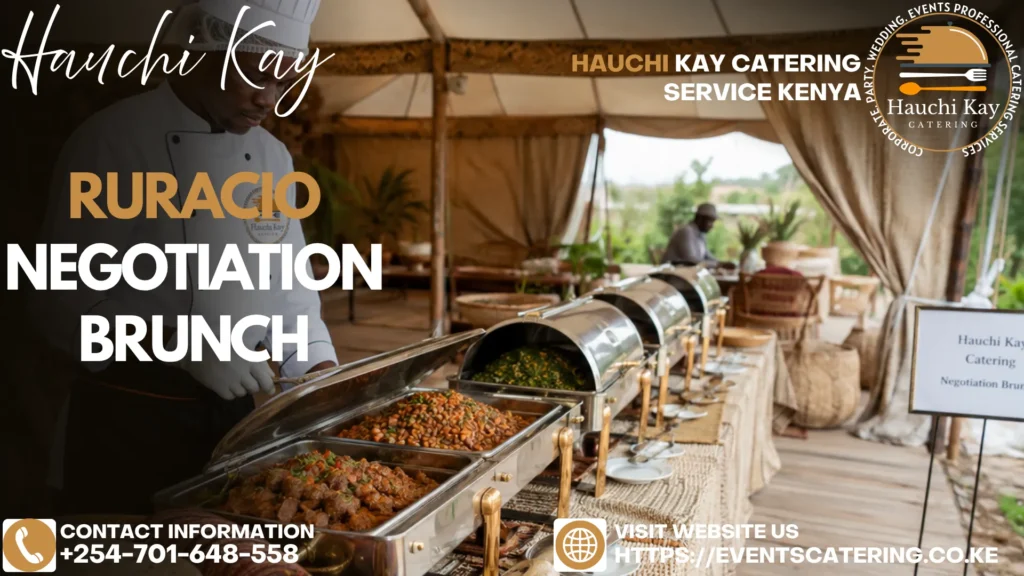
We provide a substantial mid-morning brunch served buffet-style under a dedicated tent separate from the negotiation space. This is not the main feast. It is a sustaining meal. A typical Hauchi Kay negotiation brunch includes soft chapati, beef stew, githeri, sukuma wiki, and kachumbari. We keep portions moderate and include plenty of starches to maintain stable blood sugar. Tea and soft drinks flow continuously.
Phase Four: The Celebration Feast (2:00 PM to 4:30 PM)
Once terms are agreed upon and blessings given, the mood shifts to celebration. This is the main meal. Guests are seated. Speeches are made. Music begins. This buffet must impress because it represents the groom’s family’s generosity and the bride’s family’s hospitality.
The Hauchi Kay celebration feast for Ruracio centers on dishes that resonate specifically with Kikuyu and broader Kenyan tradition. Mukimo takes pride of place. We prepare it the traditional way with potatoes, pumpkin leaves, peas, and corn, mashed to the right consistency. Pilau spiced with cardamom and cinnamon sits alongside it. We serve two types of ugali, white and brown, to accommodate different preferences. Chapati is stacked high because it always disappears first.
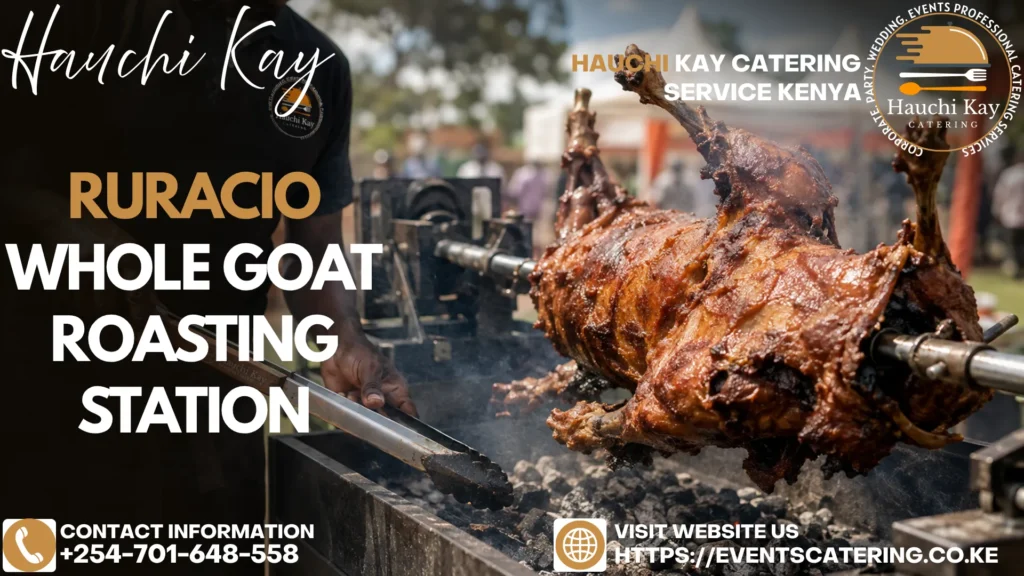
Proteins at this stage are generous. Whole goat roasted over charcoal and carved at the station. Beef stew slow-cooked until tender. Grilled chicken seasoned with traditional herbs. For lakeside or mixed-cultural families, we add fried tilapia. Vegetables include managu, terere, cabbage stir-fry, and the obligatory kachumbari. We also serve mursik in calabashes for families who want to honor Kalenjin traditions within the broader ceremony.
Phase Five: Afternoon Socializing and Evening Wind-Down (4:30 PM to 8:00 PM)
After the main feast, guests do not immediately leave. They sit in groups. They talk. Children play. Some families continue into evening with additional dancing or speeches. Food at this stage is light, refreshing, and optional.
Hauchi Kay provides an afternoon grazing table with fresh fruit platters, juice blends, Kenyan tea, and coffee. For extended celebrations, we offer a light evening service. This might include reheated nyama choma, fresh chapati rolls, and warming soup. For delegations returning to Nairobi after dark, we prepare packed travel meals with boiled eggs, chapati, fruit, and bottled drinks.

Cultural Protocols That Shape the Menu
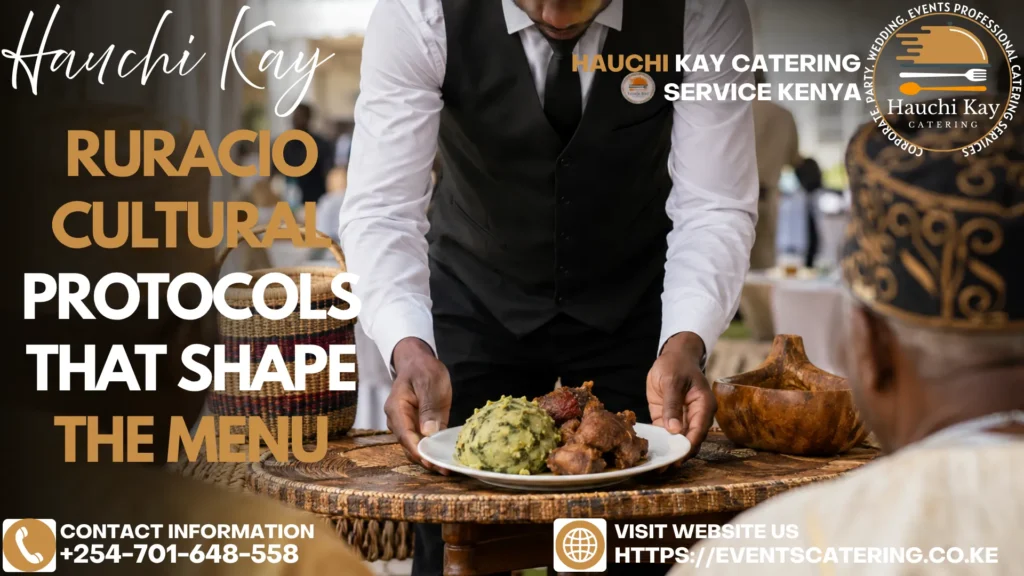
Ruracio catering carries cultural weight that reception catering does not. Certain dishes signal respect. Others are expected by specific clans. Hauchi Kay consults with family elders before finalizing any Ruracio menu.
For example, some families insist on specific preparations of mukimo without certain ingredients for traditional reasons. Others require that the groom’s family provides the main goat, which we then roast on site. Some ceremonies include the breaking of kola nut or specific elder servings that happen before the general buffet opens. We accommodate these protocols without disrupting the kitchen workflow.
We also understand seating hierarchies. Elders often eat first or in separate spaces. We provide dedicated serving staff for elder tents. We ensure that the youngest children are served quickly so parents can enjoy their own meals. These small observations separate professional Ruracio catering from standard event food service.
Hauchi Kay Ruracio Catering Packages
We structure our Ruracio services into four distinct options. Each one is built around realistic guest counts and the specific demands of all-day traditional ceremony catering.
Custom Quotation
Every Ruracio is unique. Some families need service for sixty people in a compact Kiambu garden. Others need to feed four hundred across a sprawling Murang’a homestead with multiple tents and a live goat station. Venue access, water availability, power sources, and travel distance all affect final pricing.
Contact us for a tailored quotation based on guest numbers, menu selection, venue, staffing requirements, equipment, logistics, dietary preferences, service style, and event duration. We visit rural venues in advance when possible to assess ground conditions and plan our mobile kitchen setup.
Premium Package
Indicative planning range: KES 3,200 to KES 3,800 per person
This package suits families hosting eighty to one hundred and twenty guests for a single-location Ruracio with a clear morning-to-afternoon timeline.
| Service Phase | Menu Items |
| Morning Arrival Tea | Kenyan tea, coffee, fresh mango juice, mandazi, mini samosas, boiled eggs |
| Mid-Morning Brunch | Soft chapati, beef stew, githeri, sukuma wiki, kachumbari |
| Main Celebration Feast | Mukimo, white ugali, pilau with beef, grilled chicken, beef stew, cabbage stir-fry, managu, kachumbari |
| Afternoon Station | Passion fruit juice, Kenyan tea, coffee, seasonal fruit platters |
| Service Includes | Buffet setup, standard chafing dishes, serving utensils, uniformed waitstaff for main meal |
Executive Package
Indicative planning range: KES 4,500 to KES 5,500 per person
This package serves one hundred and fifty to two hundred and fifty guests across a full-day ceremony requiring multiple service phases and extended staff presence.
| Service Phase | Menu Items |
| Dawn Departure | Spiced Kenyan tea, mandazi, bread and butter, packed travel snacks for the groom’s delegation |
| Morning Welcome | Hot tea, coffee, passion fruit and pineapple juice, mini samosas, sausage rolls, mandazi, fresh fruit skewers |
| Negotiation Brunch | Chapati, beef stew, chicken curry, githeri, mashed ndengu, sukuma wiki, spinach, kachumbari |
| Celebration Feast | Mukimo, white and brown ugali, coconut rice, pilau with goat, whole roasted goat carved at station, grilled chicken, beef fry, fried tilapia, managu, terere, cabbage and carrot stir-fry, kachumbari, coleslaw, green salad |
| Afternoon Refreshments | Mixed fresh juices, tangawizi, Kenyan tea, coffee, mini mandazi, fruit platters |
| Evening Wind-Down | Light vegetable soup, reheated chapati, warming tea for remaining guests |
| Service Includes | Full mobile kitchen setup, generator power, dedicated elder tent staff, traditional woven basket décor, crockery for all phases |
Luxury Package
Indicative planning range: KES 6,800 to KES 8,500 per person
This package is designed for high-profile families, large guest lists of three hundred to five hundred, and ceremonies where presentation and cultural authenticity must be flawless.
| Service Phase | Menu Items |
| Pre-Departure Breakfast | Kenyan tea, fresh coffee, mixed fresh juices, pancakes, sausages, eggs to preference, sweet potatoes, arrow roots, mandazi, mahamri, bread with butter and jam, seasonal fruits |
| Arrival Reception | Sparkling wine, fresh tropical juices, mini samosas, spring rolls, stuffed pastry puffs |
| Elder Private Service | Traditional vegetable soup, soft chapati, lightly spiced beef stew, mursik in authentic calabashes |
| Main Celebration Feast | Mukimo in traditional clay pots, white and brown ugali, coconut rice, aromatic pilau with tender goat, whole mbuzi choma roasted over charcoal and carved tableside, ingokho-style free-range chicken, premium beef stew, fried Nile perch, lentils, green grams, managu, terere, spinach, mixed vegetables, kachumbari, green salad, pasta salad, coleslaw |
| Live Cooking Stations | Fresh chapati on griddles, live nyama choma grill with house-made chili and tomato relishes, traditional porridge station for elders |
| Afternoon High Tea | Finger sandwiches, cakes, doughnuts, samosas, kebabs, mixed fruit platters, premium Kenyan tea blends, fresh coffee |
| Evening Dinner | Light pilau, vegetable curry, warmed nyama choma, chapati, packed gourmet travel boxes for return journey to Nairobi |
| Service Includes | Executive chef oversight, private chefs for elder and VIP tents, premium crockery and cutlery, traditional clay pot and woven basket presentation, full bar service, dedicated event captain, overnight catering staff, complete post-event cleanup |
Pricing Disclaimer
The prices shown are premium market estimates intended for planning purposes only. Final quotations depend on guest numbers, menu complexity, venue, staffing, transport, equipment hire, service style, seasonal ingredient costs, and any special client requirements. Contact us for a customised quotation tailored to your event.
Common Mistakes Families Make When Self-Catering a Ruracio
Many families initially consider handling Ruracio food themselves. After all, aunties can cook and cousins can serve. In practice, this approach often creates more stress than savings.
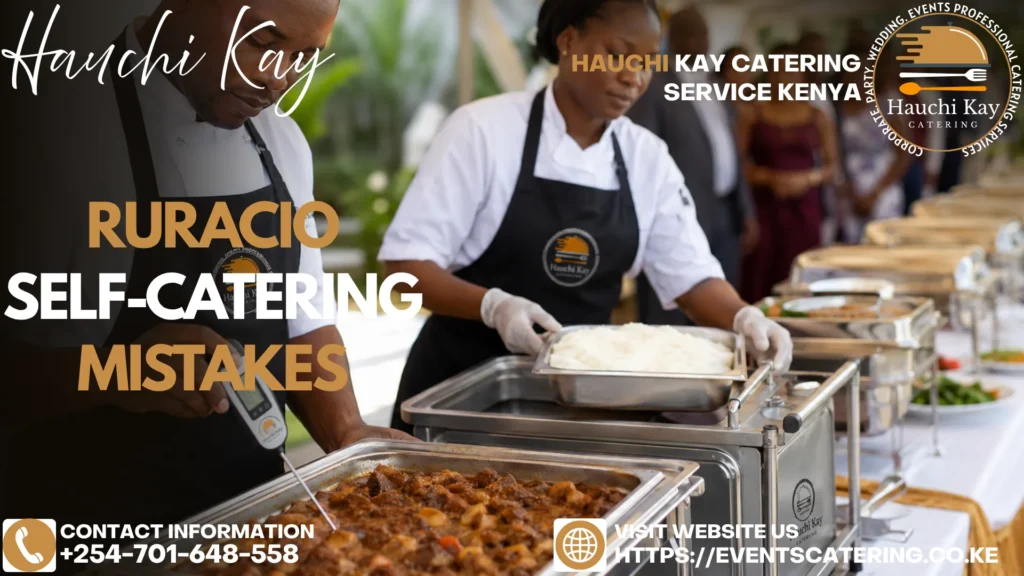
The first mistake is underestimating the sheer volume of food. A Ruracio for two hundred guests requires cooking for two hundred people across five service phases. That is not a family potluck. It is a commercial operation disguised as a home event. Without proper equipment, food sits at unsafe temperatures. Without enough serving staff, queues stretch across the compound and guests miss key ceremony moments.
The second mistake is poor timing. Family volunteers often finish cooking the main feast by 11:00 AM because they started at 4:00 AM. By 2:00 PM, when the actual celebration begins, the chapati is cold and the stew has separated. Professional caterers use holding equipment and timed preparation to ensure food quality peaks exactly when the buffet opens.
The third mistake is ignoring elder protocols. Inexperienced servers might open the buffet to everyone at once, creating chaos. Elders end up standing in lines with young children. Traditionally, certain guests should be served first or separately. Professional Ruracio catering respects these hierarchies.
The fourth mistake is running out of food. Family cooks estimate portions based on everyday meals. Ceremonial events have different consumption patterns. Guests eat more when they are staying all day. Some take extra for the road. Without professional portion control and backup quantities, the last fifty guests face empty chafing dishes.
The fifth mistake is neglecting the departure meal. After ten hours of hosting, the bride’s family is exhausted. The groom’s delegation still needs to eat before driving back to Nairobi. A professional caterer provides packed meals or a light evening service so the hosts do not have to return to the kitchen at 7:00 PM.
Your Ruracio Catering Checklist
Use this framework when planning your dowry ceremony food service.
- Confirm your guest count with a ten percent buffer for unexpected arrivals.
- Visit the venue with your caterer at least two weeks before the event. Check access roads, power availability, water sources, and kitchen space.
- Discuss elder protocols and seating hierarchies with both family heads. Share this information with your catering team.
- Confirm whether the family will supply the ceremonial goat or if the caterer should source it. If the family supplies it, confirm delivery time and condition.
- Plan for weather contingencies. Central Kenya afternoons can bring rain. Ensure buffet tents have side panels and serving areas are protected.
- Arrange separate restroom facilities for catering staff if the venue has limited facilities.
- Confirm dietary restrictions among key guests. Note any diabetes-friendly, halal, or vegetarian requirements.
- Schedule a final menu confirmation meeting one week before the Ruracio.
- Assign one family member as the catering liaison. This person communicates with the Hauchi Kay event captain on the day so other family members remain fully present in the ceremony.

Seasonal and Regional Considerations
Ruracio catering in Kenya varies by season and location. During the rainy months of April and May, outdoor cooking becomes challenging. We bring covered grill stations and waterproof tenting for all cooking equipment. In the dry months of January and February, dust control around buffet areas requires additional flooring or matting.
Regional differences also matter. A Ruracio in Nyeri at high altitude may require longer cooking times for certain starches. A ceremony near Lake Naivasha might incorporate fresh fish more prominently. A Nairobi-based Ruracio held at a hired venue with full kitchen access allows different logistics than a rural homestead in Murang’a where water must be trucked in.
Hauchi Kay accounts for these variables during our venue assessment. We do not apply a one-size-fits-all template. We adapt our mobile kitchen setup, menu timing, and staffing to the specific conditions of your location.

How to Choose the Right Ruracio Caterer
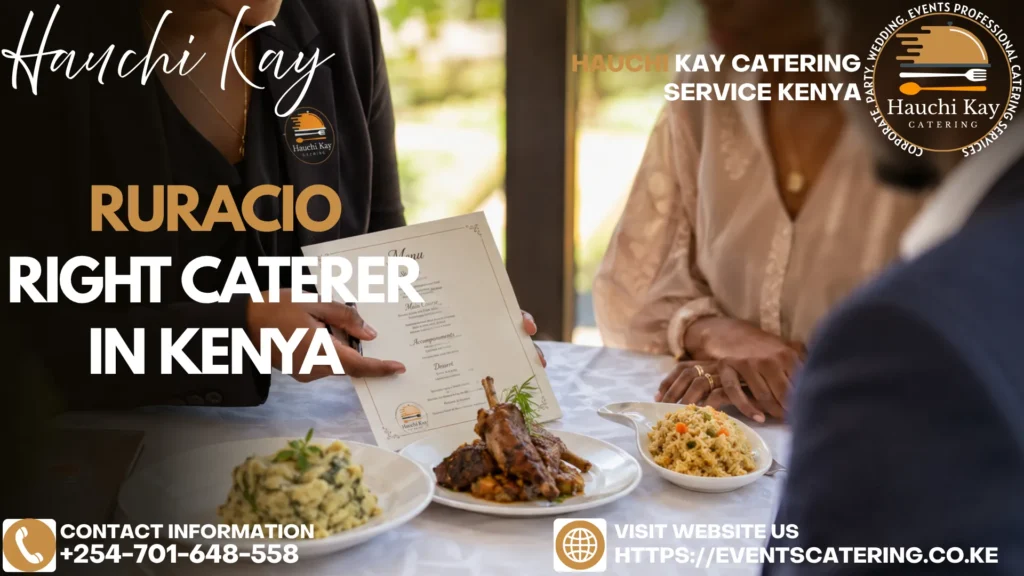
Not every caterer who handles wedding receptions can manage a Ruracio. Here are the specific questions families should ask before booking.
Ask about mobile kitchen capability. A rural homestead in Nyeri or Murang’a may lack commercial power, running water, or refrigeration. Your caterer must bring solutions, not problems.
Ask about staff experience with traditional ceremonies. Do servers understand when to be silent during elder deliberations? Do they know that certain dishes carry symbolic weight?
Ask about food safety across long hours. Outdoor buffets sitting in Central Kenya heat for ten hours are a health risk unless the caterer has proper warming, cooling, and rotation protocols.
Ask about timeline flexibility. Ruracio negotiations rarely run on schedule. A good caterer adapts meal timing without compromising food quality.
Ask about elder accommodation. Separate serving lines, softer food options, and dedicated seating service show cultural awareness that generic caterers often miss.
From Ruracio to Wedding Reception
Once your Ruracio concludes successfully, the next milestone is your wedding reception. Hauchi Kay provides comprehensive wedding catering in Kenya for the main celebration. Our wedding services cover reception buffets, plated dinners, cake service, and full bar management. You can explore our complete wedding catering packages and reception menu options on our dedicated wedding catering page. Many families who trust us with their Ruracio return for the wedding itself because they know we understand their standards.
Frequently Asked Questions
How far in advance should I book Ruracio catering?
We recommend booking eight to twelve weeks ahead, especially for Saturday ceremonies during peak season from January through March and August through December. Rural venues require advance logistics planning that city hotel events do not.
What is the minimum guest count for Ruracio catering?
Hauchi Kay typically handles Ruracio events for sixty guests and above. Smaller family gatherings can be accommodated through our custom quotation option with adjusted menu formats.
Can Hauchi Kay cater at a rural homestead without electricity?
Yes. Our mobile kitchen setup includes generator power, water reservoirs, and refrigerated transport. We regularly cater in Murang’a, Nyeri, Embu, and other upcountry locations where commercial kitchen facilities do not exist.
Do you provide the goat and chicken, or does the family?
This depends on family preference and cultural protocol. Some families prefer to source their own ceremonial goat and have Hauchi Kay roast it on site. Others prefer us to supply everything. We accommodate either approach and discuss this during consultation.
How do you handle dietary restrictions at traditional events?
We provide vegetarian, halal, and gluten-free options upon request. We clearly label all buffet items and can set up separate serving stations for guests with specific dietary needs so they do not feel excluded from the communal meal.
What happens if the Ruracio runs longer than expected?
Our staff are scheduled for the full event duration, including buffer time for extended negotiations. We plan food holding and refresh cycles specifically for long ceremonies. If the event extends significantly beyond the quoted timeline, we discuss overtime staffing transparently during the booking process.
Ready to Plan Your Ruracio Menu?
Hauchi Kay Events and Catering Services Kenya is ready to handle every detail of your dowry ceremony catering. From the first cup of morning tea to the final evening plate, we deliver food that honors your tradition and impresses your guests. Contact us today to schedule your consultation and receive a customized quotation for your Ruracio.